Showing posts with label expansion. Show all posts

Tuesday, February 1, 2011

Today is a fairly significant day in hockey history and NHL history. If you've been circling February 1 on your calendar for nearly two decades, you know one of two things: (1) it's most likely a birthday or anniversary you should remember, or (2) it's the anniversary of the appointment of Gary Bettman as NHL Commissioner. Both could be fairly important to you if you're Mark Recchi, Patrick O'Sullivan, or Tommy Salo as all three men celebrate their birthdays today, but I'm more concerned with the last 18 years in the life of Gary Bruce Bettman on this anniversary of his appointment as NHL Commissioner.

There is a lot that we can pin on Gary Bettman in terms of taking the game to new lows. Let's review some of the problems that the game has seen over the last 18 years. And this list could grow exponentially if we do this review on a market-by-market basis.
  • The FoxTrax puck. That debuted in 1996 at the 46th NHL All-Star Game in Boston. Surprisingly, Fox somehow made it last until the first game of the 1998 Stanley Cup Final. I'm pretty sure no hockey fan will let Bettman live this one down.
  • After seeing the San Jose Sharks join the NHL for the 1991-92 season, Gary Bettman goes on a tear, allowing expansion franchises to pop up in any major market with a covered arena. Since February 1993, we've seen franchises pop up in Anaheim, Miami, Nashville, Atlanta, Columbus, and Minneapolis. We also saw Minneapolis lose their original team to Dallas, Quebec City lose their team to Denver, Hartford lose their team to Raleigh, and Winnipeg lose their team to Phoenix. Outside of the Wild, are any of those teams making money?
  • Fans have endured two work stoppages as the NHL players went on strike for the start of the 1994-95 season, and we saw the entire 2004-05 season wiped out due to the owners locking out the players. And we're staring down the barrel of the guns again as the CBA expires at the conclusion of the 2010-11 season.
  • Fans and players were absolutely outraged at the NHL's decision to walk away from ESPN and set up shop on the unheard-of Outdoor Life Network. While OLN transitioned into Versus, NHL coverage in the US is still rarely found on widespread cable television, and the league has been slow to recover any television revenue and television airspace since walking away from the "World Wide Leader".
Again, we could probably spend an hour or six listing all of the problems that the NHL has seen over the last 18 years, but these are, in my view, some of the more glaring problems that the NHL has seen. However, not all is bad, and Gary Bettman and his team have done some absolutely positive things as well.
  • The NHL Winter Classic is now the showcase event every year for the NHL in the US. Before the Winter Classic, the NHL had nothing to celebrate in the lower forty-eight, and people had no reason to tune in. The Winter Classic, if nothing else, has brought fans back and attracted new fans to the sport.
  • The NHL, unlike the other three major sports, have embraced and endorsed new technology. The NHL has branched out to fans via Twitter, Facebook, and YouTube to give the game more access to the techno-savvy fans, and fans of the game have responded in kind by blogging, tweeting, and Facebooking all sorts of information and photos. Hockey has taken advantage of the social media craze like no other sport.
  • The NHL introduced some changes that have opened up the game for offensive stars after watching them suffer for years. No longer is obstruction and interference a way of life, the two-line pass is ancient history, and the shootout allows for more creativity and excitement in the game. If anyone thinks that the game is worse now than before the 2004-05 canceled season, they simply aren't watching the same game I am.
  • While moving at a snail's pace, the NHL is slowly gaining on Major League Baseball and the NFL in terms of attracting and retaining fans. While there is no chance that the NHL will ever knock those two sports off the mountain in the US, any gains are certainly positive. Through its agreements with Versus and NBC, the NHL is inching its way back onto the sports landscape in the US. While it's taking a lot longer than promised, Bettman is doing what he was initially hired to do.
Of course, there are still some major issues that the NHL needs to tackle, and they would be well-advised to solve these issues as soon as possible. No sports league on the planet is perfect, of course, but solving these major issues will put the NHL in a very good position to continue to make inroads in the southern US while holding strong in the northern US markets and Canada.
  • The NHL needs to find a way to protect players' heads. The debates about head trauma will continue until the end of time until someone finally puts his foot down and says "enough". If the Canadian Hockey League can institute a no-contact rule on checks to the head, and they still produce some of the best players in hockey history, it seems like a no-brainer (excuse the pun) for the NHL to follow suit.
  • The NHL needs to continue to work with the players in terms of coming to an equitable agreement for both sides. The NHLPA is unhappy with the escrow amounts while the NHL brags of record profits, so there will have to be some bargaining done on both sides in order for labour peace to continue.
  • The NHL needs to continue to make itself available to the fans. The fans love players with personality - Paul Bissonnette ring any bells? The NHL and NHLPA need to keep that connection with the fans. I've always maintained that the NHL players are the most accessible athletes of the four major sports, and there's no reason for this to stop. Maintain and build that relationship with the fans, and they'll reward you for it.
  • The NHL needs to continue, if I can continue this trend, to work with its partners. NBC, CBC, HBO, Versus, TSN, and Sirius XM all have major stakes in producing high-quality NHL broadcasts, and these relationships need to continue on all fronts. Spreading the NHL far and wide across many networks means that the game reaches more and more people, and there's no better way to attract new fans than to have them watch the game.
Overall, there have been turbulent times and happy times for the NHL through the 18 years that Gary Bettman has been at the helm of this ship. Going forward, there will be more problems and more joy as the league continues to grow and thrive. I'm not saying that Gary Bettman has been a savior for the NHL in any way, but you have to remember that things could always be worse than what they currently are.

Given those two options, I'll happily stay the course for the time being.

Until next time, keep your sticks on the ice!

Thursday, January 13, 2011

This is not my desk, but I pity whoever has that to deal with in the future. No, today I want to clean off my desktop that has been littered with images and emails and stories that I think need to be told. I collect these little snippets of information as I wander my way through the dark halls of the Interwebs, and they seemingly pile up until I can find a good day to end the insanity and clear off all the icons. There are a number of things to look at, read, and hear about, so let's get started on what should turn out to be a pretty good collection of hockey-centric information.
  • CONTEST NOTICE: I received an email from Lynsey. Lynsey works for a company that has been hired by LG, the electronics company, to promote a contest in association with the Toronto Maple Leafs! Ten finalists have been selected to compete for the right to be the LG Leafs Ambassador, and you can vote on the finalists! There's even a pretty good prize for voting: one voter will win a 55" HDTV from LG! To register and get in on this chance to win a TV, click on the link above, choose your favorite video, and register your info for your chance to win. It's free, and who doesn't like free, especially when it's a free 55" HDTV? The videos - they're pretty good too! Get voting!
  • I received an email from Arvay Adams who wants to bring to light something I have never heard of, so let's explore it now. Long ago before the heady days of the NHL and WHA, there existed a league that went by the letters "CHL". We've heard of the Canadian Hockey League, the Central Hockey League, and the Continental Hockey League, but this one was very different. Enter Mr. Adams with his proposal to shed some light on the "Colored Hockey League". This is the first I've heard of this league, but I am highly intrigued by the history, and I'm glad Mr. Adams contacted me with his idea for CHL apparel. I'll be buying in to some of his designs this week, and look for an upcoming article on this fascinating league on this site!
  • I'm sitting at home right now in my Toronto St.Pats t-shirt, so I thought I should post this picture of the 1921-22 Toronto St.Pats. My shirt doesn't look like the sweaters worn by the team in the picture, but I love these old photos. If you look closely, the player standing third in from the left, the player directly to the left of the goaltender, and the goaltender himself have the "N" in Toronto reversed on their sweaters! Those players with the "N" problems are George Smith, Bill "Red" Stewart, and John Roach. A little sweater "oops" there for three of the St. Pats!
  • When the Mighty Ducks of Anaheim were first being unveiled, there was a contest to pick a logo for the team. While Michael Eisner, then-CEO of Disney, may have wanted his team to wear the jerseys from the Mighty Ducks movies, there were some other images being floated about as potential logos for the expansion team. The logos on the bottom row and at the very right of the top row are very Disney-esque in their design, but that first logo on the left could have been a very interesting secondary logo. Of course, we all know what logo they chose and eventually what that logo spawned.
  • Speaking what the Ducks' logo spawned, here's Jason York in all of that jersey's glory. Wow. York doesn't look happy about it at all.
  • In other horrific jersey news, we have Wayne Gretzky appearing in Los Angeles' alternate jersey, also known as the "Burger King" jersey. Wayne's legacy in LA was great, but seeing him in this uniform makes him seem less great for some reason.
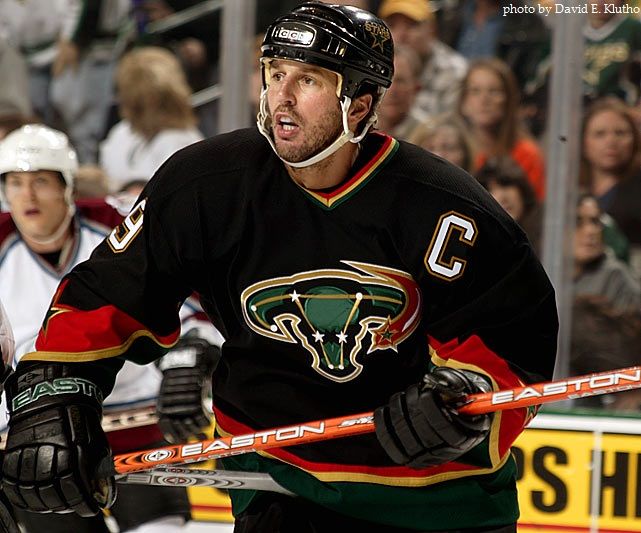
  • Mike Modano always looked good in North Star green, so when the Dallas Stars put him in this tragic alternate jersey, it certainly didn't seem right. Ironically, I picked up one of these Stars alternate jerseys the other day for a mere $90. While some may question my sanity for this, I'm trying to decide whether Modano should appear on the back or go with Brendan Morrow. Thoughts on this one, readers? Maybe Lehtinen?
  • Sports Illustrated posted a fabulous collection of photos today of all the current NHL goaltenders' masks. There are some absolutely fabulous designs on a few masks, and some really personal marks that make them entirely unique. Some of my favorites? Kari Lehtonen's Chuck Norris mask makes me laugh. I love the old masks displayed on Joey MacDonald's mask. The right side of Jonathan Bernier's mask brings back memories of Kelly Hrudey and Erik Ersberg. Pekka Rinne's predator-in-a-goalie-mask design is pretty neat. Jason LaBarbera shows off his love for pro wrestling. Ty Conklin brings back the Blues Brothers. James Reimer is all about Hockey Night In Canada.
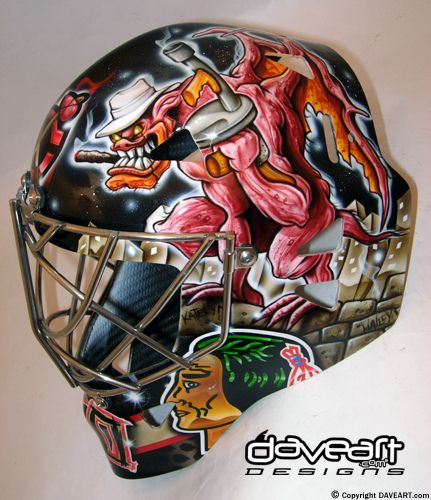
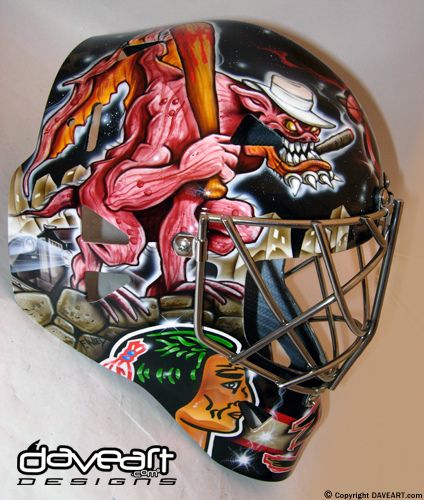
  • The one mask that SI forgot to include is the alternate mask worn by Marty Turco when the Blackhawks wear their alternate jerseys. Being that the jerseys resemble that of what the Hawks wore in the 1930s when gangsters played a large role in Chicago, Turco's "Gangsta Gargoyle" mask is highly appropriate in terms of it being paired with the alternate uniform.
  • OPPORTUNITY: Since school is eating up a ton of my time that I normally spend blogging, if anyone is interested in submitting articles for HBIC like you did in September, please contact me via email. This is a blog "of the people, by the people, for the people", so if you have something hockey-related you want to get off your chest, send me an email today! Or in the near future! Or whenever you like!
That's a quick Thursday update as I clear a bunch of stuff off my desktop and email. I encourage anyone who wants to guest post to contact me. You'll get full credit as the writer of the article, and I definitely enjoy reading other people's ideas and opinions. The best part is that you contribute only as much as you like and only as often as you like. I'm still writing, but I occasionally need some time to deal with homework. That's where you come in.

Give it a thought, HBIC readers, and contact me if you're interested. I was very impressed with the last round of HBIC guest posts, and I think this feature will continue as we move forward with this blog.

Until next time, keep your sticks on the ice!

Sunday, November 28, 2010

Teebz's Book Club has primarily been keeping readers up-to-date on a lot of the newer books being published. However, there is a lot that one can learn from older books that may now be out of circulation, and I encourage you to seek out some of these books at bookstores. I was lucky enough to discover one such book at a little bookstore in a small town as I passed through this summer during a road trip, and Teebz's Book Club is proud to bring you Hockey Is A Battle, written by Punch Imlach and Scott Young, and published by Pocket Books, a division of Simon & Schuster Limited. The paperback version I have of this book is even older than the image to the left, and it's still in great condition! And much like Imlach's stories in the book, this book is a timeless classic.

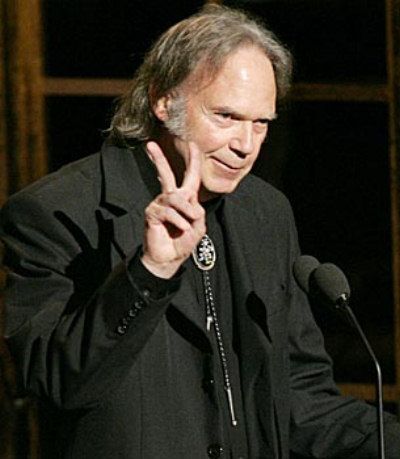
While Punch Imlach is a fairly well-known name in hockey circles, Scott Young may not be. Young was a Canadian sportswriter and journalist who wound up writing more than 45 books for readers throughout his career. Young was born in Cypress River, Manitoba on April 14, 1918, and was hired as a copyboy for the Winnipeg Free Press in 1936 before becoming a sports reporter. In 1940, he married Edna "Rassy" Ragland, the two had two sons: Bob Young, born in 1942, and Neil Young, in November of 1945. Young moved to Toronto shortly before World War II had started, and worked for a number of publications as a short-story writer and reporter, including the Globe & Mail on a number of occasions.

In 1988, Young received hockey's highest honour for a writer as he received the Elmer Ferguson Memorial Award from the Hockey Hall of Fame as selected by the Professional Hockey Writers' Association, and was also inducted into the Manitoba Hockey Hall of Fame. Young passed away on June 12, 2005 at the age of 87.

Hockey Is A Battle is somewhat unique as it is written in Imlach's own words in a stream-of-consciousness style. Reading the book feels like listening to your grandfather or father tell stories of "old-time hockey" and the way it used to be in hockey. However, make no mistake in that Imlach's personality and insight into these stories are not conveyed. If anything, Young brings the stories to life by keeping Imlach's personality intact throughout each chapter of the book.

The chapter I found most interesting was Chapter 12 where the Maple Leafs and Punch Imlach prepared for the 1967 NHL Expansion. In this chapter, Imlach discusses how the Expansion Draft would affect each of the Original Six teams, and how difficult it was to keep the Maple Leafs together after winning the 1967 Stanley Cup. This entire chapter was extremely interesting to read in terms of the historical aspects of the game, and Imlach's insight as the General Manager and Coach of the Toronto Maple Leafs provides amazing information for the reader.

There are many fascinating stories in the book besides what is found in Chapter 12, though. From the proposed Frank Mahovolich trade to Chicago that fell through in 1962 to Andy Bathgate's falling out with Imlach to how George Imlach got the nickname "Punch", it is all chronicled in Hockey Is A Battle. He talks of coaching Jean Béliveau with the Quebec Aces, how his minor-league career got him into Maple Leaf Gardens, and where he decided coaching was his lot in life. Again, Young's conversational style of writing makes it seem that Imlach is speaking directly to you, giving you some great insight on Imlach's thinking.

There's no doubt that I would have never been able to read some of these stories had I not been able to find Hockey Is A Battle. While the book itself might be hard to find in a local bookstore, I highly recommend purchasing a used copy from Amazon if you have the means. Hockey Is A Battle is an excellent book to read, and really shows off Young's writing talents. Because of Imlach's great stories and Young's abilities, Hockey Is A Battle certainly deserves the Teebz's Book Club Seal of Approval!

Until next time, keep your sticks on the ice!

Wednesday, September 8, 2010

Having finally arrived in Houston, Texas on Monday night, I've spent the last few days just trying to stay cool. The heat combined with the high humidity makes the environment like a sauna as Sage C. said in the comments a couple of days ago. What strikes me as interesting is that Houston, for the size of the city it is, could very well be an NHL city. However, the similarities to Winnipeg, a former NHL city, are not that far off in terms of its hockey history. Both cities had WHA teams that were bitter rivals, both cities had IHL teams that were bitter rivals, and both teams have AHL teams that are bitter rivals. What makes this story great is that Houston still has a very strong hockey following despite their teams being shuffled through several professional leagues, and this passion of Houston's fans have made Houston a very attractive city for professional leagues.

We'll start with hockey's start in Houston way back in 1972. The WHA had awarded a franchise to Dayton, Ohio, and the Dayton Arrows were to begin play in 1972. However, owner Paul Deneau was less than thrilled with Dayton's lack of enthusiasm for a pro team combined with its lack of a suitable professional arena, so Deneau didn't waste any time in moving the franchise to Houston, Texas.

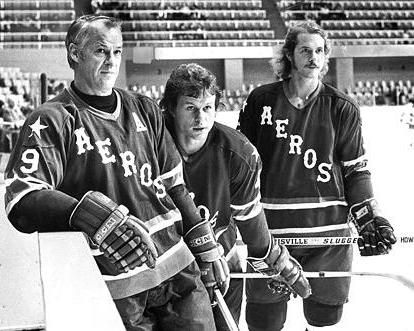
In retrospect, this might have been the best relocation in the history of hockey in terms of success for both the team and the owner. The newly-moved Houston Aeros would be a cornerstone for the WHA in terms of its success in the early going, and the team would be one of the most successful teams in the rogue league.

In 1972, the puck dropped for the Aeros as they were part of the six-team Western Division of the WHA's inaugural season. They would battle their way to second-place in the division on the strength of a 39-35-4 record. Gord Labossiere led the team in goals and scoring with 36 goals and 60 assists. Don McLeod and Wayne Rutledge nearly split the games, but Rutledge had the better record with a 20-14-2 mark and a 3.05 GAA compared to McLeod's 19-20-1 record and 3.56 GAA.

In the playoffs in 1972-73, the Aeros squared off against the Los Angeles Sharks. It took six games, but the Aeros advanced to the semi-finals against the Winnipeg Jets who had finished first in the Western Division. Winnipeg decimated the Aeros in the series, sweeping them out of the playoffs on their way to the WHA Final. While the first season for the Aeros didn't result in a parade, there would be big news made in coming seasons.

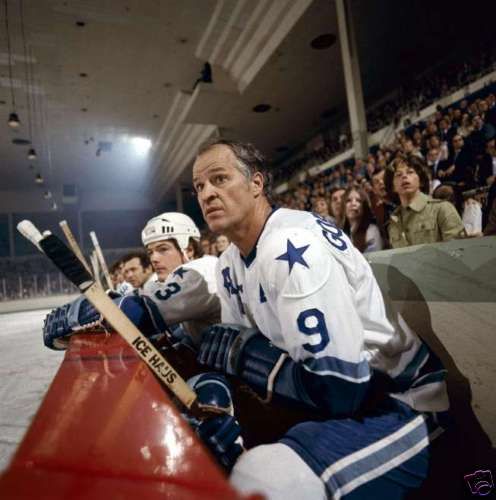
In the off-season of 1973, the Aeros decided to make a major player signing. They discussed the possibility of 45 year-old Gordie Howe, who had retired in 1971, of playing with his sons, Mark and Marty, in Houston. The elder Howe liked this idea, and he signed on to play with the Aeros for the 1973-74 season. It marked the first time that a father-sons combination had played together on the same ice in professional hockey.

The results were encouraging for the Aeros. Gordie Howe scored 31 goals and added 69 assists for a 100-point season, and the Aeros finished first in the Western Division and as the top team in the WHA with a 48-25-5 record. They matched up against the Winnipeg Jets in the first round, and handily swept the Jets aside in four games. They met up with the Minnesota Fighting Saints in the semi-final, and they were victorious in six games to advance to the WHA Avco Cup Championship.

There, they ran into an upstart Chicago Cougars club that had finished fourth-place in the Eastern Conference, and the Aeros proved they were the real deal. They hammered the Cougars in four games, outscoring them 22-9 in the series, and captured their first Avco Cup! Houston had its first professional hockey championship a mere two years after getting a pro hockey franchise!

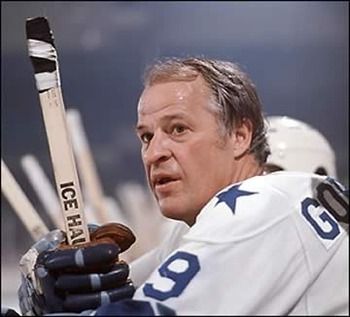
Gordie Howe was named the winner of the Gary L. Davidson Trophy as the WHA MVP in 1973-74, and he would prove that the Aeros' success in that season was no fluke. His son, Mark Howe, was named the Lou Kaplan Trophy winner as the WHA's rookie of the year. Goaltender Don McLeod was named the winner of the Ben Hatskin Trophy as the WHA's best goaltender. 1973-74 was a great year for the Houston Aeros franchise!

1974-75 saw the Aeros roll over the WHA, posting the league's best record at 53-25-0 as they ended up first in the Western Conference again. Gordie Howe nearly duplicated his previous season as he scored 34 goals and added 65 helpers. But it was in the playoffs where the Aeros march to dominance really continued.

The top-ranked Aeros eliminated the eighth-ranked Cleveland Crusaders in five games. After dismantling the Crusaders, they trounced the San Diego Mariners in a four-game sweep in the semi-finals to give them a berth in the Avco Cup Championship to defend their title. However, there wasn't much defending as they tore through the Quebec Nordiques in a four-game sweep. The Aeros had captured their second consecutive WHA Championship, becoming the first WHA team to do so!

While there were less accolades for the players of the Aeros this season, Ron Grahame, seen here with the Bruins, did win the Ben Hatskin Trophy for leading the WHA in wins, shutouts and goals against average, as well as being named the WHA Playoff MVP after losing only one game on the way to another championship celebration. As a side note, Ron Grahame is the father of former NHL goaltender John Grahame!

The 1975-76 season was more of the same dominance as the Aeros plowed through the WHA's new 80-game schedule with a 53-27-0 record. The finished first in the Western Division, and tied with Winnipeg for the most points. However, Houston finished with one more regular-season win that Winnipeg, and were once again considered the top seed in the WHA. Gordie Howe was the model of consistency again, recording 32 goals and adding 70 assists in 78 games that season.

The WHA Playoffs saw the Aeros dispatch the San Diego Mariners in six games in the quarterfinals before eliminating the upstart New England Whalers in seven games. Whether the extra games took their toll or Houston simply wasn't as strong, the Winnipeg Jets ran over the Aeros in the Avco Cup Final in a four-game sweep. Disappointing to be sure, but the Aeros still had a lot in the tank.

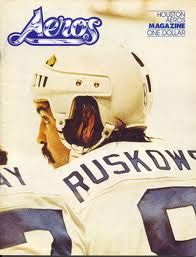
The 1976-77 season saw the Aeros dominate the WHA once more, posting a final record of 50-24-6. They were the top team in the Western Conference, and owned the best record in the WHA that season. Howe had a serious drop-off in production this season as he only appeared in 62 games, scoring 24 goals and 44 assists - the lowest totals in his WHA career. Terry Ruskowski led the team in scoring with 24 goals and 60 assists.

Houston rolled over the Edmonton Oilers in the WHA Quarter-Finals, beating them four games to one. In the semi-final, Winnipeg and Houston clashed once again, the two WHA rivals renewing their rivalry. Winnipeg won Game One on the road by a 4-3 score in overtime. From there, the home team won each game. Unfortunately, that means that Houston won Games Two and Five before their season came to an end at the hands of the Jets once more, this by a four-games-to-two margin. While there was disappointment over the Aeros' finish once more, there were much larger problems on the horizon.

Merger discussions were initiated in 1977 between the NHL and the WHA about moving the most successful teams into the NHL. The NHL, however, informed the WHA that they were not interested in expansion in 1977, and the conversation was laid to rest. The six most successful WHA teams - Winnipeg, Edmonton, Quebec, Cincinnati, New England, and Houston - decided to push the fact by applying to the NHL as a franchise, but the chatter died down with the approaching 1977-78 season after the NHL voted down the offer.

In Houston, the Howes were asked to defer some of their salaries as the team found itself in a financial crisis. The Howes balked at the offer, and the three men walked away from the Aeros. As free agents, they garnered offers from NHL and WHA teams, but it came down to two offers: the NHL's Boston Bruins and the WHA's New England Whalers. The Howes opted to stay in the WHA with New England thanks largely to the guarantees made by the Whalers franchise. As a result, Houston's biggest stars were now playing for the rival New England Whalers.

Without their stars, the Aeros struggled more than they had in the previous four seasons. They finished third overall in the one-division league with a 42-34-4 record. Andre Lacroix emerged from the shadows of the Howes, and posted 36 goals and 77 assists. He finished ahead of teammate Morris Lukowich by an incredible 38 points!

In the playoffs, they met up with the Quebec Nordiques, but it seems that the Aeros couldn't shake the playoff monkey off their backs. Despite finishing ahead of the fourth-place Nordiques, the Aeros fell in six games to Quebec. It maked the earliest exit from the playoffs for any WHA Aeros team, and April 23, 1978 marked the last game they played in Houston. The Aeros defeated the Nordiques 5-2 that night before getting shellacked 11-2 in Quebec City on April 25 to close out the series.

In the off-season, the NHL was willing to listen to the WHA about a merger, but they would only accept four teams rather than the six teams that the WHA wanted to promote. One of the conditions of the merger was that the WHA wanted all three Canadian-based teams included in the merger, meaning that there was one spot remaining in the merger for New England, Cincinnati, and Houston. The NHL was very interested in the Hartford-New England franchise, meaning that the future looked bleek for both Cincinnati and Houston.

However, Aeros owner Kenneth Schnitzer wanted an NHL franchise and proposed that his team be accepted as an expansion franchise outside of the merger. If that was not an option for the NHL, Schnitzer proposed that he be allowed to purchase a current franchise and relocate it to Houston. The NHL declined both of these offers made by Schnitzer, and the Houston Aeros franchise ceased to exist beyond July 9, 1978.

Phew! That's quite the history right there in those seven seasons! Houston's hockey legacy would be cemented with Gordie Howe stories and Avco Cup Championships, but we're not done there. 1994 saw professional hockey return to Houston as the IHL moved into town! However, we'll embark on that leg of the flight tomorrow as we look at the modern Aeros and the history they are currently writing.

Until then, keep your sticks on the ice!

Tuesday, September 7, 2010

After taking Labor Day off, I think it would be a good time to get caught up on some of the emails that are filling up my inbox. There have been a number of interesting emails sent in the last couple of days, and I'm glad to bring these stories and images to light with hockey season less than one month away. Of course, there are always other things I could write about today, but I need to bring these stories to light. The hockey history of Houston - nice alliteration there! - will come tomorrow, and it is a great look at the old WHA days, the former IHL days, and the current AHL days. Lots of great photos and some interesting stories on-tap for tomorrow, so hit this site up again. Today, however, we have a variety of pictures and stories. Let's go!
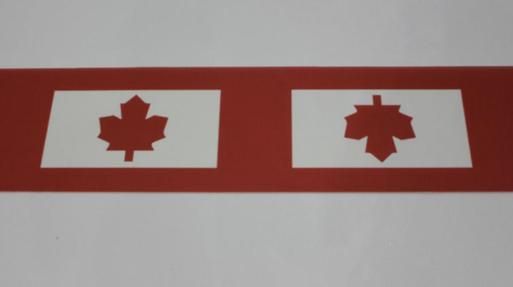
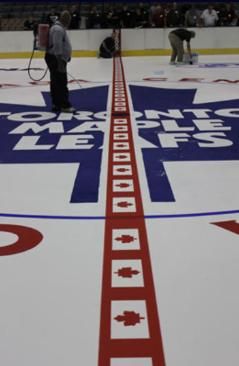
  • One reader, Bill W., sent me images of the new centre line being painted on at the Air Canada Centre in Toronto. As seen earlier this summer, HBIC examined the ads on the boards around the ACC, so it seems appropriate to show off the new paint on the ice. The Maple Leafs are adding maple leaves! The centre line splits the logo down the middle, so there will be maple leaves all over the ice this season. It remains to be seen if the team can duplicate the efforts of the paint on the ice (ZING!). More photos found here!
  • Terry Melia sent on an article he wrote on the Upper Deck Blog. Terry wrote a piece on the 2010 NHLPA Rookie Showcase that some of the industry insiders attended, and there are some great photos on the Upper Deck Blog. However, one picture really caught my attention: what's with the TV numbers on Mats Zuccarello Aasen's jersey? You can see it in the picture I posted last week as well. I guess the numbers have to be up much higher to accommodate the sleeve stripes, but it looks horrible.
  • The KHL kick off their 2010-11 season tonight with defending champion Ak Bars Kazan traveling to Moscow to play Dynamo Moscow at the Megasport Arena. Updates will come shortly from the first week, but there appears to be a large celebration taking place in conjunction with the first game of the season. Updates shortly!
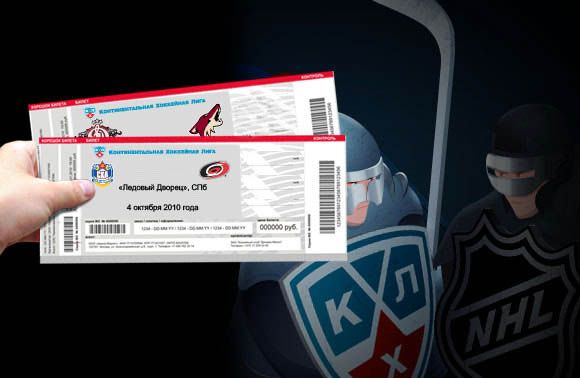
  • The KHL has launched a new website to promote their upcoming exhibition games with the NHL's Carolina Hurricanes and Phoenix Coyotes. SKA St. Petersburg will play host to the Carolina Hurricanes on October 4, while Dinamo Riga will battle the Coyotes on October 6. Visit the new site here, and check out the History links for each club.
  • Speaking of SKA St. Petersburg, they unveiled their newest players for the coming season. Denis Grebeshkov and Evgeni Nabokov were introduced by KHL President Alexander Medvedev, and both players took questions from the gathered media. It appears that Grebeshkov will wear #73 this season while Nabokov will wear #20. As he states in the interview, Nabokov's father wore #20 while playing in Russia as well! At the bottom of the article, note that Maxim Afinogenov's status as to being a player with SKA St. Petersburg is also confirmed!
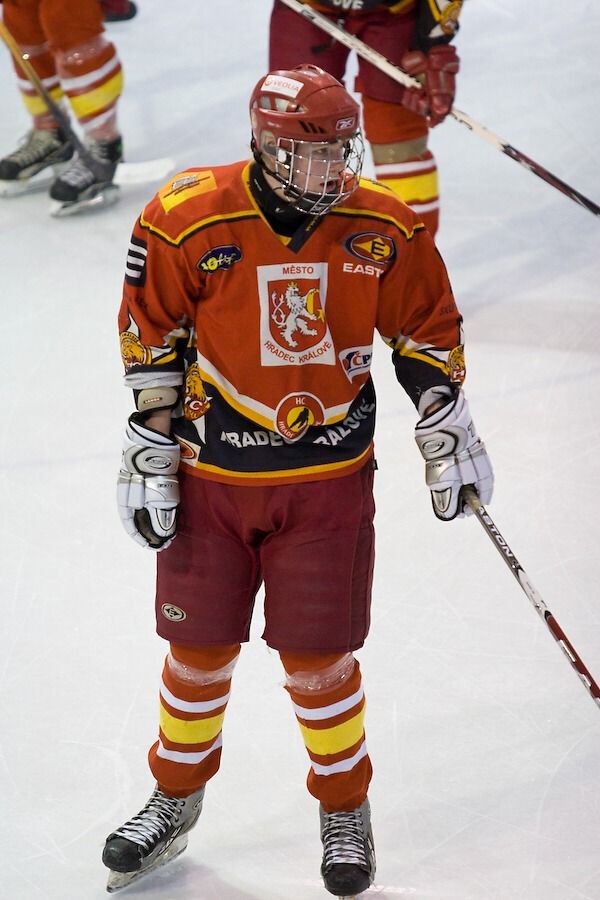
  • There were also a couple of notes about teams that would potentially play in the KHL this season. First, Czech-based Hradec Králové hockey club Lev was denied entry into the KHL by the Czech Ice Hockey Federation. The members of the Czech Federation voted unanimously to prevent the hockey club from leaving the Czech League, thus HC Lev will remain as a team in the Czech League.
  • Secondly, Budivelnik of Kyiv, the second team that was to join the KHL for the 2010-11 season, announced that they will not be joining the KHL due to their inability to construct a suitable arena for KHL play. The loss of a major team in the Ukraine is a blow to both Ukrainian hockey and to the KHL's pan-European dream. Thus, no expansion for the KHL for this season.
There are your updates for a Tuesday in September. Tomorrow, I'll add some thoughts on Houston's hockey scenario, and I'll have the first of our guest writers up this weekend for some reader-based articles!

Until then, keep your sticks on the ice!

Saturday, September 4, 2010

Unknowingly as I dressed this morning for another day of travels on the open road through the United States of America, I happened to don the t-shirt sporting the logo of the defunct Colorado Rockies. My travels took me to Kansas City today where I am writing this article. How do those two things relate? Well, a gentleman approached me in my restaurant of choice, and informed me that the team I was wearing once played in Kansas City. While I let him regale me with the tales of how the Scouts moved to Denver to become Rockies before moving to East Rutherford, New Jersey to become the Devils, I realized that there have been various levels of pro hockey through Kansas City. And some teams actually did much better than the NHL team that once called this city home.

We'll start with the NHL era in Kansas City.

Kansas City was awarded a franchise in the last wave of NHL expansion to try to curb the WHA's growth. Along with Kansas City, a franchise was awarded to Washington, DC to begin play in 1974. June 8, 1972 was the day that the NHL came knocking on Kansas City's door, and Kemper Arena was built to house both the Scouts and the NBA's Kansas City Kings. The Scouts would eventually play in the Smythe Division as the NHL expanded to four divisions in 1974 when both Washington and Kansas City began play.

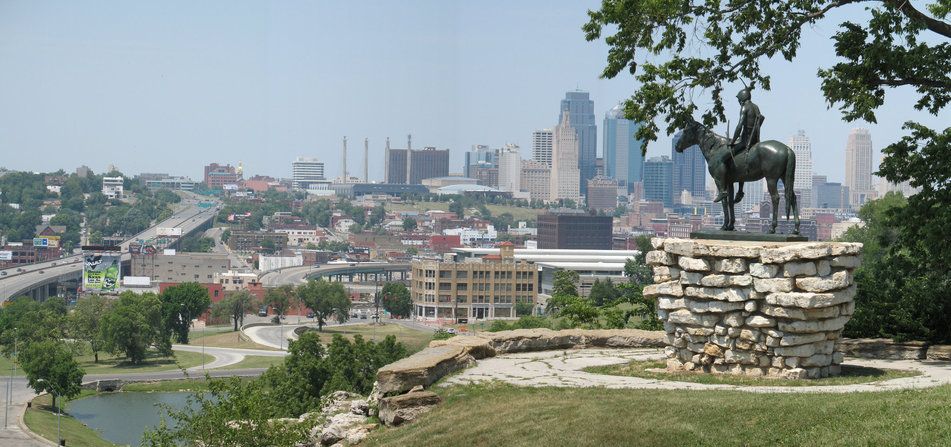
The team was originally going to be called the Mohawks - "Mo" from the Missouri postal abbreviation, and "Hawks" from Kansas' affinity to JayHawks. The Chicago Blackhawks put a stop to that name, stating that there was too much similarity between their name and the new Kansas City team name. Instead, the team chose "Scouts" in honour of the scout statue that overlooks the city. The logo reflected the statue as well, and it was nice to see hockey trying to honour the Native American peoples from this area once again.

This is where the good news ended for the Scouts franchise. The 1974-75 season ended in disappointment as there was little talent to draw from considering there were 32 NHL and WHA teams. The Scouts finished the season with a 15-54-11 record, good for fifth-place in the Smythe Division, but out of the playoffs. Wilf Paiement was a rookie for the Scouts in 1974-75, and he'd go on to have a solid NHL career. Captain Simon Nolet was named to the Campbell Conference All-Star Team, and head coach Bep Guidolin was called upon to coach the Wales Conference All-Star Team.

For as bad as their first season was, the Scouts were worse in their second season of existence. After starting the season respectably, the Scouts found themselves one point out of a playoff spot at Christmas. And then the wheels came off. And there was a fiery crash and burn. And nothing remained that was salvageable.

The Scouts went winless in sixteen games from December 30, 1975 until February 4, 1976 before defeating the Washington Capitals on Feburary 7. They then pulled off the nearly-impossible by going winless in their next twenty-seven games. All in all, the Scouts managed to go 1-35-8 in their final forty-four games to post a pitiful record of 12-56-12. Just one of the Scouts players and staff - Wilf Paiement - was called upon for the NHL All-Star Game, an indication of just how bad it was in 1975-76.

While both the Capitals and Scouts were pitiful excuses for professional hockey teams in their early goings, the Scouts also had problems drawing fans to their new 17,000-seat arena. They were averaging only about 8200 fans per game, and rising salaries were making the Scouts' bottom line look less and less appeaing. The 37 owners of the team decided to go on a massive season ticket campaign, but it only drew 2000 people to purchase season ducats. All said, they decided to sell the team to save their financial interests.

In two seasons in the NHL, the Scouts posted a record of 27-110-23 in 160 NHL games - hardly what NHL dreams are made of. They finished dead last in the Smythe Division both years, and twice had the second overall pick in the NHL Entry Draft. Wilf Paiement was their choice in 1974, and Barry Dean was the only other draft choice made by the Kansas City Scouts.

While the citizens and hockey fans of Kansas City would have to wait a few years for another hockey franchise to arrive, the IHL granted a franchise to the city in 1990, and it turned out to be a fairly successful run for Kansas City.

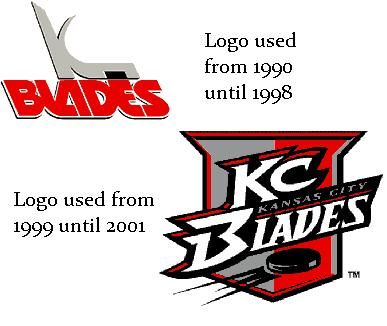
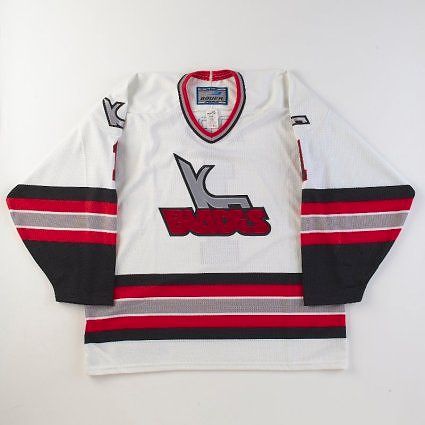
The suspended franchise of the Toledo Blades was purchased and moved to Kansas City by Russ and Diane Ross. While a "Name the Team" contest was held and ultimately chose the new team name as "Jazz", the Rosses rejected the name since there was already a "Jazz" team in Utah. The second most-popular choice was the Blades, and the Rosses stuck with that name. Thus, the Kansas City Blades were born!

In 1991, the Blades struck a deal with the San Jose Sharks to be their primary minor-league affiliate, and the Sharks would regularly stock the Blades with their up-and-coming players. This influx of talent into the Blades' lineup proved successful as the Blades went on to capture the 1991-92 Turner Cup under the tutelage of former NHL head coach Kevin Constantine. While the Blades would fall short in coming seasons, the 1991-92 team is still the only hockey franchise to bring back a championship on the ice to Kansas City.

Through pressure from the NHL to have its franchises align themselves with AHL teams as their primary affilates, the Blades and Sharks parted ways. During this same time, the Rosses decided to sell the team to the DeVos family. The DeVos clan also owned stakes in the Grand Rapids Griffins and the Orlando Solar Bears in the IHL, and a few owners felt that the DeVos family might be bordering on "conflict of interest". In 2001, the DeVos famly was involved with four of the eleven IHL teams!

The DeVos family didn't market themselves very well amongst the Blades' longtime fans. Changes were constant, and none seemed to bring back fans to Kemper Arena. After several seasons of losing money, the DeVos family looked at relocating the team to Oklahoma City which only further killed their popularity in Kansas City.

The move to Oklahoma City was blocked after the owners of the CHL's Oklahoma City Blazers refused to abandon their stake in Oklahoma City, and the IHL and the DeVos family could not reach an agreement with the Blazers. Once the news of relocation hit the news, the DeVos family was mercilessly booed at every appearance in Kansas City.

The Blades signed a deal with the Vancouver Canucks for two years at the start of the 2000-01 season to be their primary affiliate. Unfortunately for both teams, the IHL decided to fold due to rising costs, and the affiliation was cut short by one year. The Blades, like the Scouts, found themselves in limbo.

The teams from the IHL were considered in terms of joining the AHL, but AHL regulations stipulate that one owner can have a stake in only one team. The DeVos family, having interests in four teams, decided to promote their most successful team in the Grand Rapids Griffins, cutting loose the three other teams they were controlling: the Orlando Solar Bears, the Cleveland Lumberjacks, and the Kansas City Blades. Again, the people of Kansas City were screwed by the DeVos family.

While there was a Kansas City Outlaws team that played in the UHL, their history is about as long as the Scouts' history was. They didn't last long, and didn't come close to any sort of success. On April 15, 2005, the team suspended operations and folded. In one season in the UHL, the Outlaws posted a record of 28-45-7.

So there is a little history on Kansas City's modern hockey ventures. I'm not about to speculate on whether the city can support an NHL franchise, but they do have a shiny, new arena that is looking for a full-time tenant, and they were in talks with the Penguins about moving there when Pittsburgh was battling for a new arena.

What I do know is that it seems the people of Kansas City have been sold short a few times. If the Blades are any indication, hockey can work in Kansas City. Perhaps an AHL team would be a better fit?

Until next time, keep your sticks on the ice!

Thursday, August 26, 2010

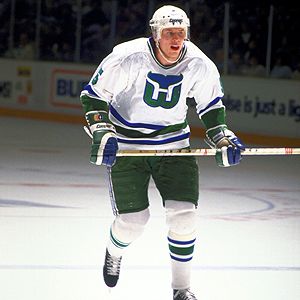
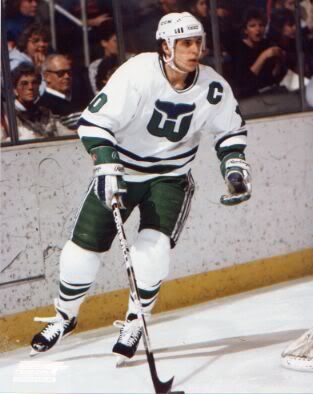
We head back to the mailbag, or email inbox, for Thursday's question, and it's quite a doozy if I do say so myself. Personally, I like the tough questions, and I really want to be sure that I get this one right. It means a great deal to me, and I'm sure it means a great deal to the email writer and the people of Hartford, Connecticut. They may have the AHL's Hartford Wolf Pack playing there now, but it sounds as if the "Whalers" may make a triumphant return to the city they called home through the NHL and WHA eras.

I've cleaned up the email a little bit in terms of grammar, but Sal S. of East Hartford, Connecticut writes,
"I’d like to get your take on if you think the NHL could and should return to Hartford. Obviously, this is not going to be an overnight adventure. We are trying to build support again here in this city (not that us fans ever lost it).

"I think Baldwin is the right guy to try his hand at this. He did it before here, and we believe he can do it again. There is a lot of renewed energy here again with Howard in the picture.

"But with Bettman still as commish, I just don’t know. We here in Hartford also support the return of the Winnipeg Jets and the Quebec Nordiques. That the Whalers merchandise is the 11th best selling merchandise in the NHL should say something about this once proud franchise. P.S... we still HATE Karmanos!!!!"
First off, a great email to hit me with as I am still a huge fan of the Hartford Whalers franchise. The Whale can do no wrong in my eyes, and I used to love the old Boston-Hartford/Montreal-Hartford battles in the Stanley Cup Playoffs before Peter Karmanos decided to pack up his gear and head south to Raleigh, North Carolina.

Here's what I know thus far.

First, according to Howlings - a reliable Hartford Wolf Pack blog from all I've read - the movement to bring the Whalers back to Hartford is already on, albeit in a different form. Mitch Beck wrote on July 24, 2010,
"[T]he last hurdle has been cleared for Howard Baldwin and his Whalers Sports & Entertainment to take over operation of the Hartford Wolf Pack. Larry Gottesdiener and his Northland Investment Corporation’s essentially removed itself from the equation in the operation of the XL Center. They turned over their interests to AEG. Well, it is only a matter of time now, as early as next week, that it should become official. When that happens, the Hartford Wolf Pack will be no more and the new team will be the Connecticut Whalers. The relationship with the Rangers will remain in place."
So while the Connecticut Whalers are on the verge of being born as an AHL franchise, the question of whether or not the city of Hartford can support the NHL returning is a murky one.

There are a few things to remember here: the NHL currently owns the logo of the former Hartford Whalers, and is marketing it extremely well. Sal S. correctly points out that Whalers merchandise is eleventh-best when it comes to merchandise sales, so the new Connecticut Whalers will undoubtedly be forced to come up with another logo.

Secondly, if there is an opportunity for an NHL team to move back into Hartford, there are some questions that have been raised about the arena, the XL Center. For hockey games, the seating plan allows for 15,635 people, and this would be the smallest arena in the NHL by a longshot. The smallest, and oldest, arena right now is Nassau Veterans Memorial Coliseum on Long Island, and it seats 16,297. If the Islanders are suggesting that they need a bigger place to play, Hartford might also have to examine their arena options.

There was a push by Hartford mayor Eddie Perez to secure the funding to replace the aging XL Center with a new arena. There are good points and bad points to this plan, but the truth is that this decision comes down to the people of Hartford. Do they want to push for a new arena in the hopes of getting an NHL team one day?

My thoughts come down to this: the citizens of Hartford need to come out and show the world that they are passionate about hockey, in particular the new Connecticut Whalers/Hartford Wolf Pack. In 2009, the Pack averaged 4190 fans per game, putting them eighteenth in league attendance. In 2010, they actually had less fans out to games as they averaged 4188 fans per game. Comparatively, one city that continues to pop up on the NHL map is Winnipeg, and the Manitoba Moose have finished second in league attendance for two straight seasons.

The NHL notices these numbers, and normally responds in kind. The fans of the Whalers need to start going to games if and when the franchise changes its name from Wolf Pack to Whalers. While I get that the people of Hartford never felt as though the Pack were a part of their community, shunning the AHL team only looks bad on the city if Whaler fans are truly passionate about getting an NHL team back.

Can Hartford become an NHL city once again? I believe they can. The greater Hartford area has a population of 1,188,841 people, but those people need to start supporting their local team. The NHL will notice, but it takes a concerted effort from the community for the NHL to actually consider placing a team there if one is available.

Hartfordians, the opportunity to be back in the professional hockey ranks is certainly within your reach. But you have to make the effort by showing that you're willing to support your pro team.

You know what you have to do to bring back the Whale. Now do it!

Until next time, keep your sticks on the ice!

Thursday, August 12, 2010

This is not going to be an article about women in the military, although I would like to point out that HBIC is a big supporter of equality. That being said, the very first draft was held on Thursday evening at the Hockey Hall of Fame for the newly-founded Canadian Women's Hockey League. While only three of the five teams took part in the draft, it was seen as a success for the fledgling league as they look to break new ground in women's professional hockey.

The idea behind the draft was to create better parity in the league. Normally, teams fill out their rosters with the best layers they can find, and player movement within the league is minimal at best. In order to shake the teams up and create some parity for the newer expansion teams in Toronto and Boston, the CWHL decided to employ a draft to move players around. The only catch was that each team could protect five players from the draft.

"In other professional leagues, people get place on different teams and people get traded and we in women's hockey have never really experienced that," goaltender Sami Jo Small explained to The Canadian Press. "It's been your choice as to where you want to go.

"Now you go where you are drafted and you have to make it work there and you really have to work hard to make it work."

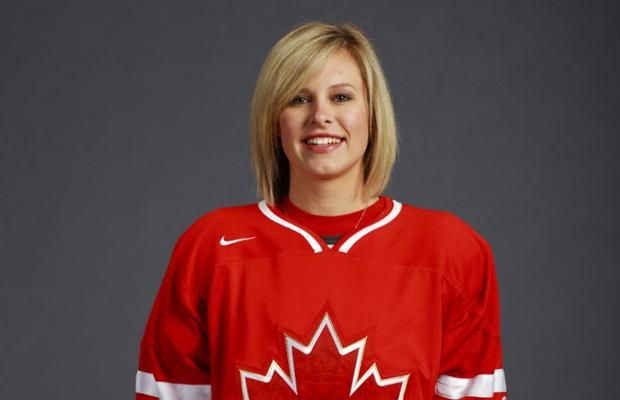
With that knowledge, the woman pictured above, Tessa Bonhomme, was selected by Toronto as the very first CWHL draft pick. The former Ohio State Buckeye captain will suit up on the blueline for the as-yet-unnamed Toronto squad alongside current and former Canadian National Team members such as Sami Jo Small and Jennifer Botterill. Both of those players were on Toronto's five-player protected list.

Bonhomme is a self-described "offensive defenceman", and that should prove to be valuable in the new league when trying to attract fans to games. The 24 year-old's hockey skill has provided her opportunities with Team Canada, so you know she has the skill to back-up the lofty draft position.

The second overall pick went to Burlington, and they chose forward Ashley Riggs. Riggs was a member of the Niagara University Purple Eagles, and was a dynamic scorer for the school. Riggs holds the single-season school records at Niagara for points (51), goals (29), shorthanded goals (6), plus-minus (+29), and hat tricks (4). She's third all-time in scoring for Niagara, so Burlington is getting a very accomplished scorer in Ashley Riggs. Burlington protected four-time Olympic defenceman Becky Kellar to strengthen their squad.

The third overall pick went to Toronto again, and they opted to choose Brittney Smith. I have no information on Miss Smith, but I'm going to go ahead and assume she's a fantastic hockey player. That seems safe.

There is absolutely no news on the results of the draft results anywhere on the Internet, so I can't tell you who Brampton chose with their first selection. I can tell you that Brampton protected Olympians Cherie Piper, Jayna Hefford and Gillian Apps on their roster, so they'll start with an excellent foundation of experienced players.

Montreal and Boston did not participate in the draft due to costs of having players travel and potentially move to a new city to play hockey. The league felt that they were not in a position to tell the women where to play based on the fact that players in the CWHL are not paid a salary to play. Travel costs and ice-time during the season are covered by the league and teams, but the players receive no pay to play. To compensate Montreal and Boston, those two teams are able to recruit and sign players from their respective regions.

"We're not paying enough money to make a woman move from [Toronto] to Boston," CWHL executive director Brenda Andress said from Toronto. "It's not feasible or logical at this point."

Essentially, it's like the NHL circa-1920 for the CWHL where players from various regions are recruited and play for their local teams. To ensure that the players from the Greater Toronto Area are spread out evenly, the draft was devised to create parity amongst the southern Ontario teams.

The CWHL is smaller by one team this year. Last season, the league featured the Mississauga Chiefs, Brampton Canadette-Thunder, Burlington Barracudas, Vaughn Flames, Montreal Stars and Ottawa Senators. While Montreal, Burlington, and Brampton were retained as teams for the 2010-11 season, there were a few losses.

Ottawa was having problems drawing enough elite players to compete with Montreal and the Toronto-based teams in the CWHL, so they withdrew from the league. The league made an executive decision to shut down the Vaughn team in order to prevent a "watering-down" of talent amongst the GTA teams.

In their places are a team based in Toronto and the first non-Canadian team in Boston. The Boston team has already committed to practicing at Ristuccia Arena in Wilmington, and to play their home games in the greater Boston area.

Boston has already announced that American Olympians Kacey Bellamy (UNH), Caitlin Cahow (Harvard), Angela Ruggiero (Harvard), Erika Lawler, Karen Thatcher (Providence College) and Molly Engstrom will be a part of their team. Tryouts have been extended to defenceman Cherie Hendrickson, former UNH standouts Micaela Long and Sam Faber, and former Boston University goalie Melissa Haber. Hendrickson suited up for Brampton last season, so her experience will be counted on for this expansion season.

Canadian Olympians Caroline Ouellette, Kim St. Pierre and Sarah Vaillancourt have announced that they will play for Montreal next season.

For more information on which players were protected by each team, please click this link that will take you to the CWHL website.

Pretty cool idea in the CWHL, and I'm happy to see that the league is starting to gain ground. The "fantasy draft" is a very novel idea in the world of hockey, and it may prove to be the best way for this league to survive. Well done, ladies, and good luck in the upcoming season!

Until next time, keep your sticks on the ice!

Thursday, July 29, 2010

The last time we saw a large contingent of Russian-born hockey players in the same Canadian city at once was during the 2010 Winter Olympics. The city of Vancouver played host to the Olympics, and Russia sent a very good squad over to Canada to compete for a gold medal. While they fell short in their quest to capture Olympic gold, there was nearly another Russian invasion into the city of Vancouver back in 1970 that would have seen some serious changes in the National Hockey League. Surprisingly enough, the national Russian hockey team were almost Canucks.

I know it seems hard to believe that the entire Russian hockey team would suddenly emigrate to Canada, especially in the 1970s when the Cold War was at is height, but the expansion of the NHL left a few general managers and owners somewhat worried in terms of the talent level of the players they needed to ice an NHL team.

According to Sports Illustrated's Scorecard on December 15, 1969, Punch Imlach had a radical and somewhat controversial idea in how to make the newly-founded Vancouver Canucks immediately competitive.
"Expansion franchises in the National Hockey League have been awarded to Vancouver and Buffalo, but the question of where to find players of adequate stature to put on major league ice has yet to be solved.

"George (Punch) Imlach, former manager and coach of the Toronto Maple Leafs, whose move to Vancouver is anticipated, had an idea, though. In his Toronto Telegram column Punch disclosed that he had offered the Russian national hockey team $300,000 to 'rent' its 20 best players to Vancouver from Sept. 15, 1970 to May 15, 1971. The players would split $200,000; the Soviet sports federation would get $100,000.

"Imlach met in a Montreal hotel room with Andrei Staravoitov, chief of the Ministry of Physical Culture's hockey committee and, through an interpreter, put his dollars on the table.

"'It was suggested,' he explained in his Punchy way, 'that the Russians would be as a whole much better than the garbage that would be available to Vancouver in the draft. Also the Russians would be a great drawing card.'

"The Russians have, of course, dominated international hockey in recent years and have expressed an inclination to meet a few NHL teams in exhibitions if the Soviet eligibility for 'amateur' and international competition would not be endangered, a question that must be considered in the Vancouver situation, also.

"Another question arises. The Vancouver team was to call itself the 'Canucks.' Will it now be the Vancouver Russkies?"
That is some phenomenal reporting, and a simply astounding revelation in Vancouver Canucks' history. From all I've read about Imlach, I knew he was wired a bit differently, but this? This is absolutely insane! He wanted to rent a national team to play as an NHL team!

It's hard to imagine that players such as Vladislav Tretiak, Valery Kharlamov, Alexander Maltsev, and Valery Vasiliev could have been Vancouver Canucks, but that's exactly what Imlach wanted to do - bring the Soviet national team to Vancouver, and let them compete as the Canucks in the NHL. Innovative, interesting, and downright insane are the only terms I can come up with to describe Imlach's idea.

Gems like this that are buried in hockey's history are exactly why I love this game! Of course, Vancouver would be a landing pad for Soviets in the late 1980s as Igor Larionov and Vladimir Krutov joined the Canucks in 1989 after years of living under Viktor Tikhonov's regime in the Soviet Union. They, along with two others, would be the first Soviet players to legally move from the Soviet ice hockey program to the NHL.

This is one of the coolest stories I've heard in a long time, and it's one of a number of excellent tidbits of historical info in the Sports Illustrated vault. I recommend spending some time sifting through it! You might find something like this that just seems unbelievable!

Until next time, keep your sticks on the ice!

Saturday, July 24, 2010

My weekends are something similar to the image to left. I spend my day in the sun, I'm surrounded by a lot of sand and clay, and I normally have a sunburn to show for it. The last few weekends of softball have been hot and dry, and that's awesome for playing. It's not so good, however, when you're out all day in the sun. Thankfully, my SPF 75 sunscreen worked wonders today. I'll be back out there tomorrow, but things should be ok as long as I lather myself in more sunscreen. Needless to say, I could use a break from both the softball and the sun. Here are your HBIC Comics for July 24.

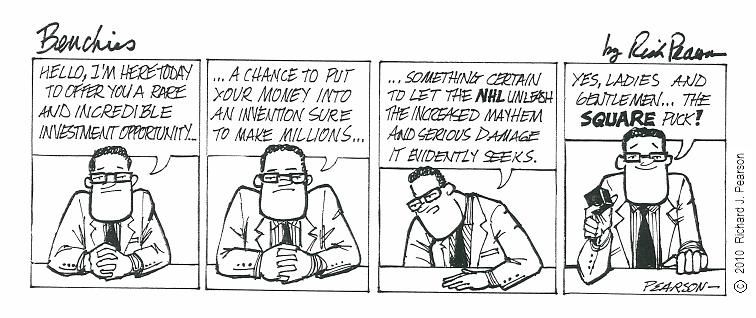
Benchies is a comic strip produced by Rick Pearson. Mick and Mike find themselves in all sorts of humorous situations, and hockey is just one of those situations where crazy things happen to the guys! You can find more of Mr. Pearson's Benchies every weekend on Uni Watch Blog where Mick and Mike get up to all sorts of hijinks!

Here is your Benchies for July 24, and it appears that Benchies is looking to join the NHL Competition Committee:

Small Market Sports is a comic strip produced by Bill Charbonneau where his cast of characters are always up to something. There's Carter (the baseball), Doug (the football), Dave (the sports radio), Nash (the basketball, and Wayne (the hockey puck). Named after the Great One, Wayne Gretzky, Wayne the puck is "a hot-tempered and slightly egotistical 'super-star' (in his own mind, anyway). As the ambassador to his sport, he is quick to defend the unrelenting jabs about the excessive violence that permeates his hockey. Even if he has to drop his gloves and knock some teeth in to do it." Mr. Charbonneau produces a new comic every Monday, Wednesday, and Friday about these characters, and you can find them on Small Market Sports!

Here is a Small Market Sports comic strip for July 24 where Wayne is worried about a lock-out, but Carter may give Gary Bettman new expansion ideas!

Bizarro is a fun comic strip produced by Dan Piraro. Dan takes the mundane, everyday occurrences and puts a new twist on them by looking at them from a different angle. Honestly, his work makes me laugh all the time because of its twisted humor, but that's why it's a such a great comic strip. Dan's Bizarro can be found on his blog, BizarroBlog, where he posts daily.

Today's Bizarro isn't a comic, but a great blog post by Mr. Piraro. It was written almost two years ago to the day, yet we're still talking about problems in Iraq. The more things change, the more they stay the same, I suppose.

One last bit of fun, a reader requesting anonymity decided to snag the image that I used a while back of a horse with a bit of a problem, and came up with the Manitoba Moose's response to the Jets arriving back in town this season. Pretty funny!

A big thank you goes out to Rick Pearson, Bill Charbonneau, and Dan Piraro for allowing me to put together a hockey-related comics page each and every Saturday. If you know someone who would like their work published, please have him or her contact me here. Whether you're an amateur or a professional artist, I'd be happy to feature your work on my site!

Until next time, keep your sticks on the ice!

Sunday, July 18, 2010

HBIC reader James H. forwarded along a very interesting email to me that I have yet to hear about on other hockey sites. Granted, I may have missed it (very likely) due to how busy I've been over the last three weeks, but I'm surprised that there hasn't been more coverage of this potential story. It seems that in the near future, Chicago will have its third professional hockey team in its third professional league playing in the city or the suburbs. Thanks to James' keen eyes on the Interwebs, there will eventually be a new ECHL expansion team in the Chicagoland area thanks to the efforts of the C&S Family Sports group.

The ECHL plays primarily along the east coast, and it was how the league was originally formed and named: the East Coast Hockey League. However, the league has pushed westward in efforts to expand its presence as the premier AA professional hockey league in North America, and now has teams in Anchorage, Alaska, Las Vegas, Nevada, Ontario, California, and Salt Lake City, Utah. Franchises are becoming more stable as the league picks up steam in terms of being affordable, family-friendly hockey. While it's not the NHL in terms of the caliber of play, the hockey is exciting and the games are filled with all sorts of fun.

In moving to bigger markets, it appears that the ECHL is looking to make a mark in the Windy City area as C&S Family Sports appears to be interested in starting up an ECHL expansion team. The AHL Chicago Wolves play to great crowds, and the NHL Chicago Blackhawks fill the United Center nightly. With hockey in Chicago back in a big way, it makes sense to try to capitalize on the popularity.

And what better way to get fans interested than to hold a "Name The Team" contest?

While I've been meaning to run this for a while, there are still a few days to get a name into the contest. Lots of cool prizes are available to the winner, so put your thinking cap on. If you can't come up with a solid hockey team name, that's ok too. You can still vote for some of the other suggested names!

Chicago's ECHL team is nearly here, and a debut of team colors and logo will be made at a later date! Keep watching HBIC for more details as they are released!

Until next time, keep your sticks on the ice!

Thursday, July 8, 2010

It's Thursday, and there aren't a lot of major hockey stories that are dominating the headlines today. There's some basketball player who was holding a press conference to announce he signed a contract to play somewhere, but who really cares about basketball? There are more important things going on in the world of sports than some player making a mockery of his sport and league, so let's get off that island. We've got player news, uniform news, and a Russian who is all about the money, but has yet to show up when it really matters. We'll kick it off with that story. Let's go!
  • The Los Angeles Kings' saga of being in and out of the Ilya Kovalchuk sweepstakes sees the team out of the running again after they rejected agent Jay Grossman's counter-offer to the contract proposed by the Kings. Here's a quick tip for both Grossman and Kovalchuk: win something, and then ask for more money. Kovalchuk has yet to advance past the first round of the Stanley Cup Playoffs, yet he's asking for Gretzky/Lemieux money. Personally, I wouldn't pay it.
  • The Vancouver Canucks make a couple of appearances today, but we'll start with the retirement talk. A third banner will be raised to the rafters at the newly-named Rogers Arena this year as the Canucks have announced that Markus Naslund's #19 will be retired. Naslund captained the Canucks from 2000-2008, and is the franchise's leading scorer. Naslund was a major player in community initiatives, so this will be special for the city of Vancouver and Naslund himself. He joins former captains Stan Smyl and Trevor Linden as the only men to have their number retired by the Canucks, and the ceremony will go down on December 11, 2010.
  • The arena that the Canucks call home got itself a new name after General Motors decided to not renew their naming rights for this upcoming season. GM Place, affectionately known as "the Garage", will now be called Rogers Arena as the telecom giant puts its name on another sports facility. Rogers has the rights to the name on the Vancouver arena for the next ten years. GM, in their defence, will remain as a major sponsor inside the building as they push the Chevrolet brand.
  • The Canucks also showed off their 40th Anniversary throwback jerseys, complete with patch! Lots to like on this jersey: monsterous logo, 1970s-style captaincy letters, the "V" on the sleeve stripes, no names on the back of the jersey, and great hockey stripes. The hates? That damned Reebok logo, the curved hems at the bottom of the jersey, and tapered collar into the NHL shield logo. Look, I get the sponsorship angle in terms of having Reebok design these uniforms, but a throwback should "throw back" to the actual uniform. Overall, though, a very good design, and one I can endorse.
  • In the continuing TSN series that looks at the four Canadian municipalities that are on the NHL's radar for possible expansion or relocation, Winnipeg is tops of the three cities seen right now. Winnipeg's overall mark of "B" ranked them ahead of Hamilton, who scored a "D+", and Toronto, who scored a "D-". Quebec City goes tomorrow, but with no NHL-suitable arena at their disposal, it appears Winnipeg may be the best Canadian choice for the NHL by the standards set out in this study.
  • The Nashville Predators have their new captain after having dealt Jason Arnott to the New Jersey Devils. Defenceman Shea Weber has been annointed the new captain, and becomes the fifth captain in team history and the first captain that had been drafted by the Predators. Kudos to Weber as he is one of the best young defencemen in the NHL!
  • Montreal Canadiens defenceman PK Subban added some hardware to his mantle today as he was awarded the AHL's President's Award in recognition of his outstanding accomplishments for this past season. I've seen this kid play, and he is an outstanding skater with a knack for being in the right place at the right time. He was a first team AHL All-Star this year as well as being part of the AHL All-Rookie team, and he showed amazing talent all season long. A very deserving award for a highly-skilled player!
  • The rest of the AHL's award winners can be found on this page. Congratulations go out to Howard Dolgan of the Syracuse Crunch, Tom Mitchell of the Binghamton Senators, linesman David Butova, and the Chicago Wolves for their award wins!
  • The Hershey Bears went back to the future in bringing back defenceman Lawrence Nycholat for the 2010-11 AHL season. Nycholat spent last season with the Manitoba Moose where he suited up for 37 games due to injury. Nycholat won the 2006 Calder Cup with the Bears, and put up career highs with 13 goals and 57 points. As long as he remains healthy, this signing can make the already-dangerous Hershey Bears a whole lot scarier.
  • Lastly, the requests for comic strips has gone out, and we have a number of responses. On Saturday, I'll post the first-ever HBIC Funnies Page that will feature at least three hockey-related comic strips as well as blurbs about the strips and links to where you can read more. If you know of anyone else who wants their comic strips featured - professional artists or amateur doodlers are welcome - please put them in contact with me!
I'm doing a pile of coaching tomorrow, but I'll have some pretty cool stuff coming up this weekend. Make sure you hit this site up on both days as I plan to make both pretty memorable.

Until next time, keep your sticks on the ice!

Tuesday, June 8, 2010

Meet Tamara Urushadze. Miss Urushadze is not a correspondent for HBIC in any way, but she is a reporter from the former Russian country of Georgia. She also has nothing to do with hockey, but this is one tough reporter. You see, she was shot while filing a live news report in 2008. That's right: shot while on camera live. While the bullet grazed her arm, opening a wound, she continued to report on the tensions between Russia and Georgia. For as much as we talk about hockey players being tough, that's one reporter who redefines professionalism and toughness. Wow.

I am happy to report that the 34 year-old is doing well today after her close encounter with a bullet, and is still reporting for the Georgia's nationally-funded television station. That's the background on why I chose Miss Urushadze for the image up top. So let's segue from a tough Georgian reporter to the KHL where things are tough for some teams.

The KHL has voted to include three new teams for the 2010-11 season. Joining the KHL will be HC Yugra from Khanty-Mansiysk, Russia; HC Budivelnyk located in Kiev, Ukraine; and HC Lev based in Hradec Kralove, Czech Republic. The addition of the three teams brings some stability back to the KHL after it was revealed that Lada Togliatti would be excluded from the KHL next season, and Moscow Dynamo would cease operations.

HC Yugra plays along the Irtysh River in Arena Ugra in Khanty-Mansiysk. The city is approximately 750 kilometers northwest of Kazan in central Russia, and 1900 kilometers from Moscow. The city is situated in western Siberia, and has temperature fluctuations much like that of the Canadian prairies. HC Yugra looks fairly good in their uniforms, and should be a good addition to the KHL's Kharlamov Division.

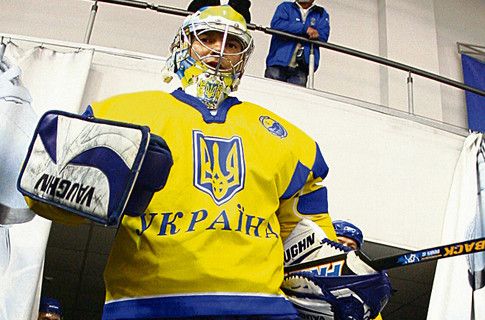
HC Budivelnyk is based in Kiev, Ukraine, and is the vision of the Dnipropetrovsk-based PrivatBank who founded the Budivelnyk basketball club. HC Budivelnyk may not have many recognizable stars on the ice, but former NHL forward Dmitri Khristich will be behind the bench as an assistant coach for this upcoming season. HC Budivelnyk looks a little like Team Sweden in yellow-and-blue, but they do have an impressive logo. Honestly, how cool is that logo? I'm hoping you said, "Very". HC Budivelnyk will replaced Moscow Dynamo in the Tarasov Division in the upcoming season.

HC Lev is based in Hradec Kralove in the northwest Czech Republic. The city was founded in 1225, making it one of the oldest settlements in the Czech region. HC Lev was founded in 1926, and has undergone several name changes over its history. The club has made it past the first portion of the expansion process, and it is assumed that they will play in the KHL next season. They have some pretty unique uniforms, so there might be some changes needed before they begin play in the fall in terms of the advertising.

There were awards handed out in the KHL as well. Much like the NHL Awards, the KHL Awards highlight the outstanding players and teams from the past season. Your winners in the 2009-10 KHL season were as follows:
  • Vsevold Bobrov Trophy - Salavat Yulayev Ufa. This trophy is awarded to the best team in the KHL regular season, similar to the President's Trophy in the NHL.
  • Top scorer - Sergei Mozyakin of Atlant Mytishchi. Mozyakin wins this honour for the second season in a row. Mozyakin recorded 27 goals and 39 assists for 66 points.
  • Top goal-scorer - Marcel Hossa of Dinamo Riga. The former NHLer recorded 35 goals this season as the KHL's top sniper.
  • "Most Useful Player" - Patrick Thoresen of Salavat Yulayev Ufa. His +45 rating was tops in the KHL, making him the "most useful player". No, I didn't name that honour.
  • Cherepanov Memorial Award - Anatoly Nikontsev of Avtomobilist Uralets. The rookie forward was the best freshman this season, winning the award named after the late Russian sniper.
  • Top goaltender - Petri Vehanen of Ak Bars Kazan. Vehanen's trophy case gets a little more crowded after he helped Kazan win the Gagarin Cup this season.
  • Regular season MVP - Alexander Radulov of Salavat Yulayev Ufa. Radulov was awarded the prestigious "Golden Hockey Stick" for being named as the MVP.
  • Playoff MVP - Ilya Nikulin of Ak Bars Kazan. Nikulin seemed to be on every scoresheet in the playoffs, and helped Kazan to their second consecutive Gagarin Cup.
The KHL held their second amateur draft to help stock the KHL teams with some new talent. Russian forward Dmitry Yashkin was selected by HC Sibir as the first overall pick. The youngster played last season with Slavia in the Czech Republic, but will be coming back to Russia to continue his professional career.

The KHL Draft went seven rounds, resulting in 188 players from 13 countries being selected. Those countries included Russia, Belarus, Latvia, Kazakhstan, Ukraine, Czech Republic, Slovakia, Sweden, Finland, Switzerland, Canada (Tyler Toffoli, #169, Tractor Chelyabinsk) and the USA (Jerry D’Amigo, #155, Lokomotiv; Jack Campbell, #170, Dinamo Minsk; Jarred Tinordi, #184, Metallurg Magnitogorsk).

And then there's that $3 million investment in over-the-hill goaltending.

Spartak Moscow decided to "upgrade" its goaltending by bringing in 45 year-old Dominik Hasek for one-year at $3 million. Hasek will certainly be a draw for the fans, but it remains to be seen if he can play a full season without blowing out a groin in one of the premier leagues on the planet.

As the list of aging, past-their-prime former NHLers grows in the KHL, the league gains some serious credibility in terms of being a twilight-of-your-career league. It's kind of like when you see the fifty year-olds at the local rink in the men's elite division: they probably had the legs a decade ago, but now they just look old when playing against men half their ages.

I wish Hasek nothing but the best, and I hope that he and Spartak have a great season in 2010-11, but something tells me that Spartak will see only a marginal improvement over this past season.

Oh, and that money stuff? Apparently, SKA St. Petersburg offered up $42 million over three years to free agent Ilya Kovalchuk, but the Russian sniper wants to explore his NHL possibilities first. Honestly, $14 million tax-free per season is a lot of money to turn down. I respect Kovalchuk for wanting to stay in the NHL, but it's hard to imagine any NHL team offering anything close to that kind of dough.

And St. Petersburg wasn't done there. They have also offered a contract to free agent Alexander Frolov. Frolov's asking price is apparently higher than what Los Angeles Kings' GM Dean Lombardi is willing to spend on the forward, and this may prompt Frolov to look elsewhere for employment next season.

If St. Petersburg is throwing around double-digit dollar figures in the millions for players, one of either Kovalchuk or Frolov will end up there next season. That kind of money can set a player and his family up for life.

So there's your KHL update from the past month. New teams, awards, lots of money on contracts, and some player movement makes for an entertaining off-season, and the KHL is bringing all of that to the table. More updates will follow as they happen, and I want to thank
Tamara Urushadze for showing everyone what true courage is.

Until next time, keep your sticks on the ice!

Monday, May 31, 2010

A lot of stuff has been said about these the two teams still standing in the NHL Stanley Cup Playoffs, but there is something I have yet to hear anyone say. That is, however, until we were chatting at work today. I wasn't aware of this, but the last time that current Blackhawks defenceman Brian Campbell played against the Philadelphia Flyers in the Stanley Cup Playoffs, this was his lasting impression.
Wow. That hit is still one of the best to date. Shoulder on shoulder, and Campbell didn't give an inch. Now, there's no doubt that Campbell probably won't be throwing any major hits like that on the Flyers, but I wasn't aware that happened the last time he faced the Flyers in the playoffs.

There's a bunch of "did you know..." stuff that I want to go over today. Some of this stuff is older pictures, but there are some pretty good stories amongst these images. Without further adieu, here we go.
  • I wasn't aware of this - probably because of my dislike for the Hamilton Bulldogs - but the Bulldogs wore a 10th anniversary patch a few years ago. They didn't wear a 10th anniversary jersey like some teams. No, they went classy instead. The best part? The Bulldogs even kept the team theme by using two crossed bones to make the Roman numeral "X". High marks for commemorating the anniversary as a patch, and for keeping the patch in theme.
  • Everyone knows that Peter Stastny was one of the better players in the history of the Quebec Nordiques, but the rest of his family wasn't bad either. Pictured here from left to right are Peter, Marian, and Anton Stastny of the Quebec Nordiques. Honestly, that uniform is absolutely gorgeous.
  • It may just be coincidence, but the two remaining teams in the NHL Stanley Cup Playoffs have players wearing Skate Fenders. That's right - both the Flyers and Blackhawks have players wearing the foot protection. Niklas Hjalmarsson is wearing Skate Fenders, and, after breaking his foot earlier in the playoffs, Jeff Carter is now wearing Skate Fenders as well. Mr. McClelland is still working with the NHL to make them available to all teams, but you're literally watching a company grow by leaps and bounds here, readers. And all because of one man's passion for the game.
  • There has always been chatter regarding the NHL expanding into Europe. This has been an idea floated around for as long as I can remember, but it never had any legs from as far as I can tell. With the KHL in charge of the best Russian teams, it's probably going nowhere today. However, the December 19, 1969 edition of The Hockey News states that former NHL president Clarence Campbell wanted this European Division to happen as the NHL expanded. Could you imagine what the NHL would be like today if this had happened? History would have been drastically changed.
  • Sticking with THN, the September 1, 1968 edition showed off the brand-new Montreal Forum that was scheduled to open that season on November 2. Ok, not "brand-new" per se, but a Forum that received extensive renovations over the summer. Some of the "more notable additions" included "several escalators", "2,000 extra seats", "[a] new and modern press box", and "larger concession areas". The 1968 seating capacity would be 16,300 - the highest number of seats in the Montreal Forum up to that date.
  • If the December 1969 edition was about possible expansion fever, it was an all-out epidemic in 1972. THN's February 11, 1972 edition stated that the NHL would expand from 14 teams to 24 teams by 1980. This was, in part, due to the WHA's rapid growth, but also due to recent mergers of minor leagues. Of course, the NHL added franchises on Long Island and in Atlanta the following year, but the NHL wouldn't hit 24 teams until 1992-93 when both Ottawa and Tampa Bay joined the league. Dreams are meant to be dreamed, right?
  • The August 1967 edition of THN showed off the California Golden Seals' new jersey and logo. I was always a fan of the Seals' look, but I never recalled the sleeve numbers being up on the shoulder. However, looking back at Bert Marshall's sweater, it's pretty clear that the sleeve numbers were, in fact, shoulder numbers. They did eventually move down the arm to the correct area as the team changed names and locations.
  • Sometimes, the worst jerseys were meant with the best intentions. Case in point? The Detroit Tigers had Nicklas Lidstrom throw out the first pitch, and gave him a Tigers jersey with the captain's "C" on the right shoulder, much in the same place that the Red Wings have their captaincy designations. It just looks awful on a baseball jersey, though. Fail.
Ok, I'm off to watch Game Two. I have my Blackhawks jersey on, so I'm rocking as "Amonte" tonight. I'm thinking this Stanley Cup Final might actually have a fight in it with Daniel Carcillo being put back into the lineup. One can only hope, right?

Until next time, keep your sticks on the ice!