Showing posts with label book club. Show all posts

Tuesday, January 25, 2011

Hockey has had a number of interesting players that have done some amazing things in their careers. From Wayne Gretzky's amazing scoring records to Martin Brodeur's records between the pipes, there have always been players that have been a notch above everyone else in terms of their talents. There have been a few players who have walked a path that no one else has during their times in the NHL, and that's the focus of Hockey Trailblazers, a new book written by Nicole Mortillaro and published by Scholastic. Hockey Trailblazers looks at five players who changed the way the game is played for many people across the world because of their heritages or gender, eventually making it to the NHL through their hard work and determination. These five people are definitely trailblazers in terms of who they are.

Nicole Mortillaro is an accomplished author, having published a number of books such as Something to Prove: The Story of Hockey Tough Guy Bobby Clarke and Jarome Iginla: How the NHL's First Black Captain Gives Back. When she's not writing books about hockey, weather, and the planet Saturn, you can find Miss Mortillaro working as the Associate Editor at Scholastic Canada. Miss Mortillaro works and lives in Toronto with her daughter, Sara.

Hockey Trailblazers looks at the paths carved by five players: Willie O'Ree, George Armstrong, Manon Rhéaume, Bobby Clarke, and Larry Kwong. Each one of these players has a significant story about their path to the NHL, and each player left a lasting legacy that many children have followed when it comes to their dreams of playing in the NHL. Miss Mortillaro does an excellent job at pointing out how each of these players were important not only for their contributions, but also for their ability to break down barriers that some people would have considered impossible to overcome.

If you follow hockey, or at least been keeping up with some of the events over the last few years, you should have a good idea of who Willie O'Ree is. O'Ree is best known for being the first black man to play professionally in the NHL. O'Ree broke into the league as a call-up for an injured player on the Boston Bruins on January 18, 1958 against the Montreal Canadiens. O'Ree's NHL career didn't last very long - just 45 games with the Bruins over two seasons, the last being 1961 - but he would be the only black man to suit up for an NHL team until Mike Marson played for the Washington Capitals in 1974. Miss Mortillaro does an excellent job in telling O'Ree's story, and has some very good quotes from the NHL legend in her first profile.

The next player she covers is George Armstrong. Armstrong played 21 seasons for the Toronto Maple Leafs, and was captain for eleven of those seasons. While this quite an achievement in itself, what made Armstrong's legacy even more impressive is that he paved the way for Native Canadian and Native American kids to look at professional hockey as a potential job! Armstrong was of Irish and Algonquin heritage, and his background led to his nickname of "Chief". Armstrong's captaincy remains the longest tenure of any captain in the Maple Leafs' history. Miss Mortillaro's work in this chapter is outstanding as she really highlights the importance of Armstrong's legacy in leading other Aboriginal players into following their dreams.

Miss Mortillaro profiles another trailblazer in the third section as she looks at someone who more recently made headlines. Manon Rhéaume's introduction to the NHL seemed more like a circus than an opportunity, but Rhéaume's breakthrough into an NHL preseason game has opened doors for other great female players to test their talents out in professional men's hockey. Miss Mortillaro includes all of the barriers that Manon Rhéaume knocked down: becoming the first girl to play in Quebec's International Pee Wee Hockey Tournament, becoming the first female in the QMJHL in joining the Trois-Rivière Draveurs, and becoming the first woman to play in an NHL game with the Tampa Bay Lightning. Miss Mortillaro's look at Rhéaume's career shows that she certainly opened doors for other women to play in professional hockey.

The fourth person profiled by Miss Mortillaro in Hockey Trailblazers doesn't seem like he should be included. Bobby Clarke's legacy in the NHL is quite well-known as he was the captain of the Broad Street Bullies, but his background is not that special. Where Clarke's legacy is seen is with his medical condition as Clarke is a Type-1, insulin-dependent diabetic. Diabetes can be a very difficult condition to balance with the demands and rigors of an NHL career, but Clarke showed many diabetics that they are only limited by their own abilities in controlling the disease. Clarke's ability on the ice opened many doors for players who may suffer from any disease, and he proved that he doesn't have to be held back by anything. Miss Mortillaro illustrates this point well in the chapter on Bobby Clarke.

The last player may have the shortest appearance in the NHL, but Miss Mortillaro shows that Larry Kwong's legacy has not been forgotten. Kwong was born in Vernon, BC to Chinese immigrants in the early-1920s. Growing up in BC meant that the young Eng Kai Geong - Larry's given Chinese name - got to see a lot of hockey, and began playing the game as a result. On March 13, 1948, after having been signed by the New York Rangers in 1946, Larry Kwong got the call-up to the Rangers as they faced the Montreal Canadiens that night. Kwong only saw the ice briefly in the third period, but he became the first player of Chinese descent to play in the NHL! Kwong played many more seasons across the globe, but this short moment in time with the Rangers was all he saw in the NHL. Miss Mortillaro shows the hardships that Larry Kwong faced as he played the game of hockey, but refused to be discouraged by anyone's discrimination towards him.

I really like Hockey Trailblazers due to the fact that Miss Mortillaro shows that not everything in the NHL has to be about statistics. These five players showed determination in becoming NHL players despite being different than the majority of players around them, but not one of them ever gave up. In addition to these five players, Miss Mortillaro gives a number of other examples of players who faced uphill battles to achieve their dreams, and these individual stories in addition to the five players profiled should show that the only person that can hold someone back from one's dream is one's self.

This is an excellent lesson for children today, and I really think Miss Mortillaro has done a great service for the youth of today in Hockey Trailblazers. In youth hockey today, we see all sorts of kids of both genders from various backgrounds playing the game of hockey, and Hockey Trailblazers shows that it doesn't matter who you are or where you come from when you're pursuing a dream. Because of this message, Hockey Trailblazers certainly deserves the Teebz's Book Club Seal of Approval for showing that nothing should hold anyone back from following one's dreams. I highly recommend Miss Mortillaro's 61-page book for everyone as it is an excellent read!

Until next time, keep your sticks on the ice!

Sunday, January 2, 2011

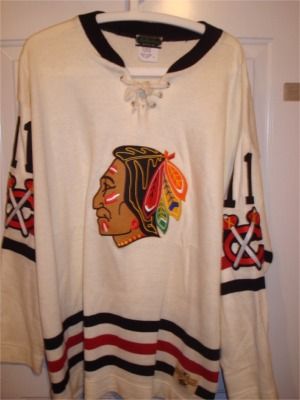
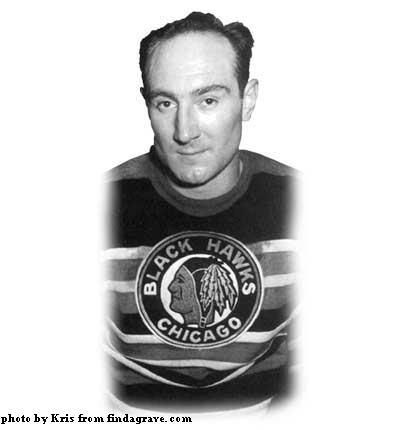
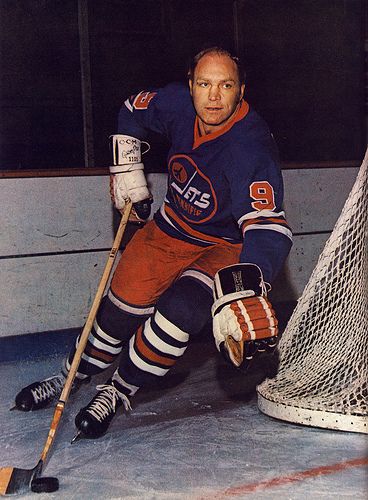
The man to the left? Hockey legend. Chicago icon. Hall-of-Fame left winger. All three terms, plus many more, could be used to describe Bobby Hull. While the man's public life was certainly larger-than-life, his private life seemingly was kept guarded as he let his play on the ice do most of the talking. Thankfully, a new book has begun to pull back the curtains on Mr. Robert Marvin Hull as his life is examined in photographs in The Golden Jet, written by Bobby Hull and Bob Verdi, and published by Triumph Books. There are literally hundreds of photographs in this book of the big winger throughout his playing career, and some are fascinating in terms of what they show. That much being said, the pictures of Bobby Hull show just how fascinating this man is, and why he became the hockey icon that he is.

The story starts on January 3, 1939 when Robert Marvin Hull is born in Point Anne, Ontario as the fifth of what would eventually be eleven Hull kids. His father, Robert Hull Senior, worked for the Canada Cement Company, and played hockey for the plant and in a senior men's hockey league. Just as Bobby Hull would turn out to be, Robert Hull was an imposing figure on the ice with his large frame.

Bobby quickly learned to skate with the help of his sisters, Laura and Barbara, and would often be out on the outdoor rink owned by the Canada Cement Company all day and into the night, stopping only for meals. Like most children from his generation, Bobby was assigned chores to do by his parents, and Bobby would have them done by six or seven o'clock in the morning so that he could spend all day on the rink. He carried water for his mother, shoveled snow around the neighbourhood, and chopped wood as part of his daily routine, as well as walking several miles to school every day. Bobby's muscular figure began to develop early thanks to these work-intensive activities.

Under his father's direction on the ice, Bobby learned the important skills that made him such a dominating hockey player: stickhandling, shooting, skating, and protecting the puck. As he developed and began scoring at amazing paces through various league, a Chicago Blackhawks' scout heard of Bobby's exploits. Bob Wilson made the trek to Point Anne, Ontario where he signed Bobby Hull, with his family's permission, as a 13 year-old as a player under the control of the Blackhawks.

From the jumping point, we break into the vast treasure trove of images inside the book. There are small captions and little bits of info about each picture, and the images are literally worth a thousand words. One of the earliest pictures in the book is of Bobby tangling with Jean Béliveau of the Montreal Canadiens in 1957. The caption includes some info about the game and who is in the picture before this is written - "Another wardrobe note:when I came up the numbers were above the tomahawk on the sleeve. Later, that was reversed". How cool is that? Bobby Hull was a Uni Watch member back in the late-1950s!

There were a number of shots in The Golden Jet that can be found on the Internet, but there were a significant amount that I had never seen before. The one thing that I did find interesting, though, is that for a book named "The Golden Jet", there are absolutely no pictures of him in the book as a Winnipeg Jet! For a man who brought instant credibility to the WHA and the Winnipeg Jets with his million-dollar signing, perhaps the name of this book is slightly misleading. In no part of The Golden Jet do we find pictures of the Golden Jet.

I found that slightly disappointing, especially when you consider all of the accolades he amassed as a member of the Winnipeg Jets and the WHA. However, after reading through the credits, one finds that this book is copyrighted by the Chicago Blackhawks Hockey Team. And there's the reason why this is a book about Hull's time with the Blackhawks, and no other teams are represented by Hull.

That being known, The Golden Jet is still well worth the money spent on it, and there are a ton of old photographs that will surely make you smile if you love hockey history. There are so many great images that just the pictures would be worth the selling price alone. To make things even better, the book comes with a DVD produced by Blackhawks TV featuring highlights, interviews, TV commercials, and behind-the-scenes clips from the Blackhawks' video library! So not only do you get the stills of Hull's greatest moments, but you also get some live-action shots of Hull's greatest achievements as well!

Overall, The Golden Jet is very enjoyable to read, and the DVD features bring the package together nicely. While I would have loved to see at least a few WHA moments whereby the Golden Jet got his name, this Chicago Blackhawks production is certainly well-worth the money, and definitely deserves the Teebz's Book Club Seal of Approval! Pick up The Golden Jet at your local bookstore today!

Happy birthday, Mr. Hull, as I'm sure you'll be celebrating tomorrow! May the good times keep on rolling for you!

Until next time, keep your sticks on the ice!

Saturday, December 11, 2010

Teebz's Book Club returns today with another exciting book in a series of what has turned out to be an excellent trilogy of reads. I had previously reviewed the first two books in the Game Time series, Off The Crossbar and Rebel Power Play, written by David Skuy, and we return with the third installment of this series in Making The Cut, published once again by Scholastic Canada. The Game Time series follows the story of Charlie Joyce, a teenaged boy who loves playing hockey. In Making The Cut, Charlie has been invited to the Youth Elite Hockey School (YEHS) as he continues his hockey dream, but, like in the other stories, Charlie finds himself in some trouble in this book.

From the Charlie Joyce website, "David Skuy is a lawyer, recreational hockey player, and author of the Charlie Joyce Hockey Series. A popular speaker and advocate for the reading and writing skills of school-age children, he has crafted a series of books designed to capture the imagery, the sounds, the conflicts, and the achievements that typify a young boy’s life, be it in the school yard or in the hockey rink".

The story in Making The Cut sees Charlie faced with a number of dilemmas: Charlie's mom can't really afford to send Charlie to the YEHS, Jake is still causing Charlie problems, Charlie runs into a new set of antagonists, and he still needs to get better at YEHS if his mother can afford to send him to the school.

Thankfully, Charlie's little sister, Danielle, decides that drama school isn't that important, and allows Charlie to use the money that their mother has saved for it to be used to send Charlie to YEHS. Charlie, as expected, is overly excited, and finds out that Scott and Nick, two good friends from school, are also going. Unfortunately, Pudge, his best friend, did not get a letter of invitation. Pudge, however, is happy for Charlie, Scott, and Nick... until they find out that Jake has also been invited.

Charlie gets to the school and finds that the coaching staff is an impressive group, including Mr. Miller who won a Stanley Cup with the Dallas Stars. While Jake is playing with a different group, Charlie reconnects with Scott and Nick, and meets up with a couple of new friends: Corey Sanderson, his fitness-obsessed roommate, Simon and Gabriel, wingers who are friends, and Ben Slogen, aka Slogger. It appears that camp will be a great time with his new friends until he meets up with Jake and his new friends: Zane, Richard, Nathan, and Pete. These kids are much like Jake - bullies. Charlie realizes he has his work cut out for him as these guys test Charlie's physical strength as much as his patience and restraint.

Strange things begin to happen at the camp. Charlie's alarm clock doesn't go off, and he nearly misses the bus on the first day of camp. Charlie's elbow pads go missing one morning, forcing him to wrap his elbows in old hockey socks. Another day, his equipment bag is found in an empty dressing room in a completely different rink. And the biggest mystery at the camp is Mr. Miller's missing Stanley Cup ring! Who could have taken it? Why is this stuff happening to Charlie? Who is behind the mysteries?

Making The Cut is another excellent book by David Skuy, and I personally think that it is the best of the three books he has published under the Game Time series. Charlie's constant battles with Jake and his friends are one of the major sub-plots, but the mystery involving Charlie's equipment and Mr. Miller's ring drive the story along as a nice side story. Making The Cut definitely deserves the Teebz's Book Club Seal of Approval, and I look forward to more books from Mr. Skuy featuring Charlie Joyce!

Until next time, keep your sticks on the ice!

Friday, December 10, 2010

It's that magical time of year! Christmas is right around the corner, and I know there are some hockey fans who have been nice this year. There probably have been some naughty ones too, but they may just need a present to see the error of their ways. In both cases, what do you get your hockey-intensive husband/wife/dad/mom/son/daughter/randomly selected family member? There are a lot of options out there for your spending dollars, but HBIC wants to highlight a few businesses that I've supported over the years with much happiness. And I'm happy to report that none of these businesses know I'm doing this. Except one. And we'll talk about his business first.

Rob Ullman, a great guy and superb artist, creates "illos", aka "illustrations". Most of these illustrations tend to be of women in various states of sports attire. The cool part of Rob's business is that he'll sketch up your wife or girlfriend in a sports scene if you send him a photo (and some cash!). Contact him here if you want to get a very personalized gift for your gal this year. If that doesn't work, click here to pick up something from the Atom Bomb Bikini store or buy some of his great artwork. I have two of Rob's books, and they are fantastic! You won't be disappointed in Rob's ability!


I can't say enough good things about Mr. Frank McClelland's product. The Skate Fenders literally save your feet from pucks and slashes that may otherwise leave bumps, bruises, and broken bones when they hit your feet. As you know, skate boots offer little in the way of protection, and I am happy to say that I love the Skate Fenders for what they do. If you have a loved one who is playing the game of hockey who doesn't have these, I recommend them over any other piece of equipment that may end up under the tree. Keeping your loved one on the ice is better than having him or her dealing with a serious foot injury! To order the Skate Fenders, please click here. I've order three pairs for Christmas this year to give to hockey players I know!


I won't lie - this gift idea is more for those who have a little extra cash on the side. It's probably not the best idea for growing children, but I want to say something about MLX Skates. While I have yet to use these, I do have a pair on the way, and I am very interested in their claims of how fast the boot molds to the foot. I love my CCM Tacks, but they took a while to break in. As you may be aware, this causes some serious discomfort for skaters, and normally results in players needing weeks to break their skates in at practices. MLX Skates are hoping to change that. And because it's Christmas, they've dropped their prices and are throwing in a free t-shirt and hat! Click here to take advantage of the new prices!

Book It!

As you're aware, Teebz's Book Club advocates reading at every level of life. Whether your hockey star is playing her very first game or your veteran superstar is playing his fortieth season on the ice, reading is still a required skill for everyone to succeed in life whether it be on the ice or elsewhere. Here are some of the books I've liked since starting this blog as well as places to order them:
Don't Get Fooled!

There are a lot of children and adults who ask for hockey jerseys for Christmas. I, for one, used to ask for jerseys when I was younger, but I found that some unscrupulous people sell knock-offs and fakes. You have to be careful, readers, so I am linking this excellent article from the Ottawa Citizen about how much the fake jerseys are costing legitimate businesses in North America. Now, there's no doubt that the prices advertised by some of these off-shore companies are attractive from a buying perspective. But I urge you to investigate and to buy from a local store. It helps the community, and it can drive these illegitimate shysters out of business. Jeff, author of the excellent Third String Goalie blog, has an excellent jersey-buying guide on his site on how to determine a real Rbk jersey from a fake one. Jeff also has a ton of merchandise available in the Third String Goalie store if you want to support him. Well done, Jeff!

There are a few suggestions if you're still looking for a last-minute hockey gift idea. I can't guarantee shipping times for any of the businesses being that it is the holiday season, but if you order today, there's a chance it could get to your house in time for the big day on December 25. Happy shopping, and may your Christmas be merry and happy!

Until next time, keep your sticks on the ice!

Sunday, November 28, 2010

Teebz's Book Club has primarily been keeping readers up-to-date on a lot of the newer books being published. However, there is a lot that one can learn from older books that may now be out of circulation, and I encourage you to seek out some of these books at bookstores. I was lucky enough to discover one such book at a little bookstore in a small town as I passed through this summer during a road trip, and Teebz's Book Club is proud to bring you Hockey Is A Battle, written by Punch Imlach and Scott Young, and published by Pocket Books, a division of Simon & Schuster Limited. The paperback version I have of this book is even older than the image to the left, and it's still in great condition! And much like Imlach's stories in the book, this book is a timeless classic.

While Punch Imlach is a fairly well-known name in hockey circles, Scott Young may not be. Young was a Canadian sportswriter and journalist who wound up writing more than 45 books for readers throughout his career. Young was born in Cypress River, Manitoba on April 14, 1918, and was hired as a copyboy for the Winnipeg Free Press in 1936 before becoming a sports reporter. In 1940, he married Edna "Rassy" Ragland, the two had two sons: Bob Young, born in 1942, and Neil Young, in November of 1945. Young moved to Toronto shortly before World War II had started, and worked for a number of publications as a short-story writer and reporter, including the Globe & Mail on a number of occasions.

In 1988, Young received hockey's highest honour for a writer as he received the Elmer Ferguson Memorial Award from the Hockey Hall of Fame as selected by the Professional Hockey Writers' Association, and was also inducted into the Manitoba Hockey Hall of Fame. Young passed away on June 12, 2005 at the age of 87.

Hockey Is A Battle is somewhat unique as it is written in Imlach's own words in a stream-of-consciousness style. Reading the book feels like listening to your grandfather or father tell stories of "old-time hockey" and the way it used to be in hockey. However, make no mistake in that Imlach's personality and insight into these stories are not conveyed. If anything, Young brings the stories to life by keeping Imlach's personality intact throughout each chapter of the book.

The chapter I found most interesting was Chapter 12 where the Maple Leafs and Punch Imlach prepared for the 1967 NHL Expansion. In this chapter, Imlach discusses how the Expansion Draft would affect each of the Original Six teams, and how difficult it was to keep the Maple Leafs together after winning the 1967 Stanley Cup. This entire chapter was extremely interesting to read in terms of the historical aspects of the game, and Imlach's insight as the General Manager and Coach of the Toronto Maple Leafs provides amazing information for the reader.

There are many fascinating stories in the book besides what is found in Chapter 12, though. From the proposed Frank Mahovolich trade to Chicago that fell through in 1962 to Andy Bathgate's falling out with Imlach to how George Imlach got the nickname "Punch", it is all chronicled in Hockey Is A Battle. He talks of coaching Jean Béliveau with the Quebec Aces, how his minor-league career got him into Maple Leaf Gardens, and where he decided coaching was his lot in life. Again, Young's conversational style of writing makes it seem that Imlach is speaking directly to you, giving you some great insight on Imlach's thinking.

There's no doubt that I would have never been able to read some of these stories had I not been able to find Hockey Is A Battle. While the book itself might be hard to find in a local bookstore, I highly recommend purchasing a used copy from Amazon if you have the means. Hockey Is A Battle is an excellent book to read, and really shows off Young's writing talents. Because of Imlach's great stories and Young's abilities, Hockey Is A Battle certainly deserves the Teebz's Book Club Seal of Approval!

Until next time, keep your sticks on the ice!

Sunday, November 21, 2010

As you're probably quite aware, I love hockey history and quirky facts from the fastest team game known to man. There are lots of places to find these tidbits of information, but it's always handy to have a book full of interesting anecdotes and quips about the game of hockey. Admittedly, I could probably sit and read a book of historical and interesting hockey facts for hours. Because of that, Teebz's Book Club is proud to present Peter Puck's Big Book of Hockey, written by Brian McFarlane and published by HB Fenn and Company. Peter Puck, the "Poke-Check Professor", takes a front-and-center role in presenting some historical, unusual, and interesting stories from the game of hockey, and it's this look at hockey through the eyes of the affable Peter Puck that we get Peter Puck's Big Book of Hockey.

Brian McFarlane, the son of Hardy Boys author Leslie McFarlane, was working for NBC in the early 1970s. The Canadian sportscaster and author was asked by his boss at NBC to come up with a way to educate people in hockey. McFarlane's idea was Peter Puck, although the name was created by Joe Barbera, president of Hanna-Barbera Cartoon Studios who helped create the look of Peter Puck.

"When I was with NBC in 1973, my boss, Scotty Connell, decided that our intermission features needed to be more instructional in nature," McFarlane said. "He called Joe Barbera out at Hanna-Barbera, and said, 'We need a little animated character to describe hockey.' They asked me to send Hanna-Barbera some of my literature on hockey, some of my books, and describe what an offside is and icing and that sort of thing."

Now that you know how Brian McFarlane and Peter Puck came to be, Peter Puck's Big Book of Hockey, voiced by Peter Puck, contains a lot of information broken into distinct chapters:
  • Love That Hockey History! - all about hockey's beginnings.
  • The NHL's Fascinating Past - all about the NHL's history.
  • Those Cool, Courageous Goalies - all about goaltenders.
  • Getting An Early Start - all about youth and young hockey players.
  • Women Love Hockey, Too - all about the fairer sex in hockey.
  • Stanley Cup Facts and Follies - all about the big, silver trophy.
  • Some Fabulous Hockey Records... and a Few Less Memorable Ones - all about hockey records.
  • When Coaches Lose Their Cool - all about coaches.
  • Some of My Personal Favorites - all about Peter Puck's favorite facts.
  • Remember the WHA? - all about the WHA.
  • About the Game Officials - all about officials.
  • Hockey Here and There - all about facts and stories from random hockey locations.
  • What More Can I Say? - all about random hockey facts.
Needless to say, there is a wide range of hockey information contained on the 222 pages that Peter Puck has voiced. The facts that are presented are a variety: there are some that are known, and some that were completely unknown to me. What Peter Puck's Big Book of Hockey does is bring them all together in one place, and present them in an organized fashion.

Do you know who the youngest NHL owner was? Do you know who the first Russian-trained player to score an NHL goal was? What team did he play for? Why was 1989 a significant year for Europeans in the NHL? Do you know who the last goaltender was to play every minute of every game for his team, and what team did he play for? How many women have had their names engraved on the Stanley Cup? All of these questions are answered in this book, and Peter Puck's Big Book of Hockey presents it all in short, anecdotal form.

As stated above, there are some relatively well-known facts that are presented in Peter Puck's Big Book of Hockey, but there are a significant amount of facts that were unknown to me. The chapters are broken down into easy-to-read sections, and all progress chronologically so that finding a specific fact is relatively easy to locate. The one thing that this book required was an index for even faster referencing, but it's not that hard to find what you're looking for if you know what you need. Because of Mr. McFarlane's writing and knowledge of the game, this book is a "must-have" for all hockey trivia buffs and amateur hockey historians, and certainly deserves the Teebz's Book Club Seal of Approval.

As Peter Puck always says, "Love that hockey game!"

Until next time, keep your sticks on the ice!

Saturday, October 30, 2010

Teebz's Book Club has been tearing through books lately in an effort to give children everywhere an opportunity to find hockey stories to read during National Young Readers Week. There are some excellent stories that have been produced by very good authors, and these men and women deserve a little attention from your little hockey player or fan. Today, TBC is featuring another excellent story and author as I'm proud to bring to you Hat Trick, written by W.C. Mack and published by Scholastic Canada. Hat Trick is a very good story that has some excellent life lessons that children can learn from and apply to their lives as they read about Jonathan McDonald's struggles in this book.

According to Miss Mack's biography in the back of her book, "W.C. Mack was born in Vancouver, BC and now lives in Portland, Oregon. Always a Canucks fan, W.C. Mack has also been known to cheer for the Portland Winterhawks". From the Amazon.ca site, "W.C. Mack was raised in Vancouver, BC, where she is certain her parents unwittingly cursed her writing career with a happy and stable childhood. Luckily, happiness did not impede her ability to write Hat Trick, nor her first book for middle-grade readers, After All, You're Callie Boone, also published by Scholastic".

Jonathan "Nugget" McDonald is a hockey player for the Cutter Bay Cougars in British Columbia, Canada. Jonathan, like most eleven year-olds, loves to play hockey and hates doing homework. It is here where Jonathan finds out how important school is in the grand scheme of his hockey life. And it only gets worse when a rival player named Eddie Bosko moves to town.

Jonathan hates math and conveniently forgets to do his assignments because he is more concerned with hockey. Mr. Holloway, his math teacher, doesn't let Jonathan off the hook, however, and informs Jonathan's parents at a parent-teacher interview that Joanthan's math marks aren't even close to where they should be. Jonathan's mother and father know the importance of school considering that Jonathan's dad was a Calgary Flames draft pick whose career was cut short after getting hit in the face with a puck. Because of this set of developments, the McDonald parents hire Eddie Bosko as Jonathan's tutor!

To make matters worse, Eddie Bosko isn't just a hockey player, but a right winger like Jonathan! Not only is a former rival now playing on his team, but Bosko is also trying to steal his position! And now the hulking winger was going to be his math tutor?!? What else could go wrong for Jonathan?

The one thing that Jonathan could rely on is his hockey skill. Jonathan had trained hard in the off-season, and the results were showing on the ice. Jonathan also was interested in a radio contest held on PUCK radio where the grand prize was tickets to a Vancouver Canucks game and the chance to shoot from center ice for prizes! Of course, Jonathan's favorite team is the Vancouver Canucks, and Jean Ducette of the Canucks is his favorite player.

Could he solve the trivia question for the prize?
Can he figure out math to pass Mr. Holloway's class?
Can he outperform Eddie Bosko to keep his position on the ice?

I really like the messages contained within Miss Mack's book. Hat Trick provides an excellent moral story without being too preachy, and Jonathan's story is one that kids should relate to in terms of school being more important than sports. The conflicts, both internally and externally, that Jonathan faces present very good lessons that all children should know.

Hat Trick is 163 pages long, but it shouldn't be too difficult for younger readers to get through, and the chapters are broken up quite nicely into small sections. Miss Mack has done an excellent job in making this book easy to read as well as providing some excellent lessons that all kids should know. Because of these reasons, Hat Trick certainly deserves the Teebz's Book Club Seal of Approval. Add it to your hockey player's or hockey fan's collection so they can enjoy it over National Young Readers Week!

Until next time, keep your sticks on the ice!

Thursday, October 28, 2010

I'm a pretty regular reader of The Hockey News. They always present excellent pieces, and their writers have exceptional insight and information that they include in their articles. Occasionally, they will produce a "Collector's Edition" of their publication that normally generates some buzz about the sport. They have seemingly done this again as I received their newest publication entitled "Top 100 Players of All-Time by Position". There is always debate and discussion whenever a publication narrows down their sport or industry by the top however-many, but The Hockey News goes one step further in examining the sport by position, and ranking players according to their position rather than ranking them overall. Needless to say, this effort by The Hockey News should generate conversation if nothing else.

There shouldn't be a lot of surprise about who made the list. Names like Gretzky, Orr, Howe, Lafleur, Béliveau, Lemieux, Bourque, Coffey, Roy, and Hasek are almost given that they will appear on the list. And while this list has a lot of the same feeling as the 1997 Top 100 Players of All-Time, it is very interesting to see who made the new list after having been left off the first list. Also, the list has seen some players rise above others as their accomplishments over the last decade have given them a more impressive resumé since that 1998 list came out.

There are some players who I think should be included on the list that were left off through some process. Valeri Kharlamov? Vladislav Tretiak? Where are these iconic players? They are normally regarded as two of the top players to have ever laced up skates in hockey, but neither appeared in the NHL. Why do they not get a nod on the Top 100 Players of All-Time by Position? Perhaps THN needs to name it more succinctly as the NHL's Top 100.

Regardless of this oversight, the top 50 players from 1997's THN Top 100 Players of All-Time are all ranked within this book except one player. Max Bentley of the Chicago Blackhawks no longer appears amongst the top twenty centermen to have played the game. Of course, there are many players who could have moved ahead of the former Blackhawk, but it seems hard to believe that a large number of centermen have improved that much over the last 13 years. Guys like Steve Yzerman and Joe Sakic certainly have reason to be ranked ahead after leading their teams to Stanley Cups as well as being icons in their own rights, but Max Bentley has been omitted as one of the top centermen over the last 13 years after having been voted better than both Yzerman and Sakic. And if Bentley was on the list 13 years ago and Marcel Dionne was not, how is Dionne now better than Bentley?

There are many other questions that one may find when reading this Collector's Edition of THN. Questions that I have are as follows:

  • Is Nicklas Lidstrom really a better defenceman than Denis Potvin, Larry Robinson, Al MacInnis, Scott Niedermayer, and Brian Leetch? I could make a case for him against each man, but to say he's all-around better than a man like Robinson seems very hard to justify. That's not saying Lidstrom doesn't deserve his spot on the list; he just doesn't seem to be better than at least two of the listed men.
  • Should Peter Forsberg be ahead of Sidney Crosby? Should either of them even be on the list, especially Crosby at this point in his career?
  • The list of left wingers is mediocre at best. Alex Ovechkin ranks four spots better than Brendan Shanahan, five better than Michel Goulet, and twelve spots better than Henrik Zetterberg. I get that Ovechkin is an amazing talent, but Henrik and Brendan have Stanley Cup rings while Goulet was a scoring machine no matter which team of which he was a part.
  • Alex Mogilny makes the list for right wingers. Aside from a few great years in Buffalo, why would he be on this list? Mogilny was talented and could score when healthy, but the man could hardly be considered a contemporary of players like Gartner, Bossy, Jagr, and Kurri.
  • If given the option of these three goalies, who would rank highest in your view: Bernie Parent, Tony Esposito, and Turk Broda? Goaltenders are always tough to rank, in my view, but there seems to be a definite Canadien flavor on this list. And while I can't argue with any of the selections, I can tell you that Johnny Bower is not on this list. And that seems very odd.
Overall, the magazine does generate a lot of debate. My father and I had a discussion over whether Phil Esposito should be higher than his seventh spot on the centers list, but there is no right or wrong answer in terms of how one justifies one's choosing of who ranks ahead of whom. Just as your favorite team is a subjective view, so are how the players are ranked, and it's clear that some may disagree with the panel that The Hockey News asked to participate.

Head out and get this magazine. Let the debate begin. I'm very certain that you'll find some disagreement, but the discussion you may have with others should enlighten both debaters as the list brings you new appreciation of certain players.

Until next time, keep your sticks on the ice!

Wednesday, October 20, 2010

I'm pretty sure that if you followed hockey in the last five years, the image of Mike Commodore is one that you remember fondly. As you may recall, the Carolina Hurricanes were the 2006 Stanley Cup Champions, and Commodore was quite famous for his crimson locks and bright red beard. If you've been watching hockey in the spring at any level, you know that superstitions take on a life of their own as players don't want to change any aspect of their lives in order to keep a winning streak alive. Because of this, all sorts of traditions get started in the NHL, and Teebz's Book Club has a whole book of them today. TBC is proud to present Hockey Superstitions, written by Andrew Podneiks and published by McLelland & Stewart Ltd.

Andrew Podnieks has written more than 50 books on hockey, including Honoured Canadiens, Celebrating the Game, and Lord Stanley's Cup. Mr. Podnieks has played a major role in researching international hockey for various institutions including the Hockey Hall of Fame, the IIHF, and Hockey Canada. The Canadian author has provided Hockey Canada all of the statistics and historical info on all of Canada's teams at of the IIHF major tournaments since 2003. You can check out his website, which features all of his books, by clicking here.

Hockey Superstitions is broken up into two distinct parts: Group Superstitions, and Player Superstitions. Group Superstitions are the "Universal Tribalism" that is exhibited by teams and/or groups of players rather than the individual. Player Superstitions are obviously more of a personal tradition or superstition that individual players exhibit.

The first section, Group Superstitions, looks at how superstitions originated at the NHL level, as well as some of the more common superstitions we know. Things like player beards in the playoffs, not touching the Prince of Wales or Campbell Conference Trophies, and never touching the Stanley Cup until a player has won it are discussed by Mr. Podnieks. However, he also brings to light the many traditions that aren't as well-known. Some of these include team mascots, coaching attire, fan and media superstitions, Kate Smith's ability to influence the Flyers to win, and, in particular, the New York Islanders' superstition of elephant dung. Yes, you read that last one correctly - elephant dung. The first 55 pages cover 28 superstitions, and they really go to show how many susperstitions are or were part of the game.

The second portion of Hockey Superstitions is all about the individual player supsertitions. Some of these superstitions are displays of obsessive-compulsive behavior, but others are simply incredible in terms of how important they were to the player. For example:

  • Peter Bondra used five sticks during the pre-game warmup, and number them. He would decide during this warmup which would be his "game stick". If he scored in the first period, he would continue using the stick. However, if things weren't working very well, he'd grab one of his other numbered sticks to use.
  • Ray Bourque would change his sweaty equipment between periods, but he would also re-lace his skates during the intermission and discard the previously-used laces.
  • Shane Doan writes "29:11" on each of his sticks. Dona's religious beliefs have spread to a superstition with his sticks, and the Book of Jeremiah, chapter 29, verse 11 is very important to Doan.
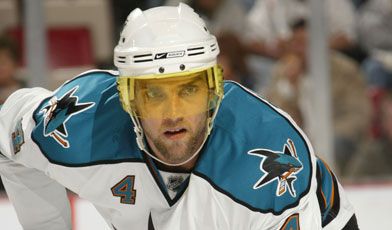
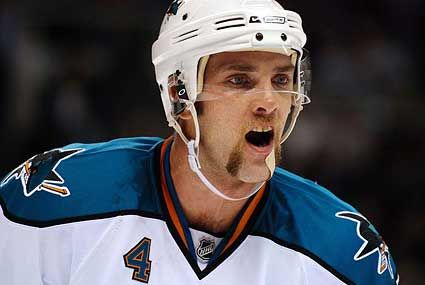
  • Kyle McLaren, who is known for wearing a yellow visor, actually began his superstition because of a joke. McLaren is color blind, and a teammate swapped his clear visor for a yellow one. McLaren didn't notice until after the game in which he scored the game-winning goal! He did change back to a clear one in 2007-08 to see if that would change the fortunes of the San Jose Sharks in the playoffs, but his superstition started because of a prank!

As you can see, there are a vast number of superstitions that players have used. Mr. Podnieks covers over 100 players on approximately 110 pages, so you know there will be interesting anecdotes passed on about a vast number of players from across all the NHL's various eras.

I have seen a number of superstitions in hockey dressing rooms over my time, and I know they drive a player in his preparation. Mr. Podnieks covers a lot of superstitions that embrace teams and players, and presents them in short, anecdotal passages. The information contained on the 179 pages of Hockey Superstitions is excellent, and Hockey Superstitions certainly deserves the Teebz's Book Club Seal of Approval. While this book may be more suited for spring reading, there is nothign wrong with examining the traditions that drive players today.

Just as a note before you navigate away from this site, Hockey Superstitions goes on sale on November 2, 2010. I was lucky enough to receive an advance copy from McLelland & Stewart Ltd., and a huge thank you goes out to them for sending me this excellent book. Look for it at your local bookstore next week!

Until next time, keep your sticks on the ice!

Saturday, October 16, 2010

If there was ever a debate that could never be settled in the world of hockey, it is the one where a person determines which NHL team was the best of all-time. Of course, the team would have had to win a Stanley Cup as a way to determine if they truly were a great team, so that automatically eliminates the San Jose Sharks over the last decade. I kid, Sharks fans, I kid. There is one publication that may have the expertise and experience to make such a determination, though, and that's why I'm here today. Teebz's Book Club is proud to present We Are The Champions, written by The Hockey News, edited by Edward Fraser, and published by Transcontinental Books. There are a large number of teams that have won the Stanley Cup from 1917 up to the Pittsburgh Penguins' Stanley Cup victory in 2009, and The Hockey News considers all of these teams in their efforts to rank the best 25 teams in NHL history.

I can't imagine this was an easy job as there have been some juggernaut teams that have played in the NHL. The Montreal Canadiens could have a Top-25 all to themselves, but they only appear four times on the all-time best list. The Edmonton Oilers had their incredible dynasty in the 1980s interrupted by the Canadiens and the Flames, so you could put all three of those teams in there. The New York Islanders had their dynasty interrupted by those Oilers, and the Philadelphia Flyers ended the run by the Montreal Canadiens, so you'd have to give a nod to those teams as well. But which of those teams made it? From what year did those teams come?

We Are The Champions brings forth some excellent points. As Managing Editor Edward Fraser writes in the introduction,
"How can you really compare collections from the Original Six years against those built under the oppression of the salary cap? Or what about those dynasties? How much stock should go towards an organization's maintenance of longevity? And what exactly makes a great team? Is it individual talent or a collective effort? There's only one factor that wasn't up for debate. As Alex Ovechkin simply, but brilliantly stated early in his career: 'Cups is Cups.' No championship, no consideration."
In knowing what factor was the first consideration tackled by the team of professionals at The Hockey News, we can automatically eliminate all those teams who have yet to hoist a Stanley Cup in their franchise histories. From there, there had to be some other considerations. I'll allow Mr. Fraser to continue. From the introduction, "In the end, we looked at all the above angles and more, and arrived at a list we feel represents a fair ranking based on how the team performed and excelled against the competition of its time."

Now that you know how the list was set up, let the debate begin. Who should be the top team of all-time? How did the Canadiens only rank four times? Do any teams from 2000 and beyond make the list? In regards to the Canadiens, Mr. Fraser did concede that the list could have fit a number of Canadiens teams on it: "We only chose one season from each dynasty or club that won multiple Cups in a short period of time. This was done in order to avoid repetition and, quite frankly, to prevent this work from reading like a biography of the Montreal Canadiens, who could easily occupy 15 of the spots without this proviso." So there you have it.

What makes We Are The Champions even more enjoyable is that after the best NHL teams of all-time are ranked, the writers from The Hockey News went ahead and picked the best team from each developmental league, junior league, the NCAA, and international squads. Like they did with the NHL's all-time best teams, each team that was selected by THN received a full story on that team's season and accomplishments to give the reader some retrospect as to why THN ranked that team as the best all-time team from that league.

Still want more? THN also provides the best team from each NHL franchise's history at the end of the book. They go all thirty NHL teams, and choose one team from each team's history as the best team to have ever laced up the skates in that franchise's history. Some teams don't have a deep history, so those ones are probably easier to choose. But how do you choose a "best team ever" for a team like the St. Louis Blues? The Florida Panthers? The Vancouver Canucks? The Buffalo Sabres? Again, once THN finally decided on the best season in franchise history, they provide evidence for their choice.

We Are The Champions will do one thing for certain, and that is cause debate amongst hockey fans. The choices are based on subjective factors, so there is bound to be some disagreement with the rankings given to each team. There may even be disagreement on the chosen year of the teams, but that's why this type of book is good. It gets everyone talking about hockey, and makes readers look deeper and find reasons as to why they may agree or disagree with a team's ranking. Because of the book's ability to make readers talk about and debate the subject of which team is the all-time best, We Are The Champions certainly deserves the Teebz's Book Club Seal of Approval. Honestly, this type of book is always a good read in my humble opinion.

Just as a note before you navigate away from this site, We Are The Champions goes on sale on October 26, 2010. I was lucky enough to receive an advance copy from Random House Canada, and a huge thank you goes out to them for sending me this excellent book. Look for it at your local bookstore next week!

Until next time, keep your sticks on the ice!

Friday, October 15, 2010

Teebz's Book Club returns for a second day with a look at a book filled with facts and fun. There are a lot of stories and fun facts that are missed by a majority of the population, and this could be caused by a number of factors: how widely known these facts are, where they happened, or simply how common they are in the hockey world, for example. There aren't many places, though, that bring them together in one place where you can read about them. However, The Love of Hockey, written by James Duplacey and published by Publications International Limited, brings together a ton of facts, and it was very interesting to read about some of them.

James Duplacey has written over fifty books on various sports. HBIC has featured one of these, Hockey's Book of Firsts. Duplacey is the former Curator of the Hockey Hall of Fame and is the Managing Editor of the Official NHL Guide and Record Book. The 56 year-old graduated from the University of New Brunswick, has done some acting in the past, and is an author for the Armchair Reader series of books. He currently resides in Calgary, Alberta, and occasionally contributes articles about the Calgary Flames to the examiner.com.

It would be tough to describe this book without giving you an example of what is contained within its covers, but I can tell you that this collection of facts and figures is simply astounding, and the pictures that accompany the information are vivid and very appropriate. Mr. Duplacey has broken the book into six chapters, and we'll look at a few facts from the first of these sections.

Chapter One is entitled "Opening Faceoff", and there are all sorts of amazing anecdotes in this section. Some of these include:
  • The story of 44 year-old head coach Lester Patrick suiting up for the New York Rangers as their goaltender after Lorne Chabot went down with injury. Next to the story is a picture of "the silver fox" in his Rangers gear - an image rarely seen!
  • There's a story about Jim Riley, the only Canadian to suit up in both MLB and the NHL in his sporting career. Riley played with the St. Louis Browns and Washington Nationals during his baseball career, while his hockey career saw him play with the Detroit Cougars and Chicago Black Hawks.
  • The's a very interesting story about Mike Smith, a goaltender for the ECHL's Lexington Men O' War. Smith is the only goaltender in hockey history to record his first professional win, his forst professional shutout, and his first professional goal on October 22, 2002. Smith shutout the Dayton Bombers 2-0, and scored into the empty net.

Chapter Two is entitled "Greatest Show on Ice", but the chapter designations really just blend into one another as the chapters all feature stories on amazing players, lesser-known hockey history, anecdotes on arenas, and great moments in hockey. Chapter Three is entitled "Slap Shots"; Chapter Four is called "Power Plays"; Chapter Five is named "Last Line of Defence"; and, Chapter Six is entitled "Back of the Net".

What makes The Love of Hockey a phenomenal book are the images. The stories would be worth the asking price alone, but the images featured on the book's 320 pages are simply magnificent. I have never seen some of the historical photos that Mr. Duplacey has used in this book, but these are the photos that a person like me who loves hockey history would pay serious money to own. Simply put: amazing imagery in this book.

Because of Mr. Duplacey's work in collecting facts and figures and pairing these with the amazing collection of photographs that he has at his disposal makes this book worth the asking price assigned to it. While it really isn't a book that one can use for a trivia challenge, the facts and figures presented by Mr. Duplacey certainly could be used. Needless to say, Mr. Duplacey's The Love of Hockey was a highly enjoyable read, very interesting, and extremely informative. Because of these traits, The Love of Hockey certainly deserves the Teebz's Book Club Seal of Approval, and should be a welcome addition to any library or collection of hockey books that one may have.

Until next time, keep your sticks on the ice!

Thursday, October 14, 2010

Teebz's Book Club is coming at you today with a book that presents three men who could certianly have an argument made about being "awesome centres" in the annals of the NHL. Teebz's Book Club is proud to present Hockey Greats - Awesome Centres, written by Mike Leonetti and published by Scholastic Canada. Mr. Leonetti's books have appeared in TBC before, and he always produces an excellent book with his writing and insight. The three players that Mr. Leonetti looks at in his book will be discussed below, but one of the three men is a curious choice at best. I do know that the first two men that he profiles within the covers of Hockey Greats - Awesome Centres are legendary, and certainly were awesome centremen. Without further adieu, let's get into the book!

Mike Leonetti has written a number of hockey-centric books, including Canadiens Legends, The Rocket, and The Mighty Tim Horton, all of which were reviewed right here on Hockey Blog In Canada. When Mr. Leonetti isn't writing, he produces a calendar called Hockey Year Calendar that features amazing hockey photography. Mr. Leonetti lives in Woodbridge, Ontario, with his wife, Maria, and their son, David.

Mr. Leonetti looks at three players in his new book. The first player is a Montreal Canadiens legend, and certainly was an awesome centreman. Jean Béliveau played in the NHL from 1950 until 1971 with the Montreal Canadiens, and was voted into the Hockey Hall of Fame in 1972. In 1125 regular season games, Béliveau scored 507 goals and added 712 assists, but was also the captain of the Montreal Canadiens, leading the Canadiens to eight Stanley Cups over his career, and won a number of individual awards while playing in the NHL.

Mr. Leonetti's second awesome centreman is a man who rewrote the NHL record books while playing for four NHL clubs. Wayne Gretzky is undoubtedly an awesome centreman, and his accomplishments are well-documented. Gretzky played in the NHL from 1979 until 1999, ammasing 894 goals and 1963 assists over 1487 regular season games. Gretzky captained the majority of the four teams he played with, and led the Edmonton Oilers to four Stanley Cups. He, of course, has a trophy case full of NHL awards, and is seen as the best player all-time in NHL history.

Mr. Leonetti's third selection as an awesome centreman is a more curious one. While both Béliveau and Gretzky have a number of honours amongst them, the choice of Vincent Lecavalier is certainly debatable when looking at the current crop of NHL centremen. While Lecavalier won a Stanley Cup in 2004 and has been a captain with the Lightning, there is far less evidence that he will be considered one of the elite centremen ever at this point in his career. Is he good? Absolutely. Is he awesome? I'd say there might be other men playing the game right now who rank above him in terms of accomplishments. However, Lecavalier's story is told by Mr. Leonetti, and he is the third awesome centre chosen by the author.

What makes this book interesting are the background stories told by Mr. Leonetti on each of the three players. He includes photographs from their early days, showing the players in uniforms rarely seen outside of major hockey circles. There are pictures of Jean Béliveau in a Victoriaville Tigres sweater and a Quebec Aces sweater that I had never seen before. Wayne Gretzky is shown as a seven year-old on outdoor ice and in an Ontario Major Junior Hockey League All-Star jersey in 1978. Lecavalier is pictured in the 1998 CHL Top Prospects Game and at the NHL Entry Draft. By using these pictures while explaining how these players became the great players they are and were, you instantly have an idea of why these three men are awesome centres. The images are excellent, and they really give you a great view on some hockey history as well as a few rarely-seen uniforms.

Overall, Hockey Greats - Awesome Centres was a very good look at three players whose history before they hit the NHL may not be known to younger readers. This book is geared towards a more advanced young reader and adolescents, but the 110-page book is nothing that should cause too many problems for the up-and-coming reader. Mr. Leonetti presents all of the facts clearly and concisely, and the three men he profiles should be an inspiration to young hockey players. Because of his excellent writing and the photos he chose to use, Hockey Greats - Awesome Centres is certainly worthy of the Teebz's Book Club Seal of Approval!

Until next time, keep your sticks on the ice!

Saturday, October 9, 2010

Teebz's Book Club is gearing up for National Young Readers Week in the United States with another book geared towards the younger hockey fan. As you may be aware, HBIC wants to get more kids reading and more kids interested in hockey, and I'm happy to do both of these through the books being reviewed here. Today, TBC is proud to present One Hockey Night, written by David Ward, illustrated by Brian Deines, and published by North Winds Press, a division of Scholastic Books. With kids having been in school for over a month now, it won't be long until the snow flies in the northern climates, and that means hockey! One Hockey Night looks at the story of Owen, a young boy who moves to Nova Scotia, and really begins to miss hockey as he used to know it.

David Ward is a Canadian author who now lives in Portland, Oregon. He was born in Montreal, Quebec, but grew up in British Columbia. Mr. Ward worked as an elementary teacher for eleven years before switching professions and starting his writing career. He has also planted trees and worked on a chicken farm, but now spends his time writing and completing his PhD in Language and Literacy. He has written seven books since 2006, and enjoys spending time with his wife and three children when he's not writing his next book. Mr. Ward also writes a blog on his work, and you can visit his website here.

Brian Deines is an accomplished author and illustrator. He graduated from the Alberta College of Art, and has contributed to a number of excellent works with his illustrations. Dragonfly Kites, written in 2002 by Tomson Highway and illustrated by Mr. Deines, was shortlisted for the Governor General's Literary Award for Illustration and nominated for a Ruth Schwartz Children's Book Award. Mr. Deines currently lives in Toronto, Ontario.

One Hockey Night is the story of Owen and Holly, a brother and sister who find themselves living in Nova Scotia after having moved with their parents from Saskatchewan. Owen is a little down because it's December and all his friends are playing hockey in Saskatchewan while he's adjusting to a new life on the east coast. There was no frozen lake in Kettle Harbour like there was in Saskatchewan, so how could he play the game he loved?

When Holly asked Owen to play hockey, they went out to the front street instead of the backyard. Dad had prevented them from going out back, but he promised it would just be for a little while before they could head out to the backyard. "Sort of a secret," he told them.

Strangely, a large number of people began to show up at Owen's and Holly's front door, most carrying lobster crates. CJ and his mom, neighbours of Owen and Holly, were the first to drop off the crates, and Owen invited CJ to play street hockey in the future. But why were people bringing lobster crates to his house? It was too cold to catch lobster in December, yet they had collected a large number of crates. What was going on?

Owen missed hockey on the lake. He and Holly reminisced about playing on the lake back in Saskatchewan, and Owen finally assumed that no one played hockey in Kettle Harbour. Owen and Holly believed they would never play pond hockey again, but Mom and Dad had a special Christmas gift up their sleeves. What was it? Were the kids going back to Saskatchewan for Christmas? Did Mom and Dad find a lake for the kids to play on? All of these answers are waiting for you in One Hockey Night!

The story of One Hockey Night actually is based on real-life events. Mr. Ward has written an original story based on several events in Canadian life, including his own, but has captured the Canadian spirit of hockey and life in the Great White North. He writes an excellent note before the start of the story, and I commend Mr. Ward for writing this story based on the real-life experiences of a few special Canadians.

The artistry of Mr. Deines is top-notch, and really makes the story come alive on the pages. His pictures are warm and inviting, and really add to the story by putting faces and places to the words written by Mr. Ward. The illustrations provided by Mr. Deines for One Hockey Night not only add to the story, but bring the words to life as you read them.

Mr. Ward's warm story combined with Mr. Deines' excellent artistry makes One Hockey Night a must-read for the young reader. The story spans 32 pages, so it's a perfect way to get your elementary school child into reading, and the story should get the hockey fan stirring in your house! Because of this, One Hockey Night certainly deserves the Teebz's Book Club Seal of Approval!

Until next time, keep your sticks on the ice!

Thursday, September 30, 2010

HBIC really has no affiliation towards the Toronto Maple Leafs, but there seems to a be a large number of books written about the NHL franchise. It has a lot to do with their storied past and eccentric owners, but the players who have dressed for the Maple Leafs have always been somewhat larger than life, especially in the old days. One of those players was the iconic Tim Horton, and his career is examined in a different light today. Teebz's Book Club is proud to present The Mighty Tim Horton, written by Mike Leonetti, illustrated by Greg Banning, and published by Scholastic Canada. This story isn't just about doughnuts, though, and is certainly worth reading.

Mike Leonetti has written a number of hockey-centric books, including Canadiens Legends and The Rocket, both of which were reviewed right here on Hockey Blog In Canada. When Mr. Leonetti isn't writing, he produces a calendar called Hockey Year Calendar that features amazing hockey photography. Mr. Leonetti lives in Woodbridge, Ontario, with his wife, Maria, and their son, David.

From his bio on his website, Greg Banning "is sought after by major advertising agencies in Canada and the USA and he has now worked with clients in the UK. One of Greg’s most notable illustrations was his re-imaging of the iconic 'Brawny Man' for Brawny Paper Towels". Mr. Banning has worked as an illustrator with a number of publishing companies, and has illustrated five of Mr. Leonetti's books including the one we're reviewing today. He's currently working on his own book in New York with Harper Collins. For more information on Mr. Banning and his work, please check out his website here.

The story of the mighty Tim Horton surrounds the play of Trevor, a big, young defenceman who liked to use his size against smaller players. However, we find out that his reckless physical play begins to affect his team as they lose a game with Trevor sitting in the penalty box. He vows to change his game, and looks to his favorite hockey player for inspiration: Tim Horton of the Toronto Maple Leafs.

Even with the changes he was making, Trevor found himself on the bench more often as his coach avoided putting him out at the end of the game with the score close. In December while on a fund-raising initiative, he was selling Christmas cards door-to-door when he happened to knock on the door of the house belonging to none other than Tim Horton!

Trevor and Tim discussed the problems he was having in high school hockey, and Tim left his with four tips that were written down on the back of his order form. Trevor left Tim Horton's house with more than just a sale of a box of Christmas cards. He now had advice from one of the best defencemen to ever lace up his skates in the NHL!

The four pieces of advice that Tim Horton passed on to Trevor are four skills that should be developed and practiced by all hockey players today. They are the four essential skills a defenceman should have, and all will make any player much better. I'm not about to tell you what those skills are, though. You'll have to pick up the book to find out what they are!

Were Tim Horton's pieces of advice enough to get Trevor back on the ice more frequently? Were they enough to change his game, making him a bigger piece of the puzzle for his team? How did the Leafs finish in 1962 with Tim Horton patrolling the blueline? How did Trevor's team finish the season, and did he see the results he was looking for in his changes? All of these questions are answered in Mr. Leonetti's story!

Once again, Mr. Banning's illustrations are works of art. Just as they were in The Rocket, the images seen in The Mighty Tim Horton not only complement the story, but add some stunning visuals to the words. Mr. Banning should be celebrated for his artistry because they images in this book are exceptional. As seen before, Mr. Banning is an impressive artist, and his work should be celebrated with his work in this book.

Mr. Leonetti brings a great message to young readers in The Mighty Tim Horton as his four simple skills will improve a young hockey player's skill set immensely. By giving young players these four pieces of advice, Mr. Leonetti is teaching them that practice, discipline, and hard work will always be rewarded. I especially like the fact that he emphasizes practice as being key in Trevor's development as a player since all good players practice a lot. Because of these great messages and the excellent story presented by Mr. Leonetti and Mr. Banning, The Mighty Tim Horton certainly deserves the Teebz's Book Club Seal of Approval.

Until next time, keep your sticks on the ice!

Monday, September 27, 2010

Teebz's Book Club returns today with a goal in mind: more reading for more people. With school having already started, we're approximately one month away from National Young Readers Week, so TBC wants to get a few great authors' names out there for this upcoming week. One such name is Irene Punt, and Miss Punt's newest book, The Rink Rats, will be released on October 1, 2010 for young readers. This is actually the fourth book in Miss Punt's series about a Calgary boy named Tom and his local hockey team, the Glenlake Hawks. I haven't had the privilege of reading her other three books in the series, but I can tell you that this book really makes me want to hit the bookstores to find them. Teebz's Book Club is proud to present The Rink Rats, written by Irene Punt and published by Scholastic Books.

Irene Punt is a former teacher who has transformed her energy in the classroom into an unbridled passion for her subjects on paper. She received a Bachelor of General Studies degree from Simon Fraser University, and took up teaching as a way to give back. She studied children's literature at S.F.U. under David Booth, and developed a passion for writing from Mr. Booth's teachings. Her move to Calgary from Vancouver prompted her to begin writing children's books, and has scribed picture books, novels, TV scripts, and stage scripts. Her other Scholastic hockey books include The Wicked Slapshot, The Funny Faceoff, and The Rotten Ref.

The story of The Rink Rats starts with Tom and his Hawks teammates on a frozen pond playing hockey. They find the ice a little unsatisfactory for skating, and start to smooth it using various methods. Once they clear enough, they find the skating to be much better, and even come up with a new play they dub "The Pinball".

After their next game, Coach Howie announced that the team was still in search for ice time for the Family Game after finding out that the Hawks' home rink was booked. Having played and groomed the pond, Tom, Stuart, Mark, and Jordan had a great idea: use the pond rink for the Family Game! Everyone on the team was in agreement, but that left the boys with the monumental task of preparing the rink in two weeks for the game!

The boys find out that a few kind acts will repay themselves ten-fold as they work their way towards the game. Without revealing any major details, the boys find out that maintaining a rink is a lot more work than they had imagined. With a litte help from friends, though, the rink starts to take shape.

Will February's weather hold up for the game? Can the boys get the ice ready for an all-out game of hockey against their parents? Do they have enough experience to maintain and keep a pond rink going for two weeks? Can they shovel all the snow off the ice to make a big enough rink? Does an offer to go and watch the Calgary Flames play Sidney Crosby and the Pittsburgh Penguins at the Saddledome derail the boys' dream of hosting an outdoor game? All of these questions are answered in the book!

I really like this book because Miss Punt describes some important lessons for younger readers: help from friends and the value of teamwork is important, doing good deeds and helping others does not go unnoticed, and the importance of following through on responsibilities once one has accepted those tasks. The story is engaging, and the illustrations give enough of a picture to help the story along through the 82 pages.

Thanks to the lessons presented by Miss Punt combined with her well-written story and easy-to-read presentation of that story, The Rink Rats is perfect for any younger reader, and would be a great fit for National Young Readers Week! The story itself contained within the covers of The Rink Rats is excellent, and is certainly deserving of the Teebz's Book Club Seal of Approval! It should be a welcome addition on any young hockey fan's bookshelf!

Until next time, keep your sticks on the ice!

Saturday, June 19, 2010

The 2002 Salt Lake City Winter Olympics was a special time in Canadian hockey history. Following eight straight losses to the American women, the Canadian women captured the Olympic gold medal by defeating their long-time rivals. The Canadian men, led by Mario Lemieux, Joe Sakic, and Steve Yzerman, started poorly, but rallied to defeat the American men by a 5-2 score to capture their first gold medal in 50 years! There were a lot of hockey storylines at the Olympics that various people followed - Gretzky's rant against the world following Canada's 3-3 tie against the Czech Republic, Belarus' unbelievable upset of the vastly superior Swedes in the quarter-finals, the kissing of center ice by the Canadian women - but the one that author Roy MacGregor followed was the story of Trent Evans. The result? A Loonie for Luck, written by MacGregor, illustrated by Bill Slavin, and published by McClelland and Stewart, which tells the story of how the loonie got into the ice, and how Trent Evans became a legend in the hockey community for his superstitious decision.

Roy MacGregor has written some of Canada's best hockey books in his lifetime. He penned best-selling book Home Game with Ken Dryden, and is a best-selling author for his hockey-based mystery books for children in the Screech Owls series. Born in Whitby, Ontatio in 1948, Mr. MacGregor has written for The Globe and Mail, The National Post, MacLean's magazine, the Toronto Star, and The Canadian magazine. Due to his works, he has won two National Newspaper Awards, several National Magazine Awards, and two ACTRA Awards as the best television drama writer in the country. In 2005, Roy MacGregor was named an officer in the Order of Canada. He and his wife, Ellen, live in Kanata, Ontario with their four children.

There was a lot of hype surrounding the "lucky loonie" once the word got out about the coin being placed in the ice at Salt Lake City's E Center, but it started off as something that Trent Evans would never have thought twice about: pocket change.

While getting a coffee during his normal morning routine at the Tim Hortons on Sherwood Park, Alberta's Main Boulevard, Mr. Evans received change from the five-dollar bill he gave to the server. Amongst the change, he pocketed a loonie, Canada's one-dollar coin minted in 1987 in Winnipeg, that would become a part of the Hockey Hall of Fame three weeks later. With the change in his pocket, he headed to the airport in Edmonton for his flight to Salt Lake City.

So who is this Trent Evans guy?

Trent Evans is an employee of the Edmonton Oilers. His job? Ice technician for at Rexall Place where the Oilers play. His former boss, Dan Craig, was one of the officials in charge of preparing the hockey venues in Utah, and he recommended Trent as one of the official ice-makers for the 2002 Winter Olympics. Trent took the once-in-a-lifetime opportunity after consulting with his family, and he and the loonie were off to Salt Lake City.

The problem he discovered when he arrived at the E Center was that there was no center ice plug on the floor that ice-makers use to measure out all the dimensions on the ice. Every single NHL rink has this plug, but the E Center did not as it only housed the ECHL's Utah Grizzlies. In order to mark the center point after making a number of measurements to find it, Evans used a dime after consulting with Dan Craig as to how he should mark the center ice spot. However, it was something that Craig said that turned Evans onto the idea of using the loonie.
"Craig was checking the ice in one of the two practice rinks.
"'How did they mark it there?' Trent asked.
"'We used a splotch of yellow paint,' Craig answered.
"'How big?'
"'I don't know,' Craig's voice crackled through the static. 'Not big. About the size of a loonie.'"
From that point on, the loonie marked the center ice location at the E Center. Once the ice was finished and the loonie had been buried beneath five-eighths of an inch of ice, the legend of the "lucky loonie" began to grow and circulate amongst the Olympic village. Evans knew that his "secret" was no longer a secret. Sure enough, Dan Craig called to deliver the news: "Take it out."

Evans reluctantly went to the E Center to remove the loonie buried beneath the ice, but he noticed that no one was paying attention to what he was doing on the ice. He drilled the hole and pretended to scoop the loonie up, and no one thought twice about it. And this time, Evans swore, he'd keep it a secret.

Of course, the lucky loonie saw both the Canadian men's and women's hockey teams capture the gold medal in hockey in 2002. It's final resting place, including the three dents that it picked up over the course of the Olympics, is now the Hockey Hall of Fame where fans from all over the world can gaze upon the coin that inspired a nation. Even this guy.

In regards to A Loonie for Luck, Mr. MacGregor has written an excellent story about how the loonie made it to the Hockey Hall of Fame, but has also included some incredible historical notes. There's a short piece on how the loonie was hated by Canadians when it was first introduced. There's a phenomenal chapter on a number of the superstitions that players have had in the NHL, and how it carries over to coaches and staff of NHL and hockey teams.
"When you’ve got both Roy MacGregor and Wayne Gretzky involved in a project, it’s pretty much a lead pipe cinch to be good. And this little book doesn’t disappoint.…The quality of the writing and the compelling nature of the story, not to mention the fact that a portion of the proceeds will go to the Wayne Gretzky Foundation to help under-privileged kids buy hockey gear, make this a great book to buy the hockey fan, including yourself." - Oldtimers Hockey News
The main story about Trent Evans and the lucky loonie is definitely the draw to this book, though. There's a great foreword written by Wayne Gretzky that talks about his experience with Trent over the years and the Olympic experience. Trent's story, told on the 96 pages of the book, is an excellent read, and Mr. MacGregor's writing made it interesting and appealing. I could not stop reading this book. The best part is that it is appropriate for children of all ages, and is suitable for readers aged nine and older.

Because of Mr. MacGregor's excellent work, A Loonie for Luck definitely deserves Teebz's Book Club Seal of Approval, and is recommended for all readers! If you'd like to hear Mr. MacGregor and Mr. Evans speak about their collaboration on this book, please click here for a radio interview. The information they give about the lucky loonie is pretty incredible!

Just before we part, there's a charitable aspect included in this book. With the sale of each copy of A Loonie for Luck, a large portion of the royalties will be donated to the Wayne Gretzky Foundation. The Gretzky Foundation helps underprivileged North American children get hockey equipment and join minor hockey teams in their areas in order to get them into sports. The book is reasonably priced, and I'm proud to have helped such a worthy charity!

Until next time, keep your sticks on the ice!