Showing posts with label all-star. Show all posts

Saturday, March 12, 2011

There is no quantitative limit with regards to the respect and admiration I have for hockey history. There are so many great stories and so much fascinating imagery from the game that it should be celebrated as often as possible. Thankfully, Classic Auctions is holding another one of its fabulous sports memorabilia auctions, so I think it's time we revisit some of the great history seen in the game of hockey and some of the associated stories that have come along with these small glimpses into the annals of the game. Let's take a look at some of the more interesting pieces up for auction this time.
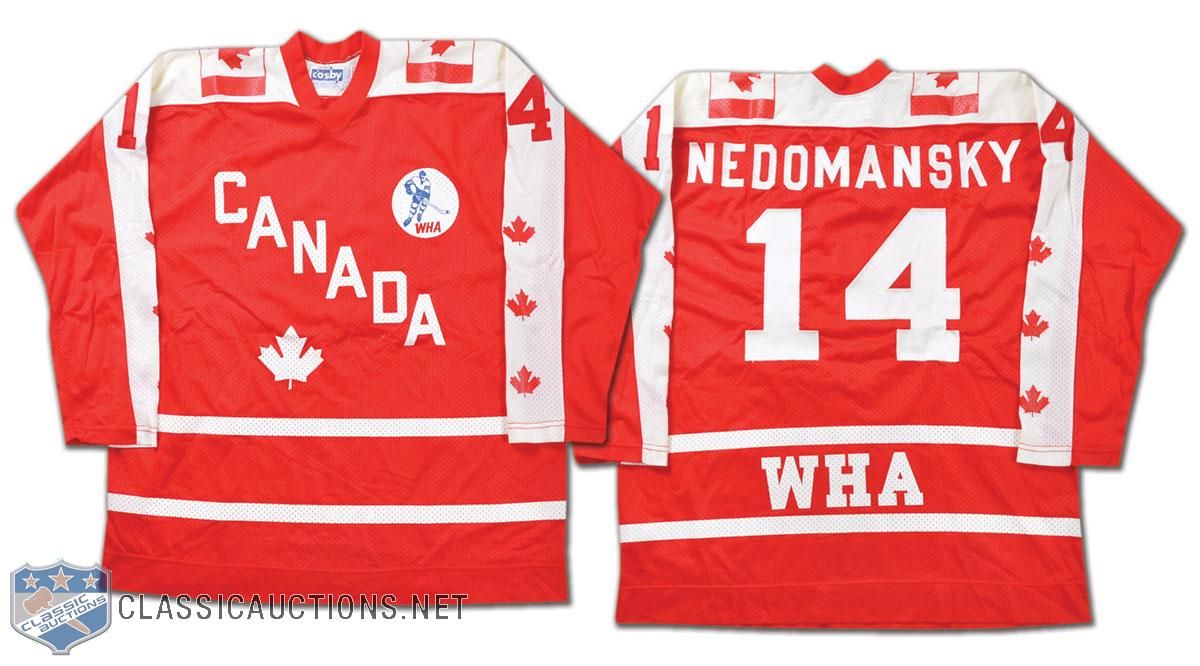
  • We'll start this look into hockey history with a glimpse back at a jersey from an all-star. Vaclav Nedomansky was chosen as a WHA All-Star in 1976, and he played on Team Canada for the game in Cleveland, Ohio despite being from Czechoslovakia! The reason for this is that the WHA chose players for their all-star teams based upon where they played rather than where they were born! The Canadian-based WHA teams sent players as part of the Canada All-Stars and the American-based WHA teams sent players as the United States All-Stars. In 1976, Toronto Toros' star Nedomansky and the Canadian WHA All-Stars beat the US WHA All-Stars by a 6-1 score on January 13 at Richfield Coliseum!
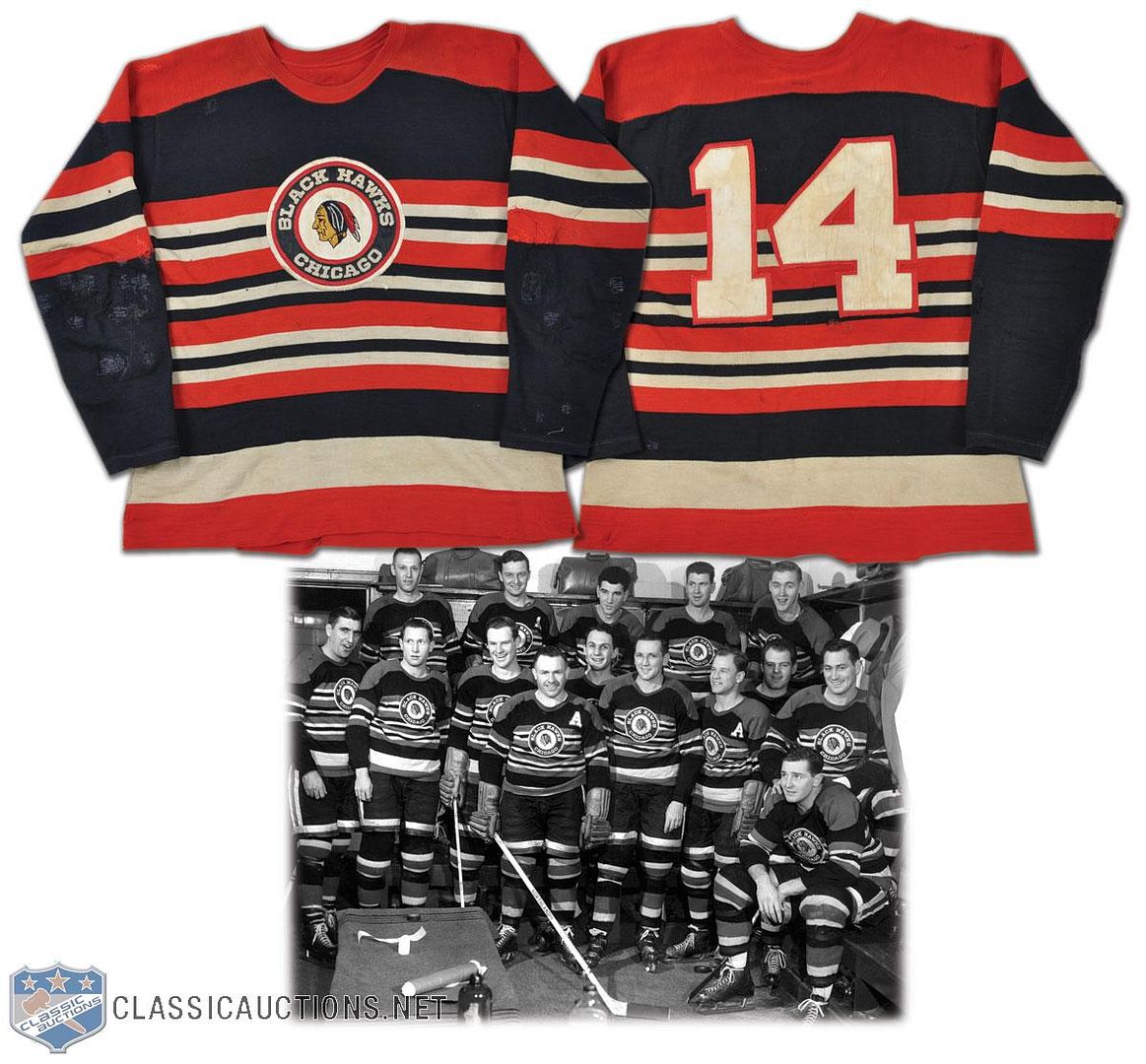
  • We move on to an Original Six team. I have to say that I am a huge fan of this Blackhawks sweater from the 1950s. The colours, the stripes, the logo, the font... it truly is a thing of beauty! If there was ever an opportunity to bring back a different alternate jersey for the Blackhawks, this one gets my vote.
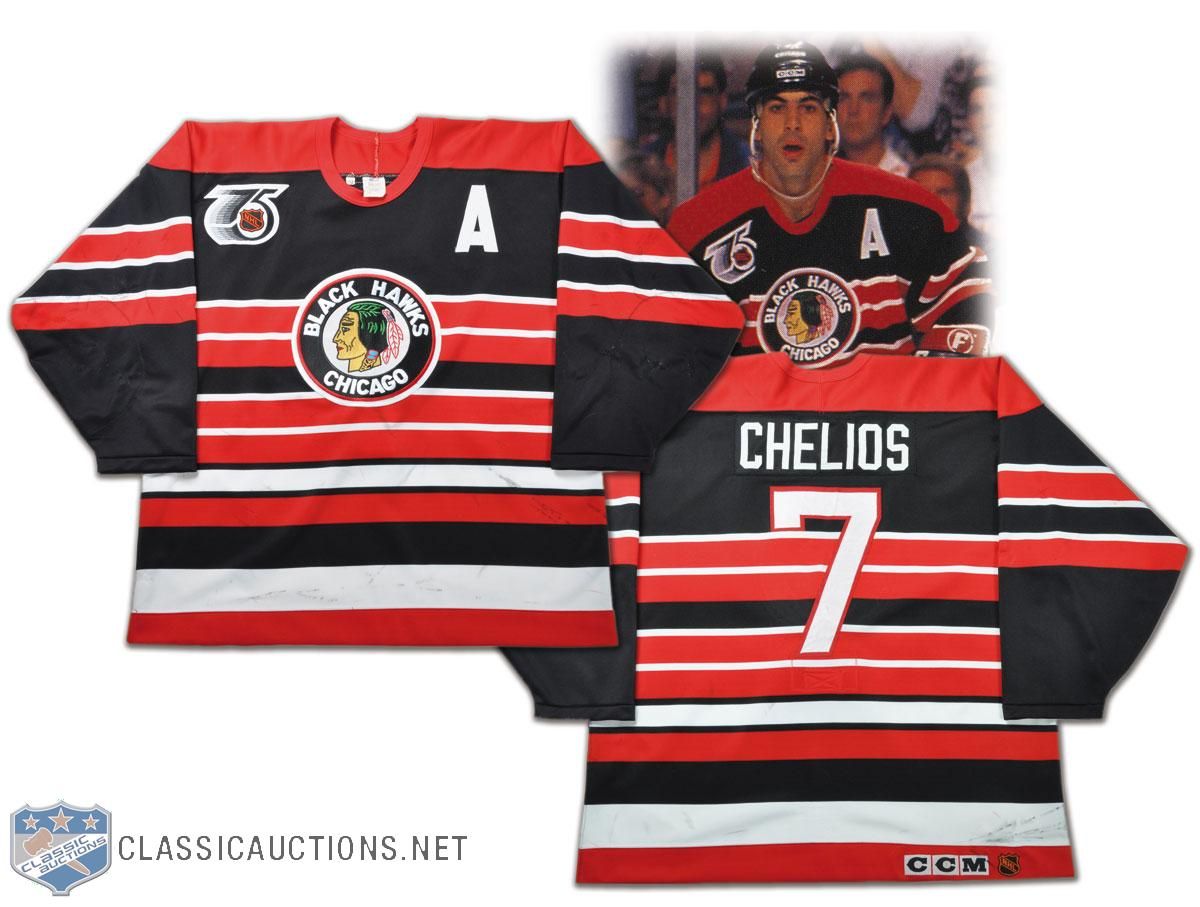
  • Strangely enough, the Blackhawks have worn this look closer to the future. In 1991-92, the NHL had the Original Six teams wear a throwback jersey, and the Blackhawks decided on a jersey that looked remarkably like their sweaters from the 1950s. Two things I don't like: the rear font they decided on, and the name on the back. The font is just too skinny, and if you're going to throwback to a previous incarnation, go all the way or don't go at all.
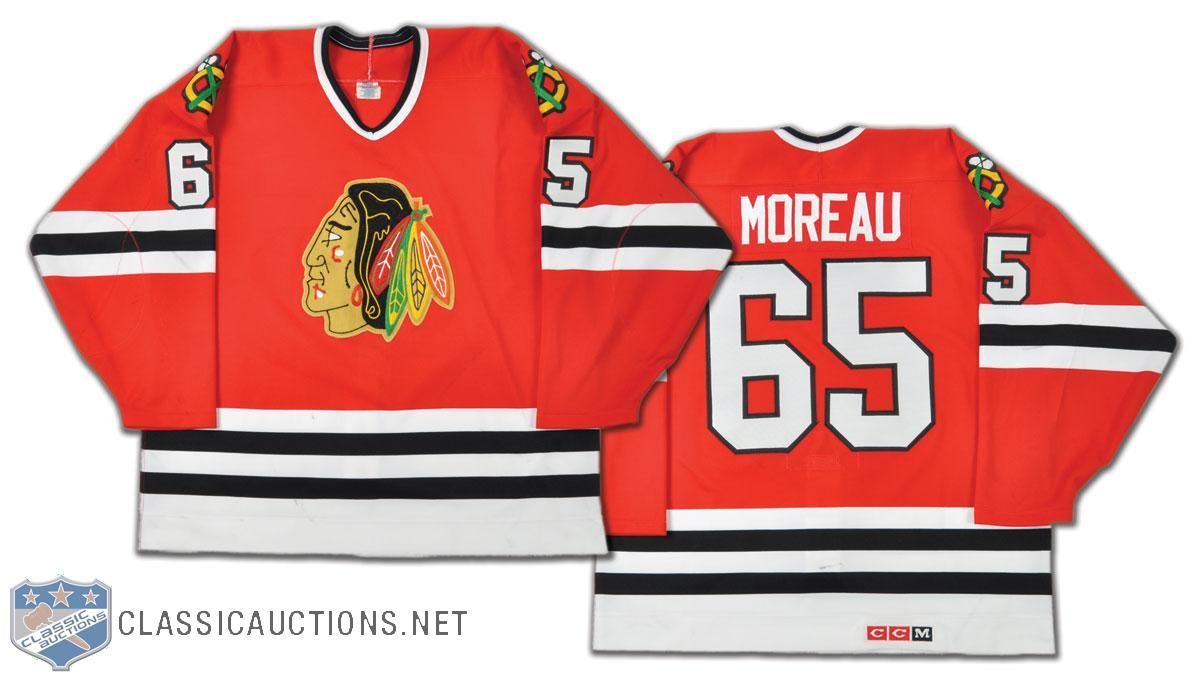
  • This is a rare find, but I'm always intrigued when I come upon a number that I've never seen a player wear. Ethan Moreau apparently wore #65 during the 1994 preseason! If you're a Moreau fan, this number is one of those rare finds - much like Joe Sakic's #88 jersey when he played with the Nordiques!
  • When you think of the Vancouver Canucks, does anyone else miss this look? I'm sorry, but as good as the current look is, there is still something about the skate logo that I truly miss about the Canucks. Maybe we'll see these beauties come back as an alternate one day? No one did yellow-orange-black like the Canucks did.
  • As much as I hated them as a Penguins fan, there is something magical about the red-white-and blue of the Capitals. But I do have one question about this Doug Jarvis jersey from the early-1980s: why are the hem stripes so huge? They literally go right to the logo which is mid-torso! That's a little crazy.
  • Just because there aren't enough Sutters in Calgary, here is more proof that the Sutter bloodline runs through the Flames. That's Shaun Sutter's jersey from the 1999-2000 season. Shaun is the son of Brian Sutter, and was drafted by the Flames when his dad coached there. Currently, Shaun serves as an assistant coach with the WHL's Regina Pats.
  • I've looked at this before, but there was something going on with the Philadelphia Flyers in the late-1970s and early-1980s. Check out the location of the captain's "C" on Bob Clarke's jersey from 1976-77. It's nearly in the middle of his chest! And it's still pretty close to his mid-line in 1980-81! What gives? Why is it so close to the middle of his chest?
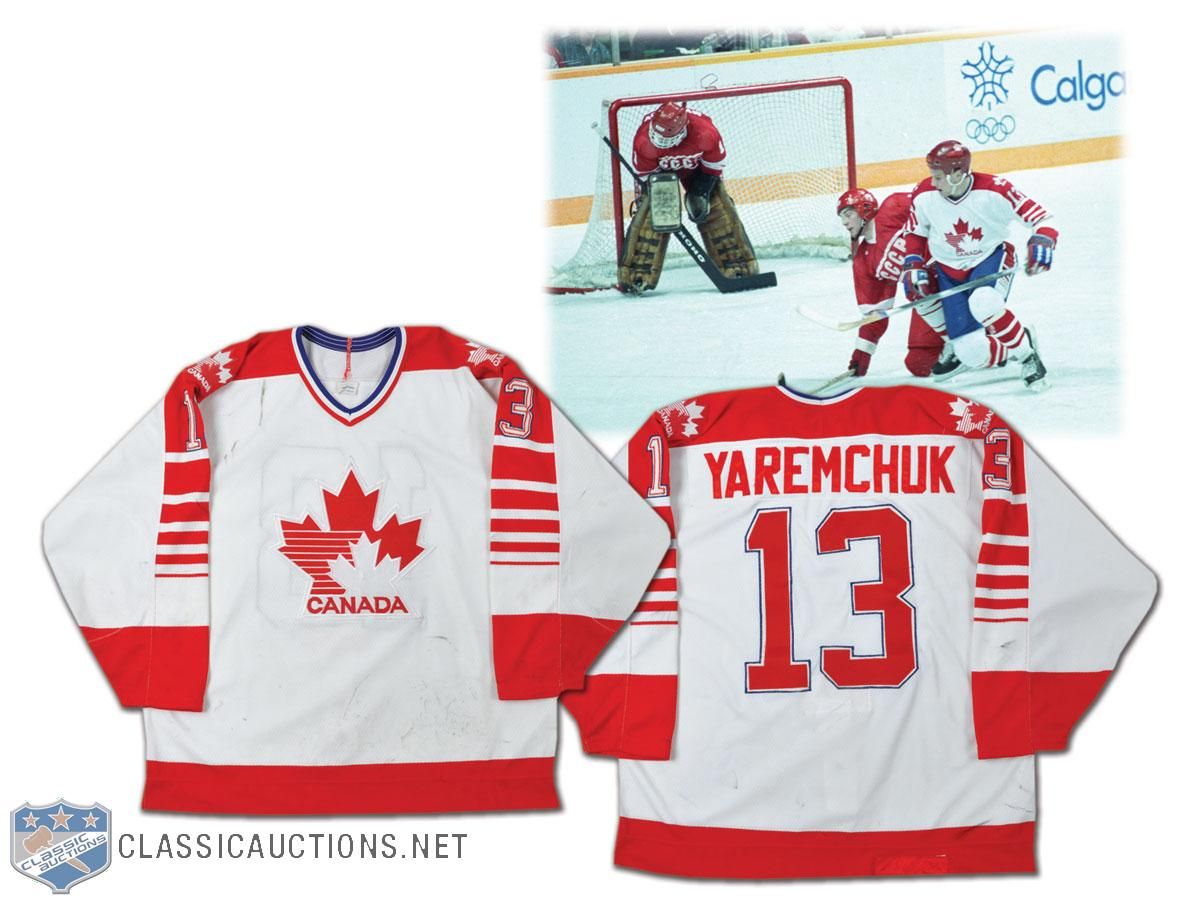
  • We move to the international scene. There's a big story surrounding the 1988 Canada Olympic jerseys that I wasn't aware of before reading the story on the Classic Auctions site. This is Ken Yaremchuk's jersey, and he played alongside NHL players like Sean Burke and Andy Moog as they prepared to represent Canada at the 1988 Winter Games in Calgary. Here's the kicker: "An embroidered CCM crest on the rear hem has been covered with a patch of red tackle twill, obviously to comply with advertising guidelines. Canada received a fine of $100,000 for refusing to wear uniforms made by Tackla at the Games". I never knew that! Corporate America already had a hold on the Olympic Games back then! How cool is that little gem of hockey history? I'm hoping your answer was "very".
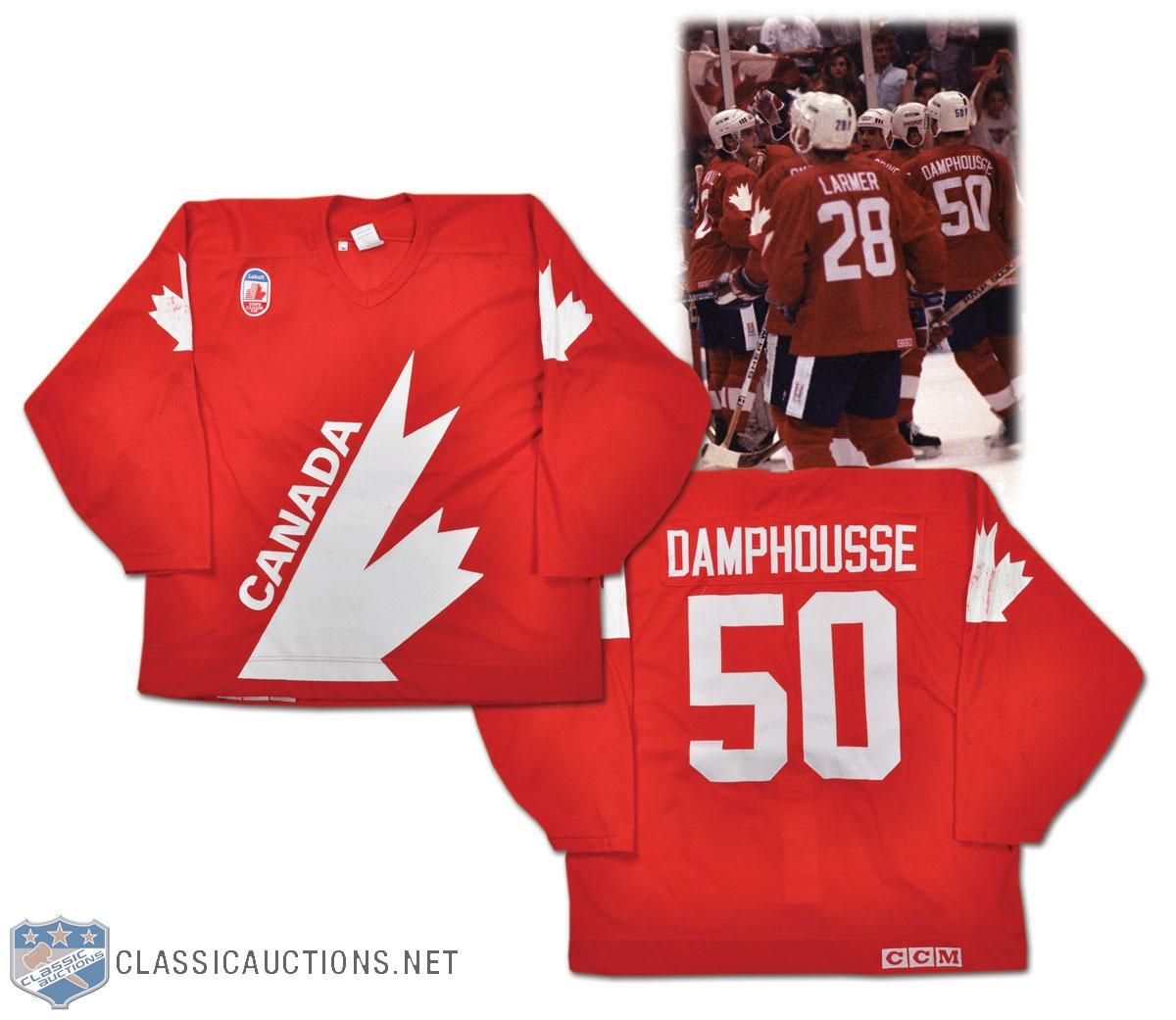
  • Here's a number that wasn't seen on the ice at the 1991 Canada Cup, but Vincent Damphousse played during the selection camp. He wore #50 through the camp as he worked to play his way onto the team, but he was cut days before the Canada Cup started. It's another one of those number cameos by a player who never wore #50 again. We'll see more of Damphousse later in this article as he has another jersey in this exposé.
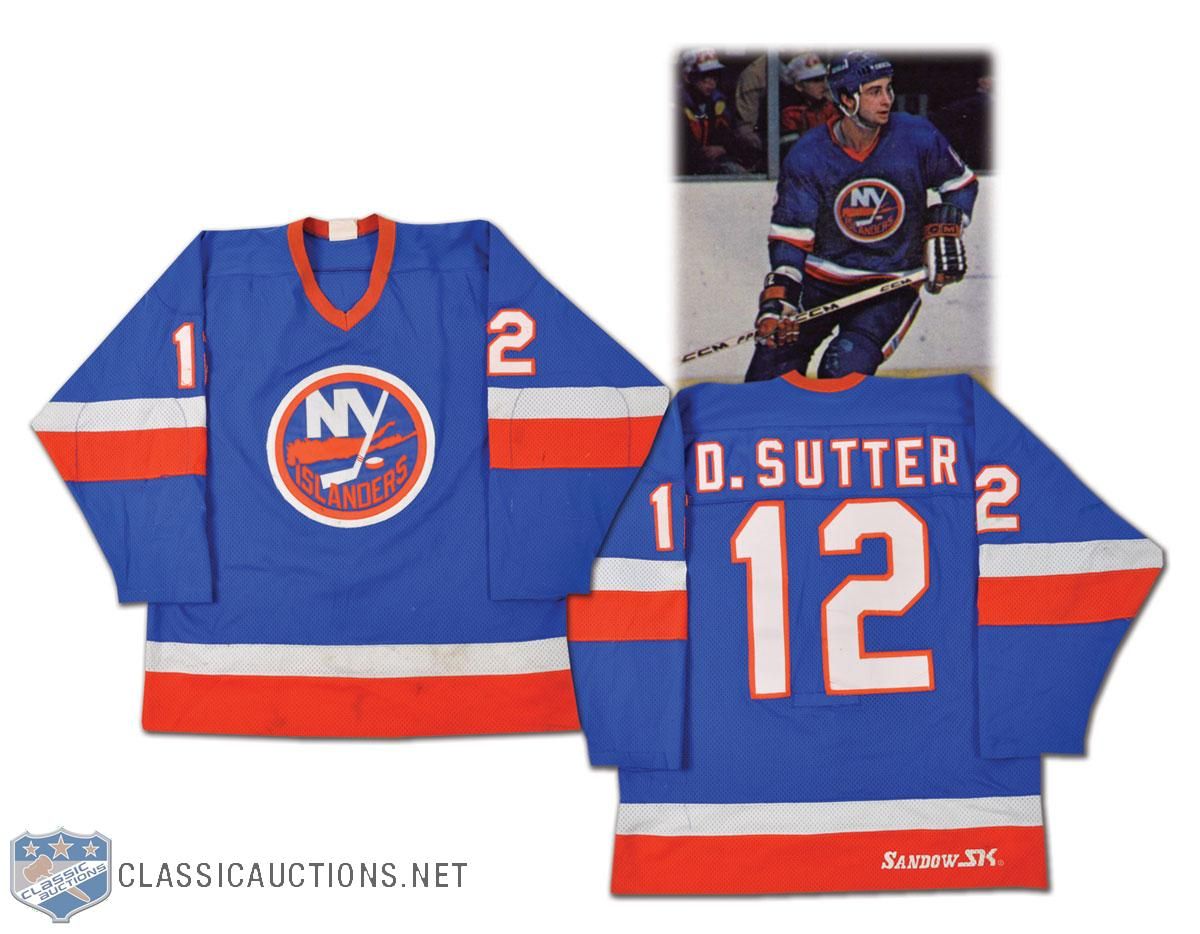
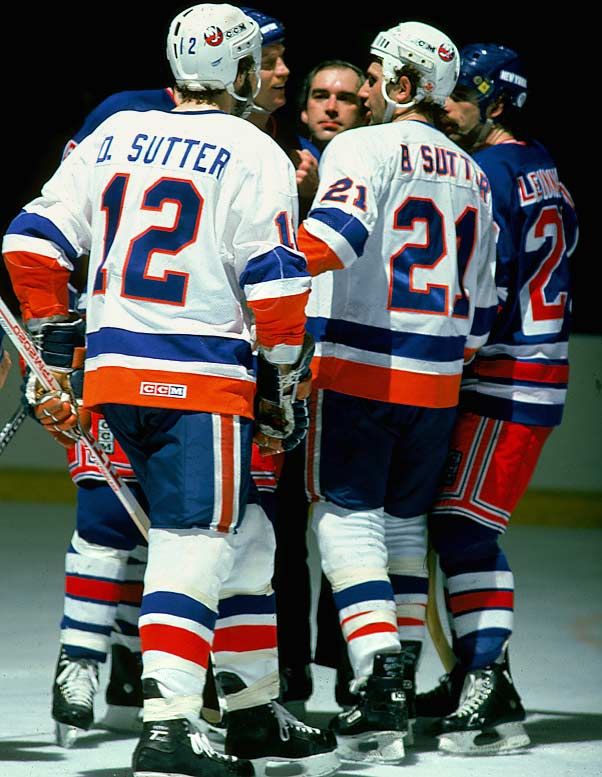
  • We mentioned a couple of Sutters already, so let's bring a couple more onboard in this article. We get a good look at Duane Sutter's jersey with the Islanders from '81-82, and I'm always a fan of the first initial on a jersey. However, as we look at this photo with both Duane and Brent Sutter in it, does anyone see a major difference in the lettering? Duane's appears as single-colour font while Brent's font is double-coloured. It appears this was corrected as of 1981-82.
  • With the Lightning changing their jerseys next season, it's always interesting to look back at some of their previous jerseys. Their inaugural jersey was interesting. Steve Kasper's jersey has that ridiculous font on it. I'm quite happy that it went the way of the dodo and was never seen again.
  • I have to say that I always loved the colours of the Minnesota North Stars. We get to see that gorgeous green colour of the North Stars jersey here on Basil McRae's uniform from the 1987-88 season. This is what Minnesota hockey looks like. Bring back the green!
  • Bob Rouse's jersey from his stint with the North Stars shows the addition of black to the colour scheme. This is how I think most people remember the North Stars. There were so many great memories of that Stanley Cup run in 1991 that ended at the hands of Mario Lemieux and the Pittsburgh Penguins in the final, but these great uniforms will stand out vividly in my mind.
  • The jerseys that the North Stars wore in 1991-92 really took leaps and bounds in the wrong directions with their "re-design". Nothing about that design even comes close to giving off that great North Star vibe, and it feels pretty bland as a hockey jersey. Little did the hockey world know that the "north" part would soon be a thing of the past.
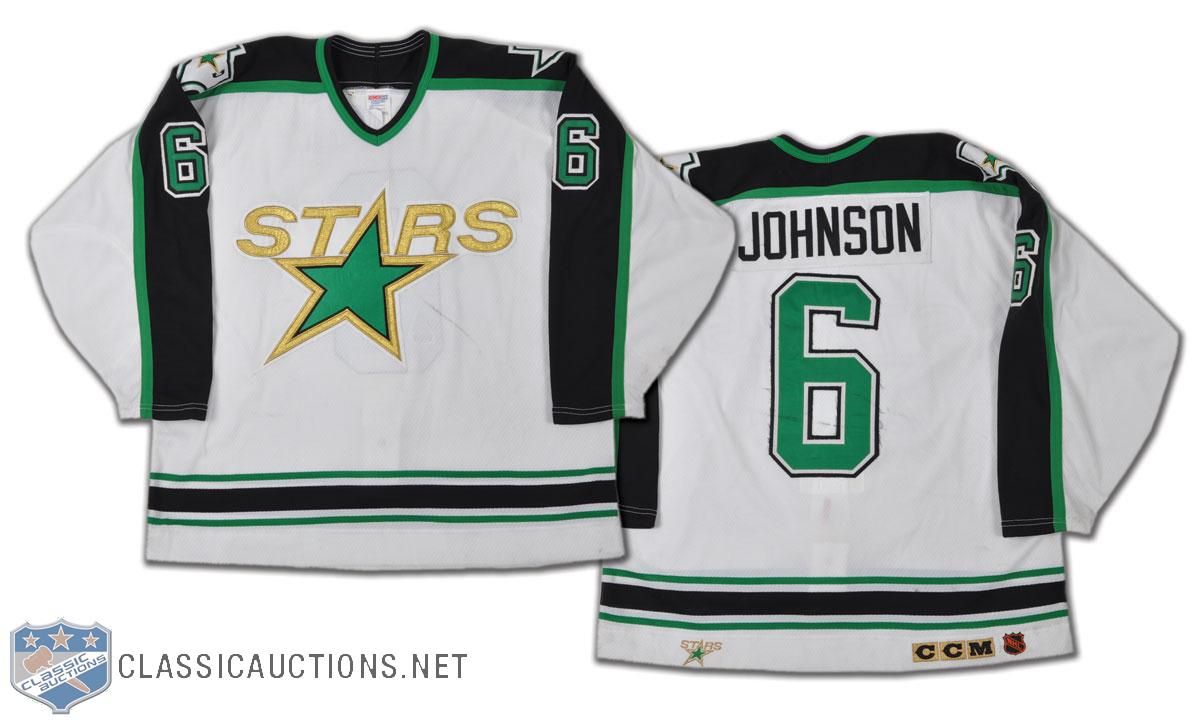
  • By 1993-94, the Stars would be playing in Dallas, and they would be wearing uniforms that seemed to have a lot in common with the earlier re-design. Note to self, fans: if your team suddenly begins to remove the parts of the uniform that make you distinctly unique like, say, part of the team name, I'd be suspicious.
  • Even the officials got in the act with some distinct designs. We've seen this image of Ron Ego calling a penalty in the WHA and discussed his red-striped officials jersey. I never scoured the internet for a picture with much intent because the referees seem to get lost in the shuffle of history. However, Wayne Mundey's referee sweater is a joy to behold!
  • The NHL officials showed that they wore the NHL colours for a long time as this official's sweater from the 1970s has orange numbering to match the NHL shield on the front! Wasn't it nice when NHL All-Star teams and NHL employees all represented the league by wearing the league's colours? The "good ol' days", I suppose.
  • The California Golden Seals seemed to miss the boat in the 1970s when they went pastel instead of staying true to their gorgeous green looks as the Oakland Seals. Bob Girard's uniform looks great, but it just doesn't have the same "pop" as the Oakland jersey does.
  • The 1975-76 Kansas City Scouts jersey is a nice blend of colours, but that logo really draws the eyes to it. That logo features chain-stitching, a favorite of Mr. Paul Lukas over on Uni Watch Blog. I'm not saying the colours should return in the same fashion, but I really think someone needs to come up with a new "Scouts" ensemble. Any takers?
  • Check out the logo on Nelson Pyatt's Colorado Rockies jersey from 1976-77. It looks a little off, doesn't it? That's because the Rockies didn't have their jerseys ready when the season started in 1976. The Kansas City Scouts had moved in the off-season before the 1976 season started to Denver, but they didn't have their jerseys ready in time for the start of the season. Thus the Rockies began the 1976-77 season with an odd-looking Rockies logo instead of their normal logos.
  • Speaking of another jersey that just doesn't seem right, here is a Penguins jersey from the late-1960s. The stripes being light blue just don't seem right after having seen them in yellow-and-black for so many years. Another of the jerseys lost in the annals of history, I suppose.
  • Don Maloney had an interesting career with the New York Rangers. While he wasn't officially the captain, he worked as acting captain whenever the Rangers saw their captain injured. Thus, he routinely is seen with the "C" on his sweater. However, Maloney is probably more well-known for his full name on the back of his sweater. I always thought that was pretty cool.
  • How many people remember Guy Lafleur's tenure with the Broadway Blueshirts? The original "Flower" laced up the skates with the Rangers for 67 games in 1988-89, netting 18 goals and adding 27 assists. I don't remember this, but Lafleur wore #44 while with the Rangers.
  • I found that the Detroit Red Wings did something as they evolved through the 1980s. In the late 1970s (and probably further back), the Red Wings used to use the wheel as the center point for their logo on their chests. The result? Greg Carroll's jersey looks seriously skewed because of the logo.
  • Another gorgeous throwback jersey from the 1991-92 season was worn by the Detroit Red Wings. Doug Crossman played with them that season, and the stripes make this jersey look amazing. This is still one of my favorite hockey jerseys of all-time.
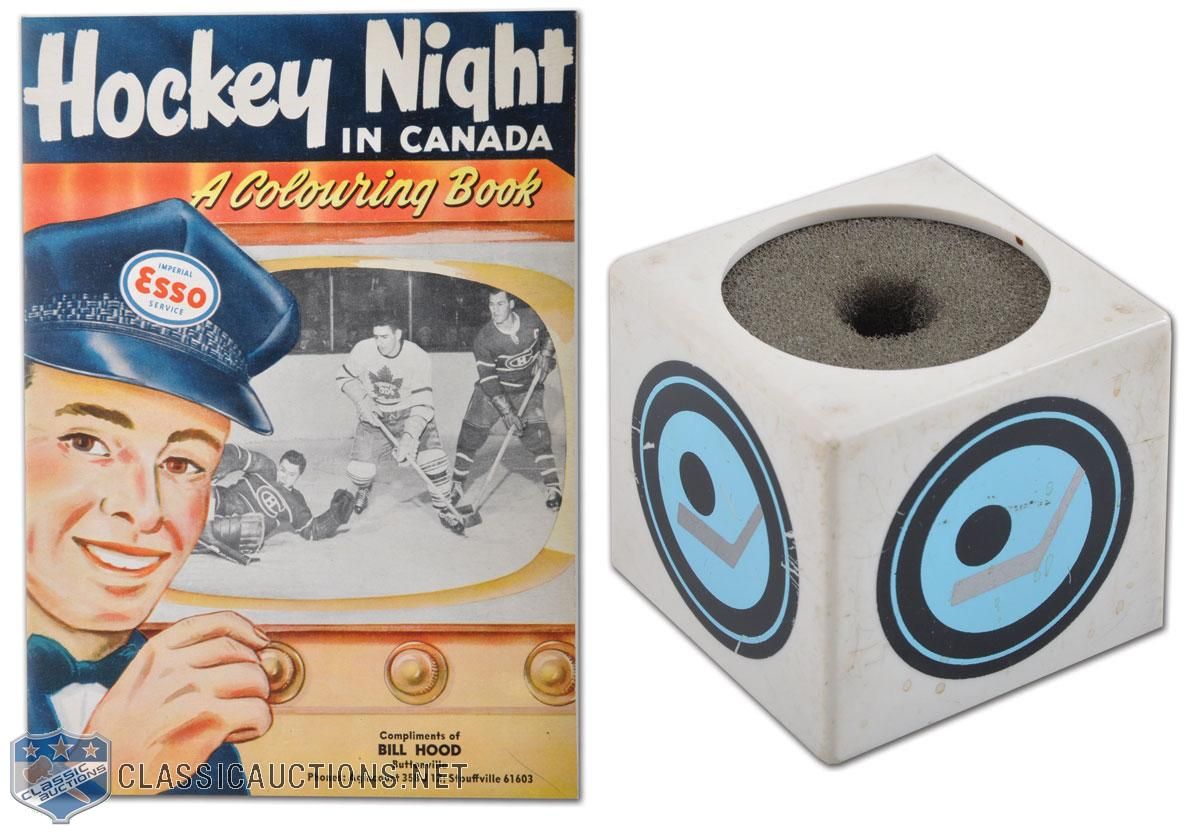
  • How cool is this Hockey Night In Canada microphone cover and book? Ok, the book isn't all that important, but how awesome would it be to have that microphone caddy? I might want one of those more than I want a fabled HNIC towel!
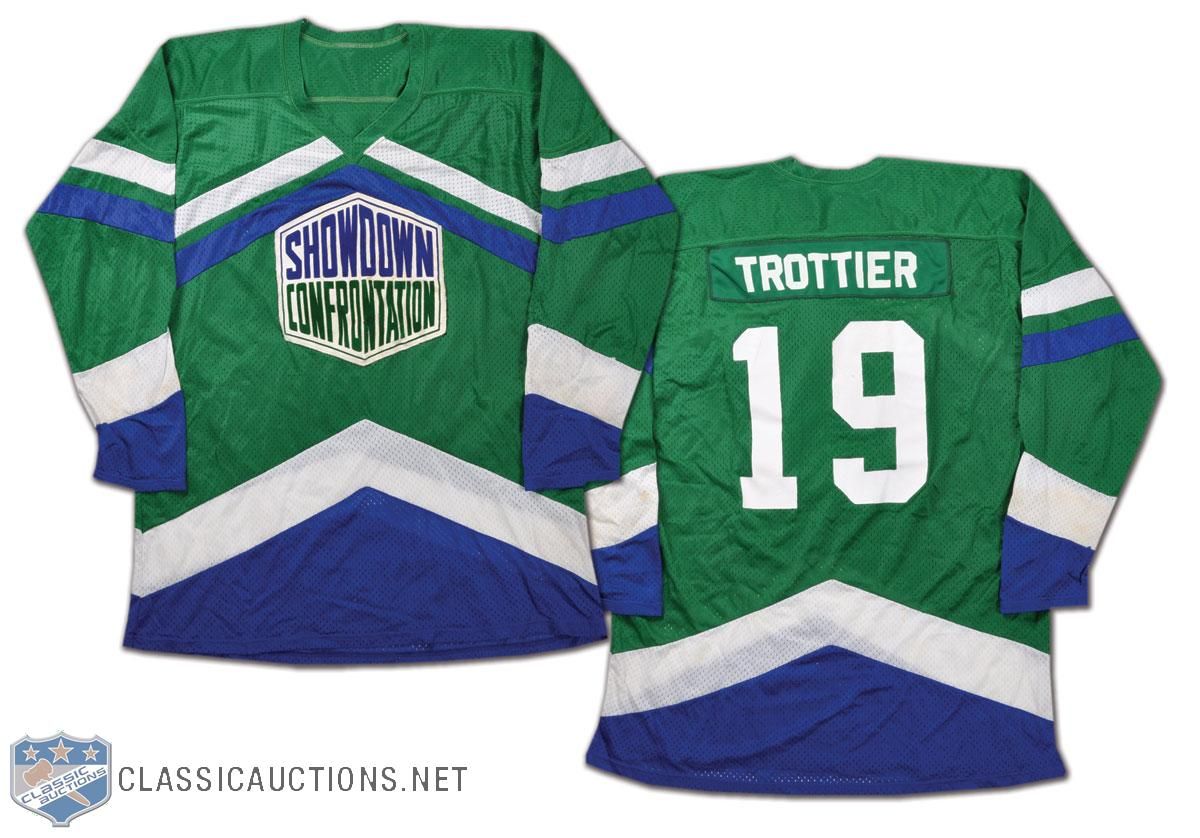
  • We've seen a number of the NHL Showcase Confrontation jerseys in the past, but there's another one in the auction this time around. Bryan Trottier's jersey is up for grabs this time, and I must admit that I really like the colours on this jersey. I may have to research these Showcase Confrontation games a little more!
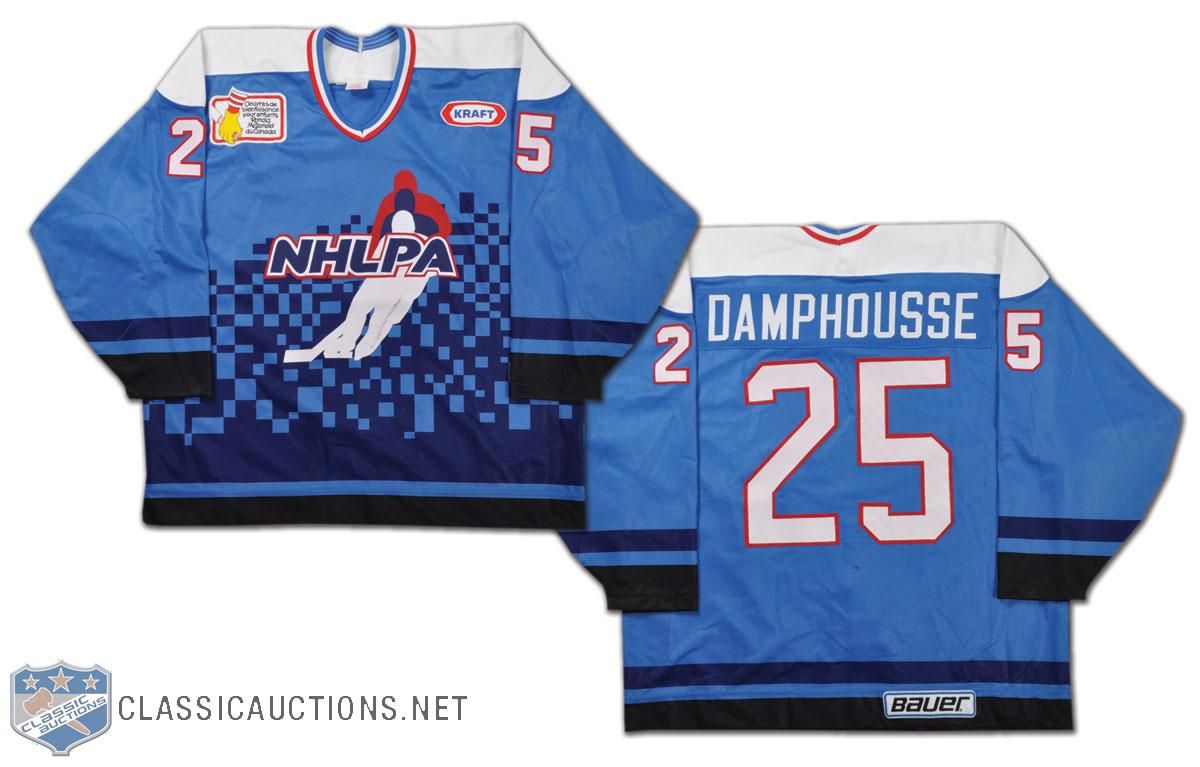
  • There are lots of people who saw the NHLPA 4-on-4 Challenge from Hamilton, Ontario in 1995, but there seems to be zero tape of these games online anywhere. During the strike, the players got together at Copps Coliseum in Hamilton to play some four-on-four hockey while representing their respective regions: Western Canada, Ontario, Quebec, and the USA. Vincent Damphousse was invited, and he played for Team Quebec at the event in this gorgeous NHLPA jersey. I want it!
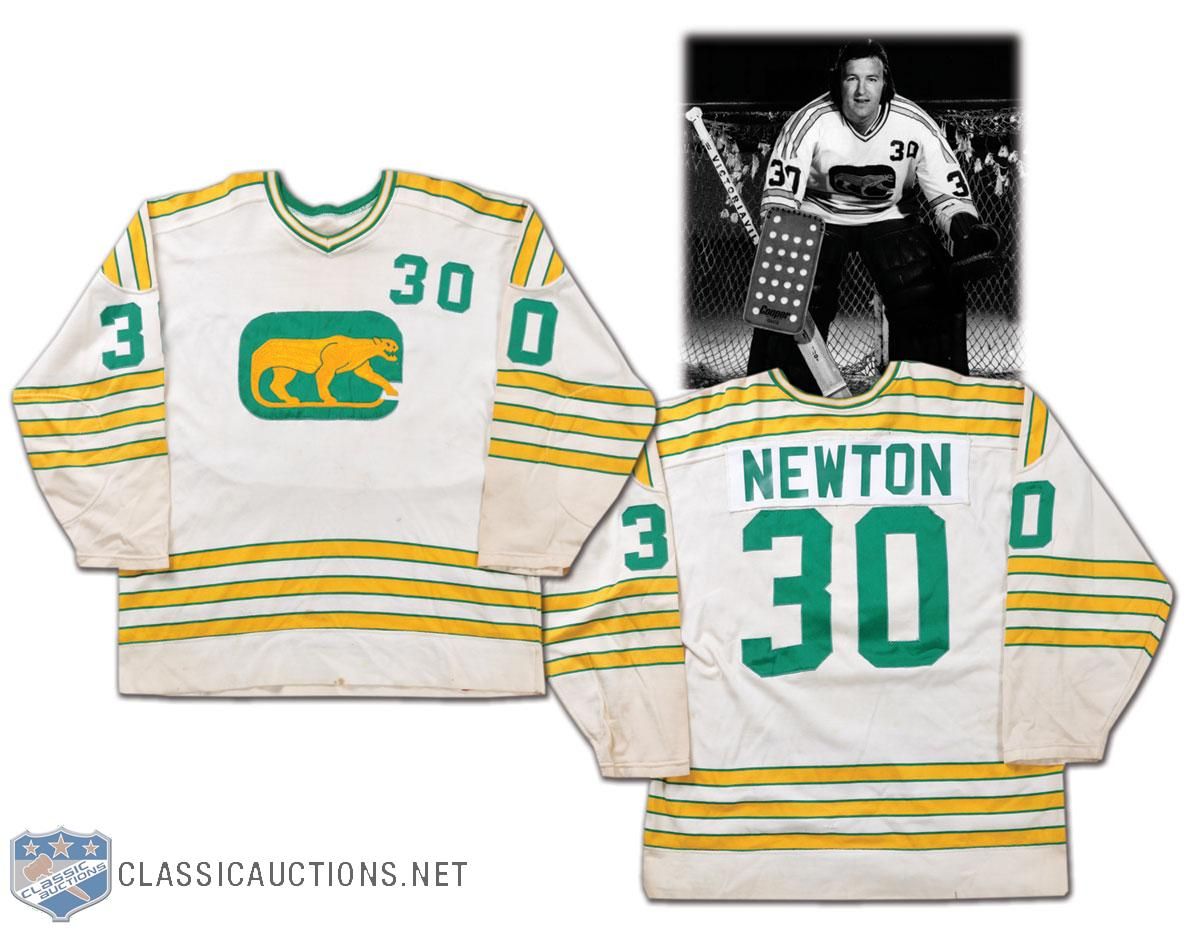
  • We started with the WHA, so let's end it with a few WHA sweaters as well. The original team with the number on the shoulder was the Chicago Cougars, and Cam Newton's jersey from 1973-74 shows the number clearly. I'm still not a very big fan of having the number on the front of the jersey in hockey, but it seems to have made a comeback with some of the NHL teams today.
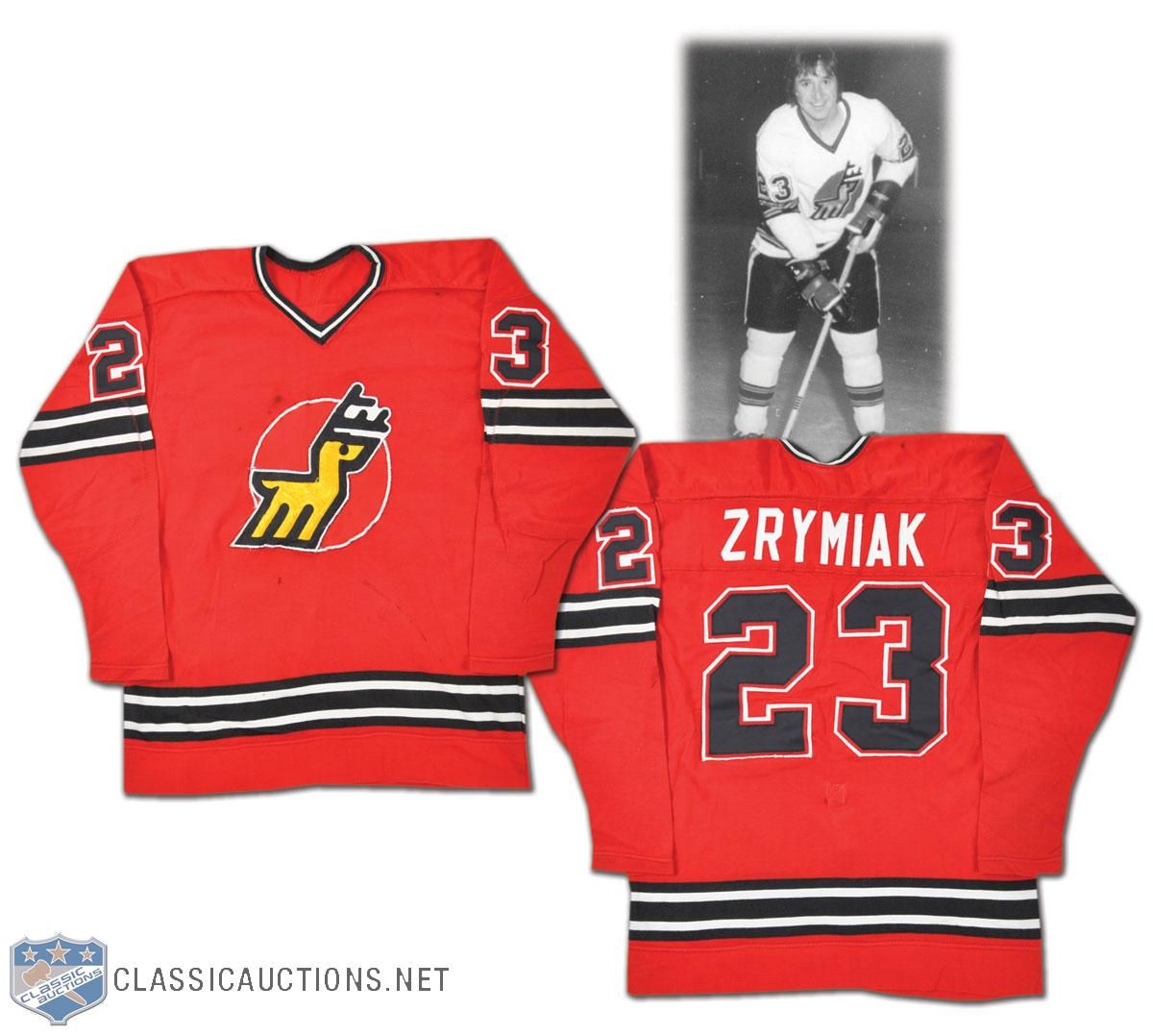
  • Journeyman defenceman Jerry Zrymiak bounced around the WHA for a while, but he played with the Michigan Stags for a while during the '74-75 season. I'm not sure about you, but the name "Michigan Stags" just sounds like a manly name. The colour is a little less manly, though. I love the Stags' logo, though.
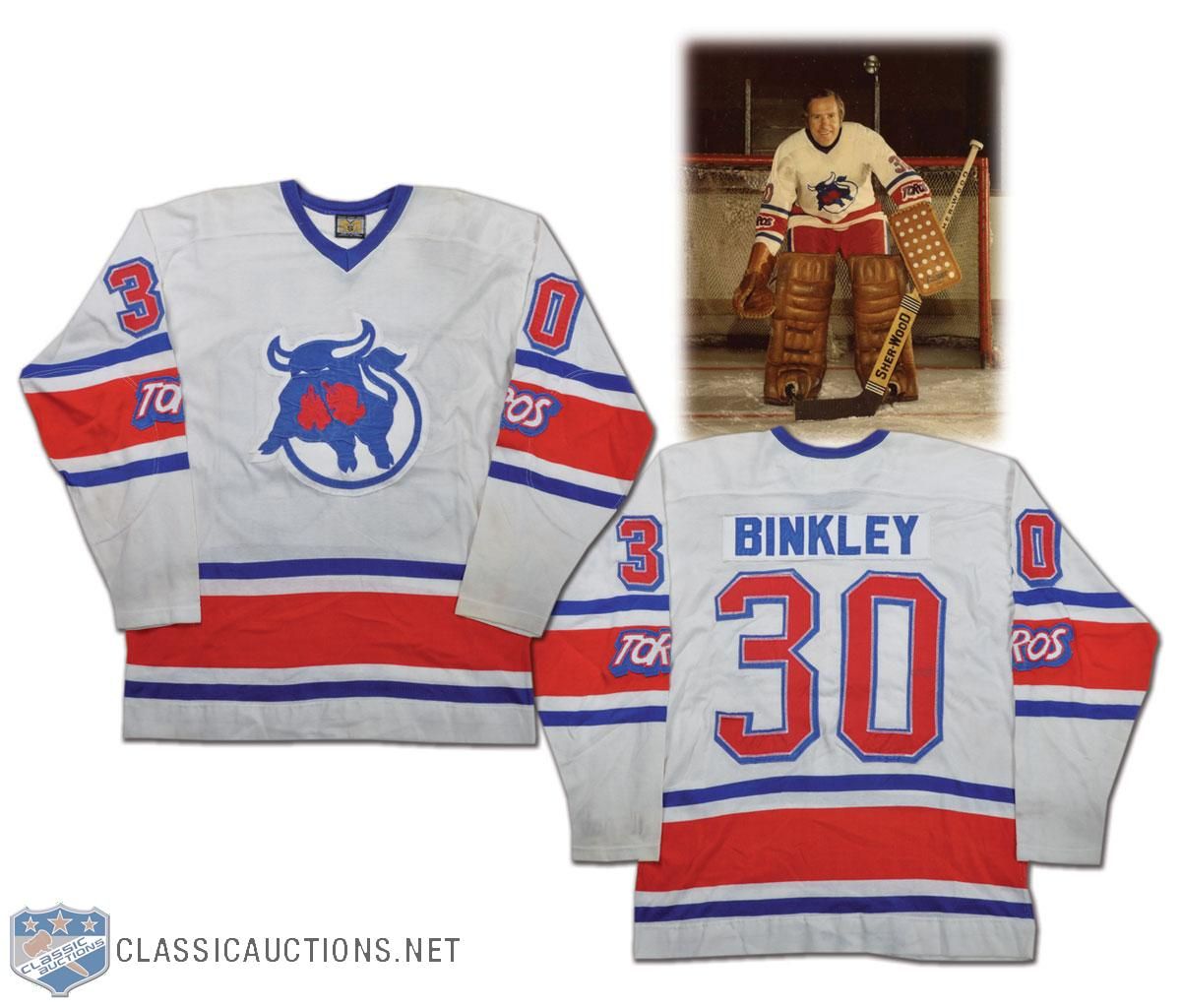
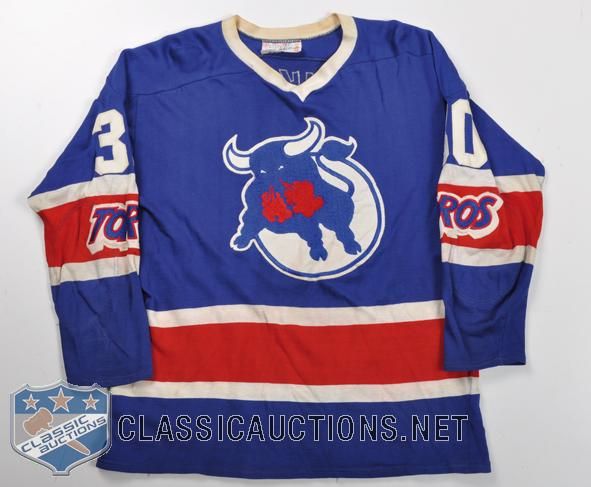
  • Les Binkley starred in net for the Toronto Toros in 1975-76. I like the colours of the Toros' jerseys, but the important part is the "Toros" mark on the sleeve stripe. That's a huge detail on these jerseys, especially when you consider that the team moved after the '75-76 season and became the Birmingham Bulls. Why is this important? Check out the similarities in the Bulls' jersey to the Toros' jersey. The only thing missing is the "Toros" wordmark from the sleeve!
There are a pile of incredible auction items available through the Classic Auctions website. I really would kill for that HNIC microphone cover or that Detroit TBTC jersey, but, being that I'm a poor college student, these luxuries will have to wait. If you're interested, get over to the Classic Auctions website ASAP!

Until next time, keep your sticks on the ice!

Wednesday, February 23, 2011

It's been an interesting week on Antler Banter as the Moose find themselves stuck in neutral in February. All teams go on streaks, whether they be hot or cold streaks, but the Moose seem to be stuck in these extended streaks that have serious consequences on their overall standing. Going 3-4 so far in March has put a serious halt on the upward movement through the standings that the Moose saw in December and Janaury. Can they break out of this slump against the Toronto Marlies and Lake Erie Monsters? Make sure you stop by the Moose website for all your Manitoba Moose news and information. If you're interested in attending a Manitoba Moose game, please click here for seating information, ticket pricing, and availability. The Moose finish off their six-game homestand with a little Hardcore Hockey!

Scrivens Makes It Two

The Moose dropped the Tuesday night affair to the Marlies by a 2-1 score, so they were looking to bounce back against a feisty Marlies squad. They also needed to see if they could score more than one goal in a game after having only potted one marker in each of four of the last five games. Tyler Weiman got the call for the Moose as he hoped to reverse the Herd's fortunes, and he faced off against Ben Scrivens who was standing 200-feet away.

It was a "good, bad, and ugly" evening for the Moose powerplay. The good: Ryan McGinnis scored his first goal of the season with the man-advantage with less than five minutes to play. The bad: the Moose went 1-for-6 on the night, missing several excellent opportunities to put this game away early as Toronto found themselves in penalty trouble. The Moose had a 5-on-3 for a full two minutes and four minutes of total powerplay time, but could not capitalize. The ugly: Tyler Weiman whiffed on what appeared to be a routine glove save, giving up a shorthanded goal early in the second period that really seemed to deflate the squad. Overall, poor marks for the powerplay units on this night for not capitalizing on chances, and Weiman has to be better.

It looked like another night at the office for Sergei Shirokov as he picked up an assist on Guillaume Desbiens' second-period goal, but things went completely off the rails in the third period as Sergei Shirokov had had enough of Nazim Kadri's antics. After Kadri slashed the Russian sniper across the shinpads, Shirokov's soft hands lost the gloves as he and Kadri wrestled their way to the ice along the boards. I'd normally say that your best scorers shouldn't be fighting, but I fully believe that a player should be able to defend himself. Good on Shirokov for dropping the mittens and showing Kadri that he's not going to be pushed around.

It took the Moose nearly 56 minutes to wake up in this game as the Marlies built a 4-1 lead in that time. The Moose stormed back in the final four minutes to make it a 4-3 game, but Ryan Hamilton iced it with 2.2 seconds to play as the Marlies hung on for the 5-3 win. The Moose have now dropped two straight games to the Marlies after winning the first three, and see their record on the season drop to 29-19-6.

Monsters Frighten Moose

The Monsters were nipping at the heels of the Moose as they entered Friday's game, so that meant that the Moose needed to put four points on the board with two wins over a team that looked to overtake them in the standings. Eddie Lack looked to reverse the fortunes of the Moose while Jason Bacashihua got the call for the Monsters.

Kevin Connauton should feel responsible for the opening goal of the game. Connauton got muscled off the puck by Greg Mauldin, and then couldn't recover to chase down Mauldin. Mauldin circled behind the net, and Mark Flood left Ben Walter in front of the net to track down Mauldin. Connauton arrived in front of the net seconds late after Mauldin centered to Walter for the first goal of the game. I'm not sure what Connauton was doing, but he certainly seemed to give up after losing the puck in the corner to Mauldin. The effort shown by Connauton might be a reason why the Moose are on a two-game skid.

The Moose penalty killing units took a hit tonight as well as they gave up two powerplay goals to the Monsters. I'm not going to blame the penalty killing units for the result in this game, but they could use a little help from the other special teams unit. Manitoba's powerplay fired blanks again as they went 0-for-4 on the night, and find themselves ranked as the 25th best powerplay in the league. When the penalty kill has an off-night, it would be nice if the powerplay units brought their lunch pails to work and scored a couple of goals.

Overall, there wasn't much to brag about on the home side as the Moose got walloped by the Monsters in a 5-1 loss. The Moose fired 30 shots on Jason Bacashihua, but there weren't many of the high-quality variety that tested Bacashihua often. With the loss, the Moose drop to 29-20-6, and lose their spot atop the North Division standings as the Monsters leap-frog into first.

Moose Fly Past Monsters

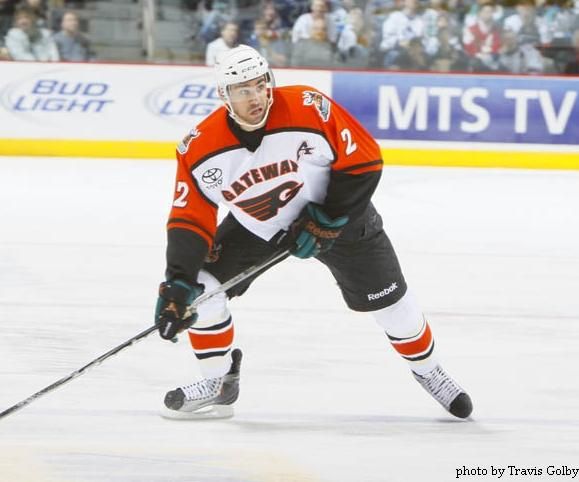
It was a big night for one minor hockey team in Winnipeg as the Gateway Flyers took to the ice for their first AHL game in history! Ok, so they weren't the real Flyers, but the Moose donned the jerseys of the Gateway Flyers for their Saturday clash with the Monsters as part of the Community Jersey Program! It was weird seeing the Moose in black-and-orange for the first time in history, but it was easy to get used to when they began playing like the Flyers - scoring and hitting. Eddie Lack would take to the pipes again for Manitoba. Jason Bacashihua started the game for the Monsters, but he would be relieved by Trevor Cann after the Moose had staked themselves to a sizable lead.

It was another big night for Manitoba's Garth Murray. The scrappy, defensive forward scored a goal, added a helper on Sergei Shirokov's goal, picked up two minutes for tripping, had two shots, and finished the game as a +2! The scorekeepers certainly used a lot of ink on his stats tonight! Murray played really well at both ends of the ice, deserving some kudos despite not earning one of the three stars on the night. He scored, he played physical, and he was responsible in his own zone. That's the kind of effort the Moose need from all 22 players.

Manitoba's best player continues to make great plays as Sergei Shirokov scored a goal, added an assist, had four shots on net, and ended the night as a +2. Shirokov's assist was a gorgeous backhanded no-look pass to Mario Bliznak that seemed to confuse Jason Bacashihua. Shirokov made a move to head behind the net casuing Bacashihua to move off the post, but Shirokov threw the puck out front on the backhand. Bacashihua, realizing he made a mistake, went back to hugging the post, but Bliznak wired it past his right shoulder into the cage before Bacashihua could find the puck again. Great plays like that show you why Sergei Shirokov was an easy choice as Manitoba's AHL all-star representative.

The Moose really played well for 57 minutes before giving up a couple of goals to the Monsters. Despite giving up a pair of goals late, the Moose hung on for the 4-2 victory to jump ahead of the Monsters in the standings once again as they have a better winning percentage. With the win, the Moose snap their three-game losing streak and improve to 30-20-6 on the season.

Gotta Grind Out Some Wins

The Moose hit the road over the next week with games starting tonight against the Rochester Americans. They'll battle the Amerks again on Friday before heading into Toronto for games against the Marlies on Saturday and Sunday. You can catch the Sunday game against the Marlies on CBC as the AHL on CBC comes to the Ricoh Coliseum for the Marlies-Moose tilt.

The Americans come into the games having gone 6-4 over their last ten games. During that stretch, the Americans have beaten the Hamilton Bulldogs twice, the Hershey Bears once, and knocked off the Worcester Sharks. They're led by Tim Kennedy and Clay Wilson offensively as both men are nearing the 40-point mark on the season. Tyler Plante is playing fairly well in net, and is even sporting a blocker with the old-style holes painted on it! Or maybe they're real holes? Either way, that looks cool! The Moose have to keep winning as the Bulldogs and Monsters are breathing down their necks, so two wins over the Americans would help immensely!

The Marlies need no introduction as the Moose re-engage in battle with them. Kadri is becoming a thorn in the side of Moose players, Scrivens and Gustavsson are playing well in net, and the Marlies are closing the gap with each win over the Moose. Again, beating divisional rivals is vital if a team wants to go far in the AHL, so the Moose need to play well against the Marlies this coming weekend after dropping the these last two games at home against Toronto!

Eight points await the Moose if they are hungry enough to get them. Working harder than their opposition is a good way to start, and the talent that the Moose bring should put them over the top in each game if they work hard. Only one thing to say as the Moose head down the stretch: DO IT!

Until next time, keep your sticks on the ice!

Wednesday, February 2, 2011

Antler Banter returns to the airwaves after the AHL All-Star break, and we find the Moose out in Pennsylvania this week as they start the second half of the AHL season. They closed out the first half of the season with games against Rochester and Toronto, so we'll take a peek into those games and who stood out for the Moose. And because it's a new week, we have another Manitoba Moose player making a splash in his NHL debut! Don't forget to visit the Moose website for all your Manitoba Moose news and information. If you're interested in attending a Manitoba Moose game, please click here for seating information, ticket pricing, and availability. We shut down the first half of the season in this week's Hardcore Hockey!

Beaten By The Bottom

The Manitoba Moose and Rochester Americans met for the third time this season as the Moose traveled to New York for a road game against the Amerks. Manitoba had won the previous two games in the comfy confines of MTS Centre, so they wanted to take their strong play against Rochester into the Amerks' barn against the AHL North Division's cellar-dwellers. It was an all-Swedish match-up in the nets as Eddie Lack and Jakob Markstrom stood two-hundred feet apart in this game.

It's always a bonus when one of your pluggers gets a goal, and it is especially big when your grinders chips a goal in while killing off a penalty. Kudos go out to Garth Murray on Friday as he netted his second goal of the season while shorthanded! Travis Ramsey's clearing attempt was blocked, but Murray grabbed the loose puck and raced down the ice on a breakaway before sliding the puck behind Markstrom.

While it's hard to be critical of the team's best player over the last month, Sergei Shirokov finished the game at a game-worst -2 on the night. He did have four shots on Markstrom during the evening, but ended the night with nothing to show for it except a couple of goals-against. That kind of night can kill a young player's career in the NHL, so Shirokov will have to take charge on his line for them to be better if he wants another shot with the Vancouver Canucks.

A fairly low-scoring, low-excitement game as eight minor penalties and one double-minor penalty was called over the 60 minutes. Jakob Markstrom was well-rested after the All-Star break, though, and he stopped all five Moose powerplays amongst the 33 saves he made in a 2-1 Amerks victory over the Moose. The Moose drop a game that they have to win if they want to keep pace with Hamilton, and fall to 25-14-6 on the season with the loss.

More Marlies, More Wins

The Moose didn't have much time to reflect on their loss to Rochester as they saddled up and headed north for a Saturday evening tilt against the Toronto Marlies. Manitoba had dropped the last two games, scoring only one goal against the Hamilton Bulldogs and Rochester Americans in the past two games. The Moose had to get themselves back on track to salvage the first half of this eastern road trip. Jussi Rynnas got the call for the Marlies while Eddie Lack took to the nets for Manitoba.

Ryan Cruthers was all over the scoresheet in this game as Cruthers recorded a "Gordie Howe hat trick"! Cruthers got started early in this game, wrapping up the legendary GHHT just 8:38 into the game. His third goal of the season came at 3:01, he added the assist on Jordan Schroeder's goal at 7:38, and Cruthers finished the GHHT by squaring off with Danny Richmond in a battle of fisticuffs exactly one minute later! That's quite a day at the office for #16!

Josh Aspenlind has been playing some inspired hockey since being recalled from the ECHL. Saturday night saw him pick up a couple of helpers on the first two Moose goals as he continued his solid play! In sixteen games thus far, Aspenlind has yet to record a goal, but his five assists and +1 rating are indicative of his solid play in shutdown and checking roles. With the Moose getting great contributions from the guys not normally relied on to score, they'll go far if this can continue!

Both teams seemed to play this game with a little less tenacity than we usually see from a Manitoba-Toronto game, and that might be expected as it seemed that both teams were looking forward to the AHL All-Star break for a little rest and relaxation. The Moose, however, closed out the first half of the AHL season with a 3-1 win over the Marlies, pushing their record to 26-14-6 on the season!

All-Star Tally

In case you missed the action, the AHL All-Star Game was played in Hershey, Pennsylvania on Monday, and the AHL Skills Competition went on Sunday afternoon. Sergei Shirokov was chosen as the lone Moose representative in this year's exhibition of talent, and Shirokov came away with his third AHL All-Star Game goal!

In the Skills Competition, Shirokov was first skater of the Western Conference team that won their heat in the Puck Control Relay challenge. He was also part of a scoreless three attempts in the Pass-and-Shoot challenge. And Shirokov put some razzle-dazzle on his
breakaway attempt by flipping the puck in the air before being stopped by Wilkes-Barre/Scranton's John Curry in the Breakaway Relay.

Shirokov certainly showed off his talent and skill, and did himself and the Moose proud over this weekend!

Bringing Up Firepower

It wouldn't be an edition of Antler Banter without seeing another talented Moose player called up to the Canucks and making memories for himself. This time, Cody Hodgson was called up on January 31, and the skilled Moose centerman suited up against the Dallas Stars in his first NHL regular season game. However, Hodgson had to wait one game until late tonight to net his first NHL goal against the Phoenix Coyotes.
Way to go, Cody!

Just as a note, the final score in the Vancouver-Phoenix game was 6-0. What makes this 6-0 score so important to Moose fans is that all six goals were scored by players who got their starts in Manitoba. Hodgson, Mason Raymond, Jannik Hansen, Alex Burrows, and two goals by Ryan Kesler paced the Canucks to the win. How many NHL teams have seen all six goals in one game come from players that their AHL affiliate has developed? Not many as far as I can tell. Well done, current Canucks and Moose alumni! This says a lot about the Moose franchise as a whole, and Moose fans should be proud of the work the coaching staff is doing with these young players!

Tough Road Ahead

Manitoba has a tough finish to this seven-game road trip. The road through Pennsylvania isn't going to be fun or easy as the Moose have a couple of games against the AHL-leading Wilkes-Barre/Scranton Penguins and a couple of games against their Eastern Conference rivals in the Hershey Bears.

The WBS Penguins come into the weekend sitting in first-place overall in the AHL standings. They are a league-best 36-12-0, and sit seven points better than the second-place Manchester Monarchs for AHL supremacy. The Penguins are 6-4-0 in their last 10 games, and lost their last game against Binghamton by a 2-1 score. Leading scorer Dustin Jeffrey is currently playing for the NHL Penguins, so Nick Johnson and Brett Sterling will have to carry the load. The Moose need to keep their eyes on these two as they both have 35 points, as well as keeping tabs on AHL All-Star Eric Tangredi.

The Hershey Bears have recovered since their early season slow start. The Bears trail the Penguins in the East Division by 11 points, sitting in second-place with 61 total points. The Moose and Bears tangled in January, and the Moose won and lost in overtime in that two-game series. The Bears are home turf this time, and they have been playing well, going 7-1-2 since their battles with the Moose. Brian Willsie, Andrew Gordon, Keith Aucoin, and Kyle Greentree have been lighting the lamp regularly for the Bears, so the Moose will need to keep tabs on those four.

Four big games against potential Eastern Conference champions in this year's Calder Cup should show everyone whether the Moose are contenders for the AHL Calder Cup. If they can continue to have all four lines contribute and play well, the Moose should capture six of eight points on this Pennsylvania tour, and that will be good for Moose as they chase down Hamilton for top spot in the AHL North Division. As always, DO IT!

Until next time, keep your sticks on the ice!

Sunday, January 30, 2011

It's that magical time of year when hockey gets back to its purest form and... alright, who am I kidding? I was asked by Phil Hecken to give some thoughts on the NHL All-Star Game jerseys for the incomparable Uni Watch Blog today, and I am replaying the article here. As you know, the NHL All-Star Game goes today, and there's something that has me excited about the game, but a number of things that do not. The NHL All-Star Fantasy Draft took place on Friday night, and we'll take a look at some of the more garish NHL All-Star Game jersey designs in a Jim Vilk-style "3+1 view". I'll also look back on a few of my favorite images from past All-Star Games. Let's get this review underway using the Paul Lukas "is it good or is it stupid" test!

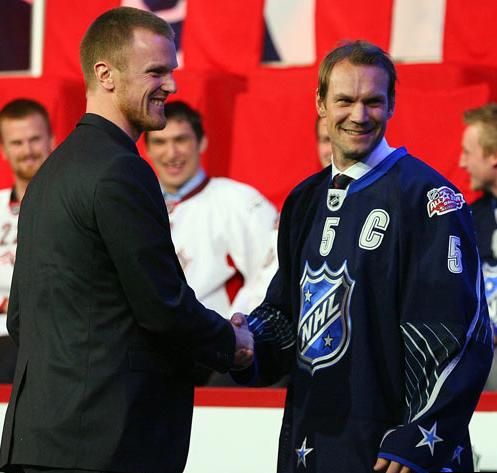
The NHL decided to allow Reebok to push the envelope in their designs this year for the two teams, and I'm sorry to say that I don't like the look the NHL chose. There's nothing good about random striping that cuts off at the seam of the sleeve and then randomly begins on the back of the sleeve and end at the elbow on the front. Honestly, what is the point of these random lines? If this is some new gradient technology that Reebok has come up with, we've been there, done that, moved on. Stop trying to add flair – it just doesn't work! Random lines that do nothing for the aesthetics of the uniform are just dumb. STUPID.

Have you actually looked at the front of the jerseys? There's just way too much stuff on the front with the NHL All-Star shield logo, the number below the collar, the captaincy designation, and the NHL shield logo. Does anyone actually look at these jerseys before signing off on them? Are there no prototypes made? The easiest solution is to remove the “feature” that the NHL apparently insists on having on the front – the number. The jersey would be much less busy, and would look fairly good if you overlook the random lines all over the sleeves. However, that number can't be overlooked. STUPID.

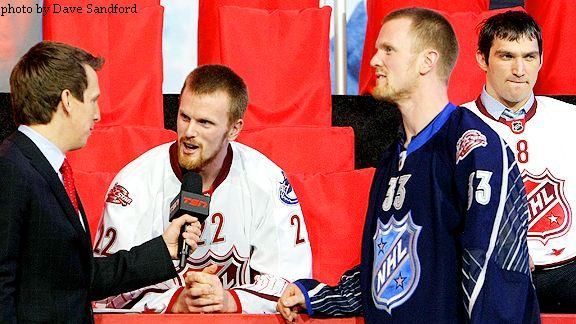
The font used on the jersey for names and numbers is legible, so that's a plus, but we run into a problem with the numbers on the back of Team Lidstrom's jerseys. Again, what's with the random lines? Do we really need these lines on the numbers? The rear numbers clearly do not match up with the sleeve and chest numbers as it appears those numbers don’t have lines, so this might be the first time in NHL history where back numbers don’t jive with TV numbers. So that automatically makes this STUPID.

Now you’re probably saying, “Teebz, you’re such a downer,” due to my three “stupid” ratings in a row. There are, however, some things I do like about the NHL All-Star jerseys.

For starters, I love the colour used by the teams. Have you noticed that the black on these jerseys is as minimal as can be? The blue is bold, and the home team is wearing white! While I’m not completely sold on the shade of red being used, the game should look good and the fans, for the first time in a long time, will be able to cheer on the good guys in white! GREAT!

I'm guessing that Team Staal will be skating left-to-right tomorrow because the NHL All-Star Game logo is on mirrored shoulders for the two teams. I get that the NHL wants the logo showing in promotional pictures during the ceremonial face-off and stuff, but will anyone not know that this is the NHL All-Star Game? I can’t call it dumb because it serves a purpose, but when you combine that with the individual team logo of each player on the opposite shoulder, this one becomes a PUSH.

Overall, not the worst-looking All-Star Game in history (we'll see those in a second), but the NHL really needs to go back to their star design or a much more simplified design. The KISS rule always seems to work best.

Teebz's All-Star 3+1

Not much needs to be said here, but these are certainly the worst looks seen at the NHL All-Star Games over the years. The "+1" will be my favorite NHL All-Star Game look of all-time. Enjoy!

3. 1982 NHL All-Star Game – Wales Conference vs. Campbell Conference. I like the colours, but how many stars do you need on a jersey?

2. 2003 NHL All-Star Game – Eastern Conference vs. Western Conference. The Western Conference jersey looks good in colour, but the TV numbers on the front left hip for these teams are useless. The Eastern Conference jersey looks like a ripoff of the Mighty Ducks' jersey. Not a fan of these jerseys. They just don't say "all-star".

1. 2000 NHL All-Star Game – North America vs. World. Count the number of different jerseys you see. If you see four different jerseys, you're right. The goaltenders for each team wore jerseys that were different from their teammates. Aren't uniforms supposed to be, y'know, uniform? This is the dumbest idea seen at an NHL All-Star Game yet.

+1. 1992 NHL All-Star Game – Wales Conference vs. Campbell Conference. There is something to behold about the 1992 NHL All-Star Game: the colour, the throwback designs, and the overall aesthetic. These uniforms are absolutely gorgeous, and some NHL team should look at bringing a design like this to life.

There are also a number of pictures that make the NHL All-Star Game special. These are some that I've liked for various reasons.
That's all for today! Enjoy the NHL All-Star Game from Raleigh, North Carolina!

Until next time, keep your sticks on the ice!

Saturday, January 29, 2011

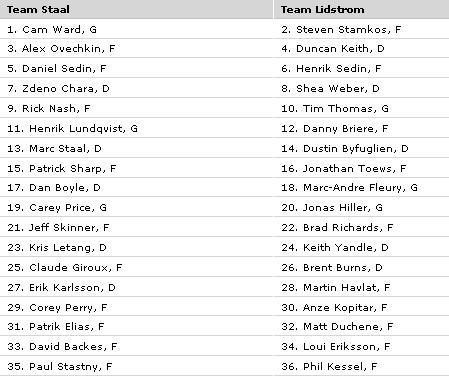
There was some pretty good buzz about the team selection in the old schoolyard known as the NHL. The 2011 NHL All-Star Game Fantasy Draft, presented by Cisco because you can't undersell yourself, was held, and Team Staal and Team Lidstrom began to assemble as the two captains and their alternate captains went back and forth picking teammates. There were many big questions - who would go first, who would be selected last, would there be teammate versus teammate situations, will the Sedins be broken up for the first time in their careers - and each one would have an answer at the conclusion of the Fantasy Draft. So without further adieu, let's look at the rosters for both Team Staal and Team Lidstrom.

Team Staal

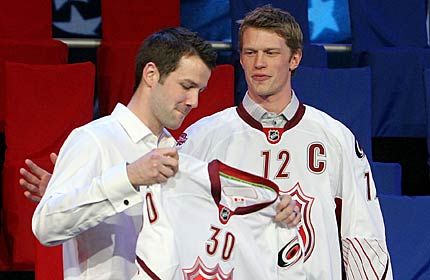
Team Staal, led by captain Eric Staal and alternate captains Ryan Kesler and Mike Green, were given the right to draft first in the Fantasy Draft. With names like Ovechkin, Nash, Toews, and Stamkos available, Eric Staal had a number of superstars to choose. With the first overall pick, Team Staal chose... Cam Ward? Alright, I get it - a little nepotism here as the Carolina Hurricanes superstar chose the Carolina Hurricanes goaltender for the hometown fans. No complaints there, I suppose.

Team Staal continued the nepotism theme as alternate captain Mike Green chose teammate Alexander Ovechkin with the third pick. And Ryan Kesler got in on the action as he chose teammate Daniel Sedin with the fifth pick of the draft. It appeared Team Staal was all about teammates early on, but the seventh pick was one made purely on talent. Zdeno Chara was added to Team Staal, and the ninth pick was another smart one as they added Rick Nash to the team.

Teammates and family played a role in the next two picks as goaltender Henrik Lundqvist was chosen with the 11th pick. Following him was another New York Ranger as Eric Staal chose brother Marc Staal with the 13th pick. Patrick Sharp, Dan Boyle, and Carey Price were selected next by Team Staal before Eric went back to the Hurricanes' roster by selecting teammate Jeff Skinner with the 21st pick in the draft.

Team Staal rounded out their roster with Kris Letang, Claude Giroux, Erik Karlsson, Corey Perry, Patrik Elias, David Backes, and Paul Stastny. If you're keeping tabs on repeat player numbers, Team Staal should have two instances of #10 (Sharp and Perry), two instances of #22 (Sedin and Boyle), and two instances of #30 (Ward and Lundqvist).

Team Lidstrom

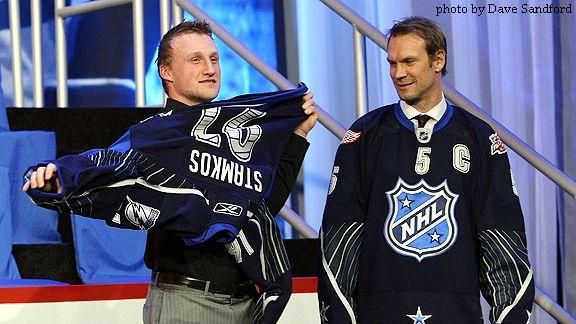
Niklas Lidstrom was joined on stage with his alternate captains Patrick Kane and Martin St. Louis as they had the second overall pick in the NHL Fantasy Draft. With Cam Ward already off the board, that left a myriad of NHL superstars to choose from, and Lidstrom jumped at one of the league's best goal scorers in choosing Steven Stamkos with his first pick.

Lidstrom, like Team Staal, decided to use a little nepotism as alternate captain Patrick Kane chose defenceman Duncan Keith with Team Lidstrom's second pick. Martin St. Louis threw a little controversy into the 2011 NHL All-Star Game with his selection of Henrik Sedin at the sixth overall pick. That, of course, means that the Sedins will be playing against one another tomorrow afternoon.

From there, it was all about talent on Team Lidstrom. Shea Weber, Tim Thomas, and Daniel Briere were chosen with the next three picks before Patrick Kane had some say on the 14th and 16th overall picks. Team Lidstrom selected former Blackhawk and current high-scoring Thrashers defenceman Dustin Byfuglien at 14, and then added Blackhawk Jonathan Toews at 16. Team Lidstrom rounded out their goaltenders with the next two picks as Marc-Andre Fleury and Jonas Hiller were selected.

Martin St. Louis and Steven Stamkos got to bring back one of the Lightning alumni with the 22nd overall pick as Brad Richards joined Team Lidstrom. Keith Yandle and Brent Burns rounded out Team Lidstrom's blueline with the next two picks. Burns' teammate and Kane's former teammate Martin Havlat was chosen at 28th overall, and he was followed by Anze Kopitar, Matt Duchene, and Richards' Dallas Stars teammate Loui Eriksson. So who was the last man chosen?

Phil Kessel of the Toronto Maple Leafs. For his wait, Kessel received a Honda CR-Z car and $20,000 to donate to a charity of his choice - not too bad for being the last man chosen. Kessel stated that he will donate the money to a cancer charity after having beaten testicular cancer in 2006. As for being chosen last, what did Kessel think of that honour?

"I don't care one bit at all," said Kessel of being chosen last to The Canadian Press. "When I was a kid, I would never have dreamed of being here. Hopefully the fans in Toronto are happy to see me in the game. I'll play well in the game for them."

If you're keeping track of those players with repeat numbers, Team Lidstrom will have two sets of numbers that will appear twice: #91 (Stamkos and Richards) and #33 (Sedin and Byfuglien).

Just as an added note, Jeff Skinner will officially become the youngest player in any of the four major sports to appear in an all-star game. Skinner is 18 years, 259 days. He officially knocks off Steve Yzerman's 1984 All-Star Game debut by eight days under the current format of the All-Star Game. When the NHL Stanley Cup champions earned the right to play the NHL All-Stars, there are two players who would be younger than Skinner: Toronto's Fleming Mackell in 1947 (18 years, 166 days) and Detroit's Larry Hillman in 1955 (18 years, 239 days).

Teammates that will face one another include Daniel Sedin and Ryan Kesler against Henrik Sedin; Zdeno Chara against Tim Thomas; Kris Letang against Marc-Andre Fleury; Claude Giroux against Daniel Briere; Corey Perry against Jonas Hiller; and, Patrick Sharp against Patrick Kane, Duncan Keith, and Jonathan Toews.

The NHL Skills Competition gets underway later today, so get ready for some fun and excitement as your 2011 NHL All-Stars show off their stuff!

Until next time, keep your sticks on the ice!

Sunday, January 23, 2011

We're back again on a chilly Sunday with more comic book unveilings. The NHL Guardian Project rolls on with seven more Guardians unveiled this past week, so we'll continue to run down the similarities between these Guardians and some of the more recognizable superheroes that have a hold on pop culture. Again, this is just some fun with the NHL Guardian Project before the big unveiling at the NHL All-Star Game on January 30, so don't take this article too seriously.

If you want to see any of the previous Guardians that have been unveiled, feel free to check out this article for the first eight Guardians or this article for the next eight Guardians. Seven more NHL-themed superheroes are on-deck, so let's get to them!

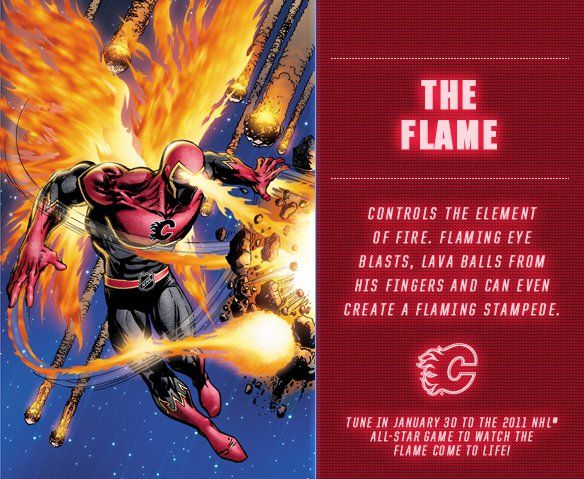
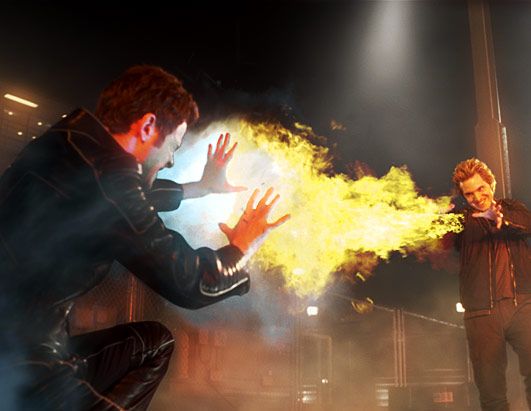
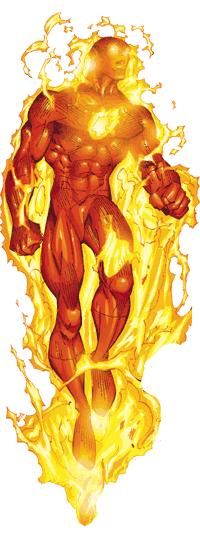
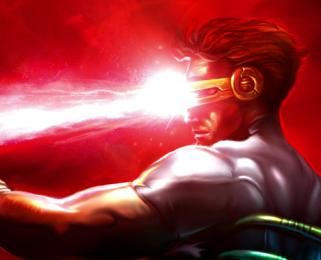
We'll start in Calgary where the Flame holds the fort. The Flame seemingly would be the equivalent of Pyro from the X-Men series or Johnny Storm aka The Human Torch from the Fantastic Four, but having the ability to shoot fire from his eyepiece reminds me of the X-Men's Cyclops as well. "Lava balls from his fingers" just sounds uncomfortable, so does that mean he has lava flowing through his veins? And apparently he can create "flaming stampedes" which means that the near-dead fire-horse is being revived by Stan Lee.

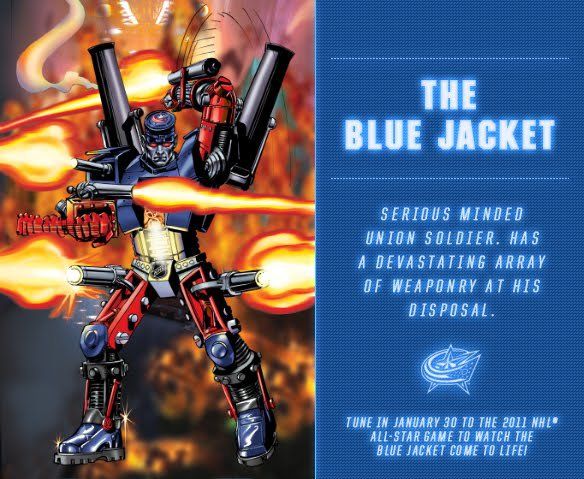
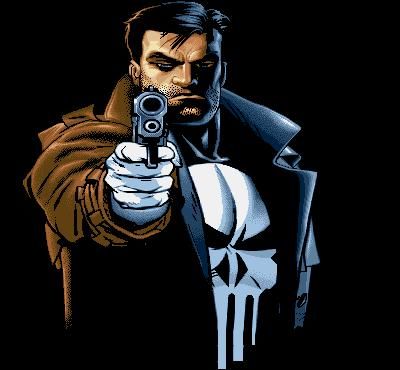
We move on to Columbus where the Blue Jacket has an arsenal of weaponry at his fingertips. As a "serious minded union soldier", I assume he'll protect the interests of the players with all his might as the NHLPA could use a good warrior. He does have "a devastating array of weaponry" attached to him, so I'm thinking that this Blue Jacket soldier is more machine than he is man. Thanks to the revamp of the Captain America, I'd say the Blue Jacket is a close copy of the stars-and-stripes superhero. That, or an Americana-themed Punisher. He was a fan of guns as well. Then again, maybe he's just a primitive Sentinel?

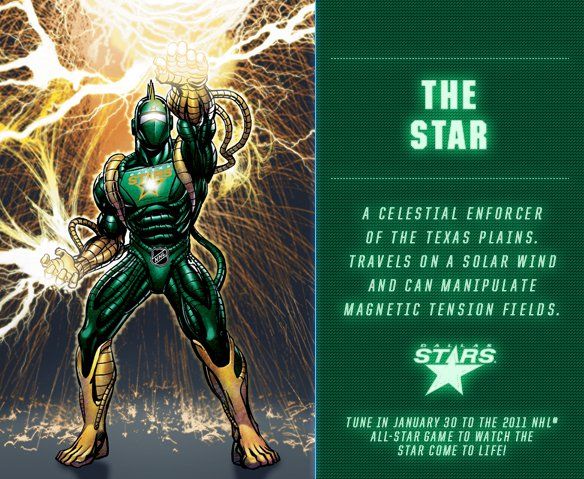
We head south to the state of Texas where the Star defends the city of Dallas. I have to admit that this Guardian's name is a little narcissistic, but who am I to judge? I find him to be very much like Electro in his electrical abilities. He's a "celestial enforcer", but I'm not quite sure what that means entirely. He "travels on solar wind", but I'm not sure why he would choose to travel this way when all it does is land him on the North or South Pole and/or send him clear past the Earth altogether. And this "magnetic tension field" stuff? Well, it is important in the field of magnetohydrodynamics, but let's just say that ten year-olds probably won't get the theory behind it. My guess is that the Star is probably from some far-off galaxy where this stuff is as common as 2+2, and is not of this planet whatsoever.

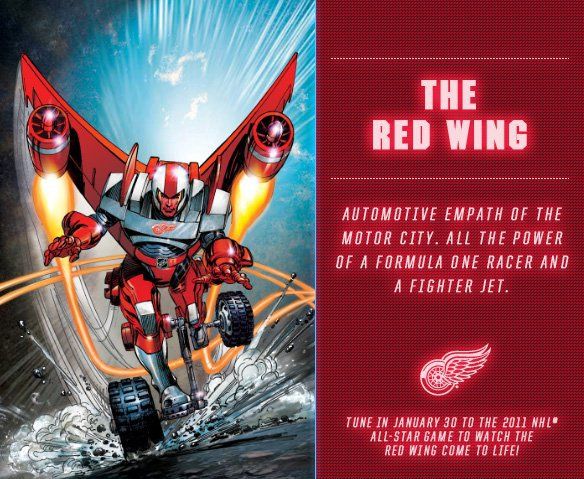
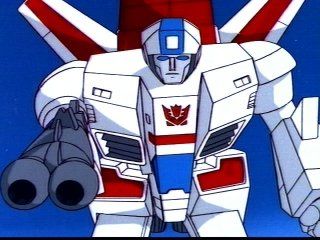
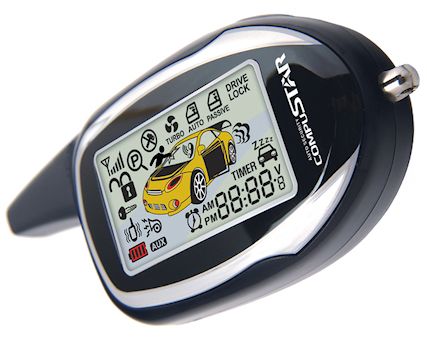
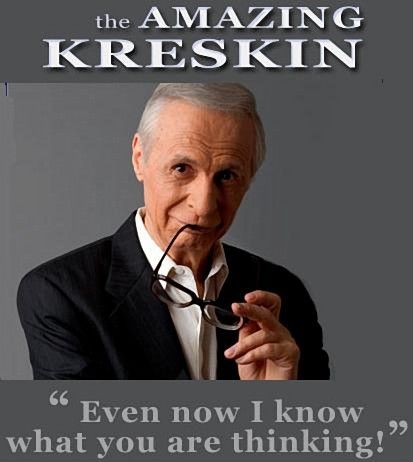
The fourth Original Six Guardian we see is the Red Wing. Only the Red Wing isn't wearing the Original Six logo, so I'm thinking we might need an update to this Guardian. The Red Wing seems like a poor man's Transformer, resembling something like Jetfire with wheels. He reportedly has "all the power of a Formula One racer and a fighter jet", so I assume he moves fast with great bursts of acceleration. Being that he's an "automotive empath", he comes equipped with Command Start, and can control any vehicle with his mind. He's like the Kreskin of Transformers!

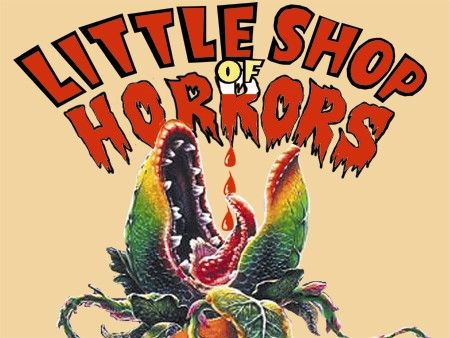
We jump north of the border to encounter the Maple Leaf. Who actually isn't a leaf at all. However, being a walking and talking maple tree means that he actually is an ent, and he is only slightly more intimidating than Dr. Reggie Bushroot of Darkwing Duck fame. He is literally an "immovable object", so we just need to find the unstoppable force for the paradox. I like the Original Six logo once again, but if he can grow exponentially larger at will, can he become bigger than the planet? At what point does this power reach its limit? Will we see a Little Shop of Horrors reference at some point?

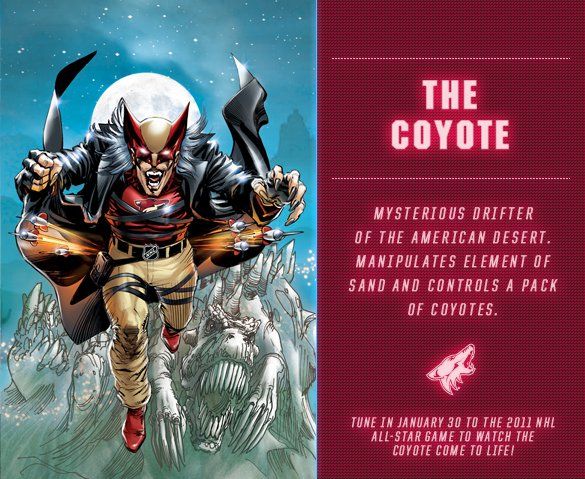
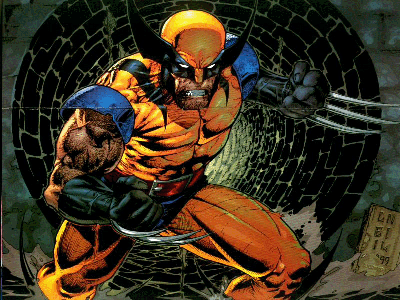
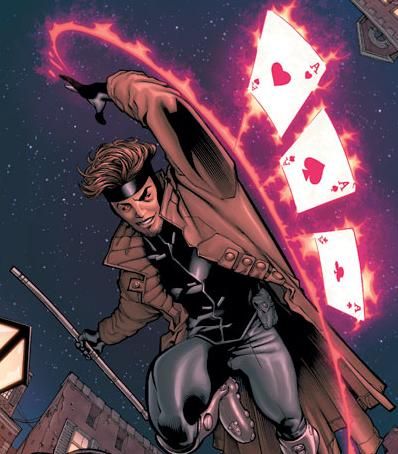
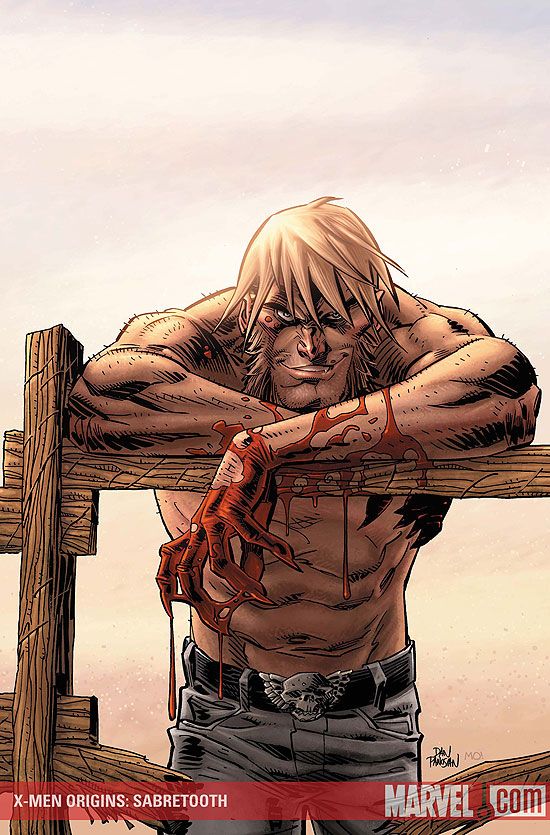
Next, we head to the desert to meet the Coyote. The Coyote is the NHL's version of Wolverine in Gambit's clothes with Sabertooth's claws. Strangely, he's also a drifter like Wolverine was in his past. He also has the same ability as that of the Sandman to control any amount of shifting sand. Oh, he also has a pack of Coyotes that roam the country side as his own personal K-9 unit. Much like the Phoenix Coyotes, I'm guessing this guy will be a major "underdog" in most battles until he "unleashes" his true powers. Puns are free of charge in this article.

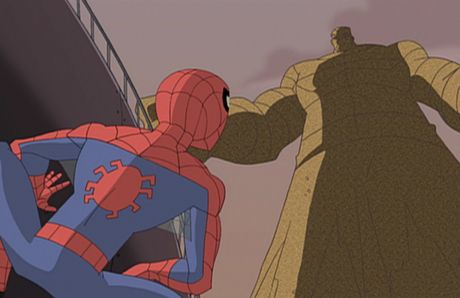
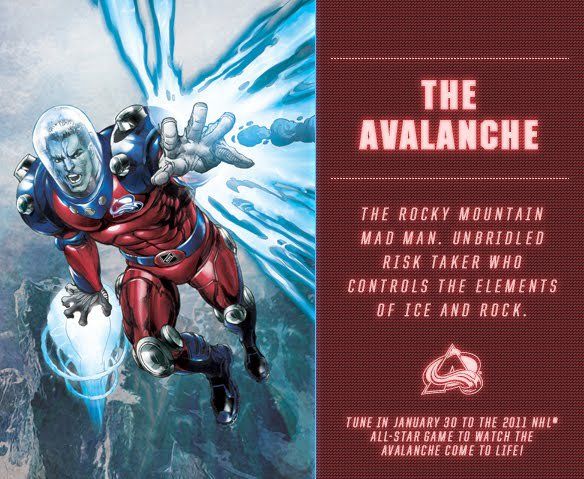
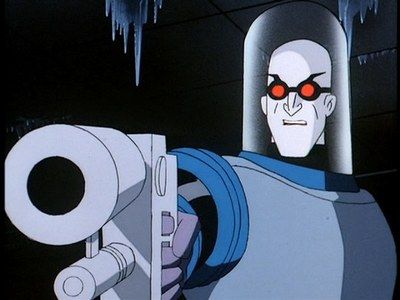
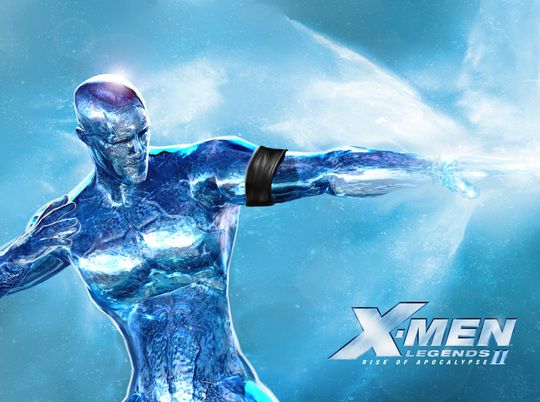
The last Guardian we encounter today is the Avalanche. The Avalanche has some very distinct similarities to that of Mr. Freeze from the Batman franchise as well as the abilities of Iceman from the X-Men franchise. The fact that he's the "Rocky Mountain mad man" worries me a little, and I'd be very concerned about his reputation as an "unbridled risk taker". I understand the ability to control ice, but how does he control rock? Can he cause earthquakes? Is he able to make mountains out of molehills? What are the limits of this power?

There are your seven newest Guardians to arrive on the scene. Again, you can see all of the Guardians on January 30 at the NHL All-Star Game from Raleigh, North Carolina when they are are officially unveiled as part of the NHL Guardian Project!

Until then, keep your sticks on the ice!

Tuesday, December 14, 2010

The foot to the left has five toes on it, but today's article brings you only this TOE: Tuesday's Odd and Ends. These are more images and stories that have been sitting on my desktop that need their stories told, and we'll do that today. It's an eclectic mix of things from several leagues, so we'll work through these as orderly and quickly as possible. Some of the images are interesting while some are strange, but they are all entertaining in their own right. Needless to say, this little piggy had better get to market and write this article before Christmas gets here! Here are some random things from the world of hockey. Enjoy!
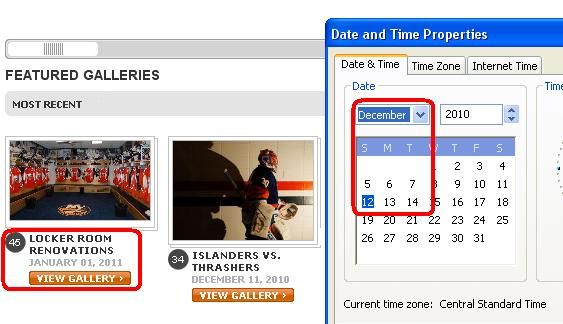
  • I was looking through the New York Islanders' website on Sunday evening for some information on the fans from Quebec City who had made the pilgrimage to Nassau Memorial Coliseum. I didn't find very much information, but I did find that the Islanders' photo gallery page is actually a time-travel portal! Yes, that gallery is dated for January 1, 2011. And just like the product they roll out onto the ice, the quality control people still have that date on the website at the time of writing this article!
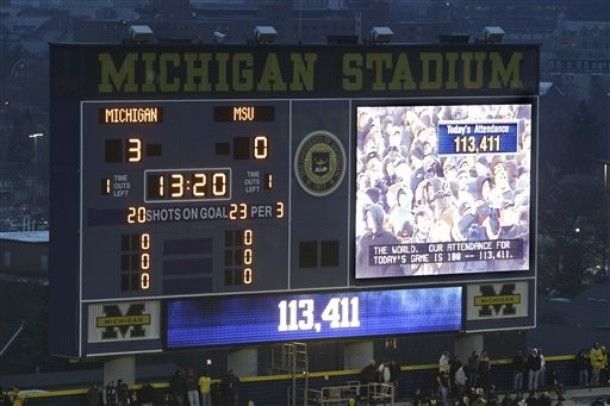
  • Huge kudos go out to everyone who attended The Big Chill at The Big House on Saturday! A Guinness record-setting 113,411 people were at the game, and they got to see the Michigan Wolverines knock off the Michigan State Spartans by a score of 5-0. John Merrill was named as the game's first star as he scored two of Michigan's goals. I am definitely impressed with the fans in Michigan who showed up for this game, and you certainly deserve a spot on Guinness' lists with that effort! Well done, fans!
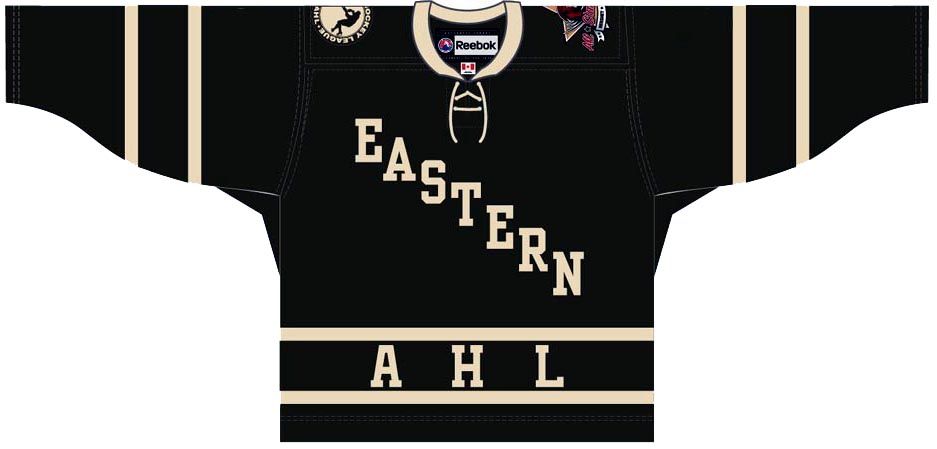
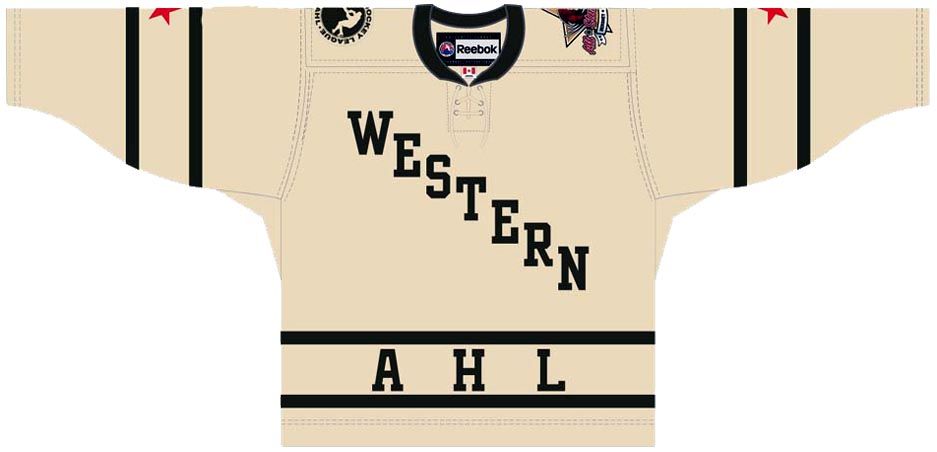
  • The AHL decided to roll out their newest All-Star Game uniforms in conjunction with the Hershey Bears. The Bears, as you may know, are hosting the game this season, and I expected something quite traditional with the AHL celebrating its 75th anniversary. Well, we got traditional as the AHL unveiled their home Eastern Conference uniforms and road Western Conference uniforms for this year's game. I do like the look of them, but I immediately thought of these past NHL All-Star Game uniforms. They seem pretty similar, no? Does anyone in hockey have any creativity left?
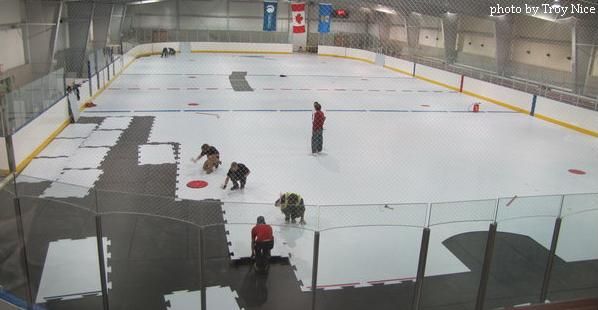
  • Great article from Brett Zarda of The New York Times about a small Canadian town that has solved the issue of springtime ice in their arena without a refrigeration system. Fort Chipewyan, a tiny outpost on Lake Athabasca in northeastern Alberta, has invested $559,000 into synthetic ice for their arena over the summer. The cost of a refrigeration system in the arena would have been into the $2 million range plus annual maintenance costs. The synthetic ice is no different than regular ice: players still use their regular skates on the synthetic ice, only there is far less maintenance involved with the synthetic ice. If you're interested in reading more about this, click the linked article above or click here to visit the Global Synthetic Ice website. It's a very cool product!
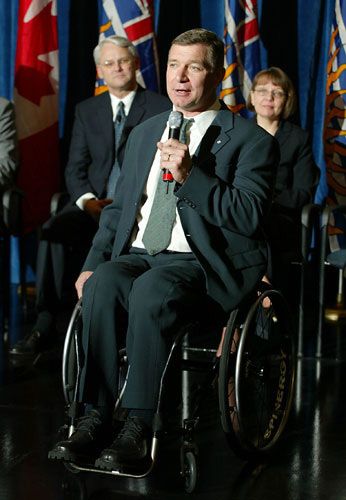
  • I had never seen this before, but a friend sent me a picture of a patch that the Vancouver Canucks wore in 1986-87. The "Rick Hansen - Man In Motion World Tour" was started in 1985 from the Oakridge Mall in Vancouver, and eventually saw Mr. Hansen travel more than 40,000kms on his trip while confined to his wheelchair before finishing on May 22, 1987 at BC Place. While support was slow at the start, Hansen eventually raised over $26 million for for spinal cord research and quality of life initiatives. The Vancouver Canucks supported Mr. Hansen in his efforts, and wore a patch to help bring his work to light. A very cool patch for a great cause!
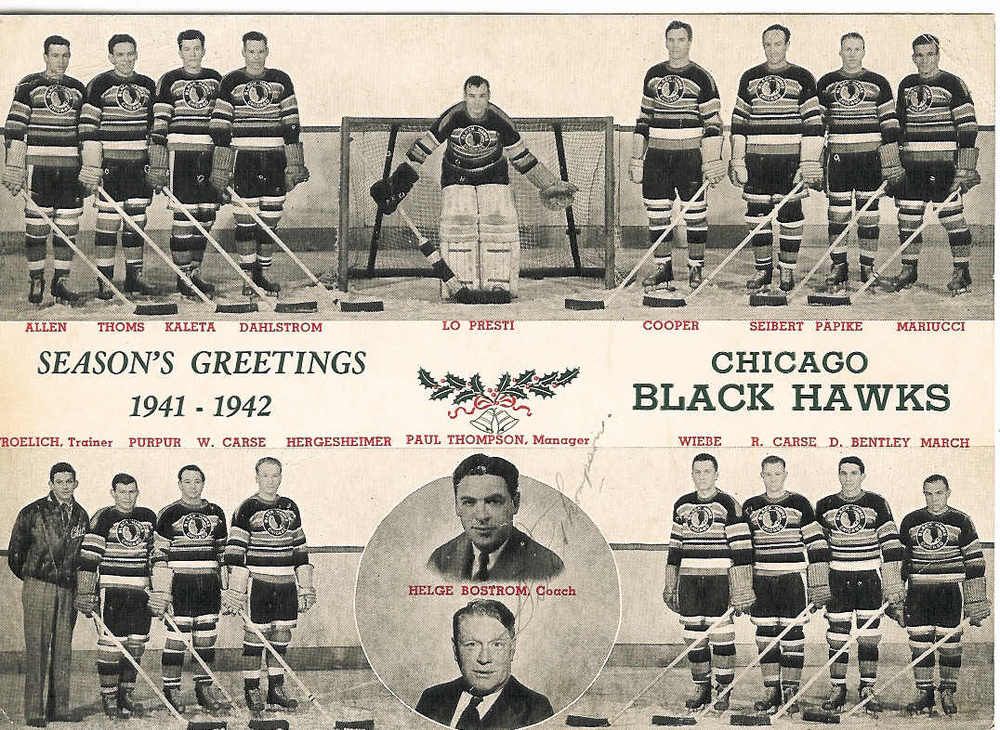
  • Last, but certainly not least, is a friendly holiday greeting from the 1941-42 Chicago Blackhawks! I'm not sure how many teams would actually send a team photo to fans in this day and age, but I was tickled pink when I saw this holiday message from the Blackhawks! Bill Thoms, second from the right at the top of the card, would lead the team in scoring that season with 45 points (15G, 30A) in 47 games. Two brothers, Robert and William Carse, can be seen on the bottom row while Doug Bentley stands beside Robert Carse. Earl Siebert can be seen at the top-left as well. Missing from that team photo are Max Bentley and Billy Mosienko - two very important players in Blackhawks history!
There are a few of the odds and ends that I've had kicking around my desktop the past few weeks. I'll begin collecting some new ones as time progresses, and I'm sure we'll have another edition of TOE. Or maybe WOE if it happens on a Wednesday. Or Foe if it's a Friday. In any case, I'll see what else I can find for another episode of Odds and Ends!

Until next time, keep your sticks on the ice!

Monday, December 6, 2010

The building to the left is probably a little "foreign" to most readers on this side of the pond, but Russians, and people from St. Petersburg in particular, will recognize it as the Ice Palace in St. Petersburg, Russia. Get it? Foreign to North Americans because it's in Russia? Anyway, the 2011 KHL All-Star Game will take place in St. Petersburg this year, and it will feature Team Jagr's team of international stars battling with Team Yashin's squad made entirely of players from Russia. We're less than two months away from this game, so let's check the particulars of what is happening at this year's KHL All-Star Weekend.

If you're marking this on your calendars, circle February 5, 2011 as the date of this year's KHL All-Star Game. While I've been hunting for English-based channels that may be carrying the game, I have yet to find any. However, the KHL All-Star Game will be broadcast live on "Russia-1" while the skills competition will be broadcast on "Russia-2". Behind-the-scenes reports and interviews will be carried throughout the day on KHL TV, the official league channel.

Now you're probably saying, "Teebz, I don't have Russian television programming". I'll be honest: I don't have it, either. But all is not lost as the KHL TV feed does work for free for all KHL regular season games and the 2011 All-Star Game! All you need to do is click here to get to KHL TV so you can watch your favorite former NHL stars kick a little butt over in Russia!

If you are reading this from somewhere in the vicinity of St. Petersburg or have the inclination to travel to St. Petersburg during the month of February, I'm happy to report that tickets to the KHL All-Star Game are quite reasonably priced! Tickets range from 190 rubles, or $6 USD, to 1900 rubles, or $60 USD, and will be available for purchase shortly at the KHL's official All-Star Game website. Honestly, they have cleaned up that website very nicely, and it looks like it could be a great source for news and information as we near the event's date.

It's just a short entry today on an event that was pretty entertaining last season. If you can, try to check out a game or two of KHL action on the KHL TV site, and make sure you check in at that site on February 5, 2011 for all your KHL All-Star Game fun!

Until next time, keep your sticks on the ice!

Monday, September 20, 2010

After spending a day in the fine city of San Antonio, it occurred to me that hockey hasn't known the city of San Antonio for any length of time. They have had three professional hockey teams in the history of their city, and the current AHL team known as the Rampage is the highest level of hockey that city has seen. With the growth of hockey throughout the state of Texas in the 1990s after the arrival of the Dallas Stars, cities that never knew hockey suddenly found a home on the hockey map. San Antonio was one of these cities, and their inclusion to both the IHL and AHL made sense geographically. However, there was one team before the IHL and AHL arrived in town, and we'll start with at this point in our examination of San Antonio's hockey history.

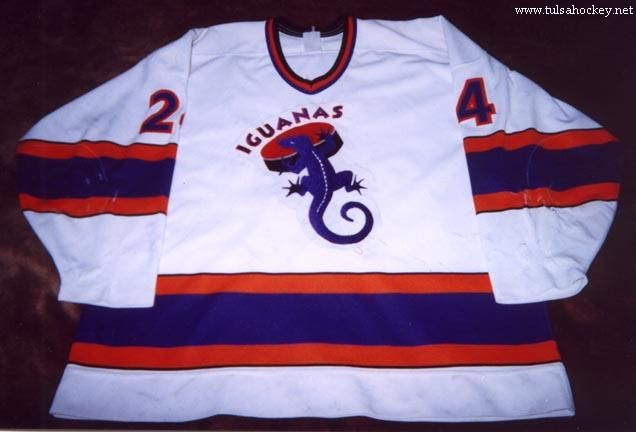
The Central Hockey League saw its first expansion team join the league in 1994 when the San Antonio Iguanas joined the league for the 1994-95 season. The team started with former Minnesota North Star Bill Goldsworthy as their head coach, but he only spent ten games behind the bench, going 5-4-1. Goldsworthy stepped down after being diagnosed with AIDS in November 1994, the first professional hockey player to acknowledge having the disease. In 1996, Goldsworthy passed away due to complications from the disease, and his gravesite is located in Lakewood Cemetary in Minneapolis, Minnesota.

After Goldsworthy announced his early retirement, he was replaced by John Torchetti. Torchetti guided the Iguanas to a 37-22-7 mark, good for second-place in the seven-team CHL. Paul Jackson would lead the team in goals with 51, and Brian Shantz would lead the CHL in assists with 80 and in points with 119. With the top four CHL teams making the playoffs, the Iguanas would meet up with the Tulsa Oilers in the playoffs in their first season.

The two teams battled through seven games. Only Games One and Six would be decided by less than three goals, and those two games went to overtime. Tulsa won both of those games - Game One was a 6-5 overtime win, while Game Six was a 5-4 overtime win. The other five games were all significant wins with margins of three goals or more. The series would flip back and forth before San Antonio wrapped up the series in the seventh game by a 6-1 score at the Freeman Coliseum in San Antonio. Their win gave them a berth in the CHL Final!

The Iguanas would face-off against the CHL regular-season champions in the Wichita Thunder. The Thunder would win Games One and Two before the Iguanas cut the deficit in half on home ice with a 5-2 win in Game Three. The Thunder would rally back to push the Iguanas to the brink, but the Iguanas staved off elimination in Game Five with a 6-2 victory. Game Six, however, saw the Iguanas fall 9-4 to Wichita as the Thunder captured the first Ray Miron President's Cup. John Torchetti won the Commissioner's Trophy as coach of the year at the conclusion of the season.

The Dallas Freeze would drop out of the CHL in 1995-96, leaving only six teams to compete for the championship. The Iguanas would finish in second-place for the second straight season, ending the campaign with a 39-17-8 record. Brian Shantz would have an outstanding season for the Iguanas, leading the team in goals with 56, and leading the league in assists with 85 and in points with 139. It appeared that the Iguanas were set to make another run at the CHL Championship.

The Iguanas would host the Memphis RiverKings in the opening round of the CHL Playoffs. The series was split 2-2 through four games, but the Iguanas poured on the heat in Games Five and Six, winning them 4-2 and 6-3, respectively. The six-game series win put the Iguanas into the CHL Final for the second consecutive season!

The Iguanas would meet the Oklahoma City Blazers in the final. The Blazers finished as the top-team in the CHL in 1995-96, so the Iguanas faced the same uphill battle as they did in the previous season. The Blazers would jump out to a 3-1 series lead, but the Iguanas were a determined bunch. They won Game Five in Oklahoma City by a 6-4 score before returning home to win Game Six by a 5-4 score in overtime. However, Game Seven saw the Blazers capture the Ray Miron President's Cup on home ice as they downed the Iguanas by a 4-2 score. Again, the Iguanas came up short, but they had been bridesmaids in their first two seasons of existance - not too shabby at all!

John Torchetti wouldn't be behind the bench for the Iguanas to start the season in 1996-97, but he was still in San Antonio. Torchetti took an assistant coaching position with the IHL's San Antonio Dragons as they began play in San Antonio. Instead, Dale Henry would guide the team through the first 36 games. Henry's reign would be cut short as he posted an abysmal 9-24-3 record in those 36 days, and he decided that he would rather help the team on the ice. He resigned his position as coach and took a seat on the bench as a player while Ric Seiling stepped behind the bench. Seiling would go 17-12-1 down the stretch, but it wasn't enough to get the Iguanas into the playoffs. They would finish the season in last place in the East Division with a 26-36-4 record.

Dale Henry played 23 games that season for the Iguanas, posting 12 goals and 19 points after his brief coaching stint. Paul Jackson led the Iguanas in goals (44), assists (46), points (90), and PIMs (391). Yes, you read that last stat correctly - leading scorer with nearly 400 PIMs! He would finish second in the league in PIMs and seventh in goals. Not a bad season's worth of work!

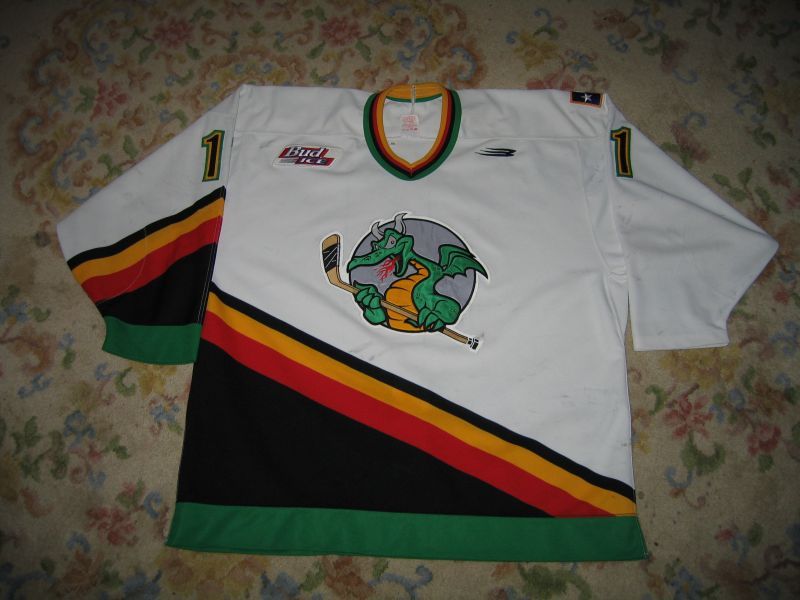
However, the Iguanas found themselves in a bit of a bind when another reptilian team took up residence in San Antonio in 1996. The IHL decided to set up shop in San Antonio after moving the Peoria Riverman franchise to Texas, and the Dragons took flight for the 1996-97 season. At first, the Iguanas and Dragons shared Freeman Coliseum, but the Dragons eventually forced the Iguanas out of their home. The Iguanas decided to suspend operations over the 1997-98 season while the IHL tested the waters in San Antonio.

The IHL Dragons lasted all of two seasons in San Antonio - not quite the lasting power that the IHL wanted. However, they had some success in their two-year existance. Head coach Jeff Brubaker hired former Iguanas' coach John Torchetti to help behind the bench, and the 1996-97 Dragons posted a record of 45-30-0-7. Daniel Shank led the team in all the major stats with 33 goals, 58 assists, and 91 points. He was also second on the team in PIMs with 293 minutes in the sin bin! David Littman and Bruce Racine split the goaltending duties fairly evenly.

The Dragons finished their first season in first-place in the Midwest Division. That finish gave them a first round date with the Chicago Wolves. In the best-of-five series, the Dragons were more than the Wolves could handle despite three of four games being decided by one goal, and San Antonio advanced with a 3-1 series win.

The Dragons would run into their cross-state rivals in the Houston Aeros in the second rund of the Turner Cup Playoffs. Houston jumped out to a 3-0 series lead before San Antonio picked up a 2-1 win to force a Game Five. The Aeros didn't let it go any longer, though, as they closed out the series with a 4-3 win to secure the 4-1 series win.

The 1997-98 season saw only one in San Antonio as the IHL's Dragons no longer had to share the Freeman Coliseum. The Dragons, unfortunately, would not survive past this season as they ran into financial problems. Despite being the better draw compared to the Iguanas, the Dragons simply couldn't make it work.

The 1997-98 season was certainly not the best way to go out, either. John Torchetti left the Dragons to take the head coaching job of the Fort Wayne Komets, and the carousel of coaches in San Antonio began. The Dragons stumbled through the season, posting a 25-49-8 record. Along with the Quebec Rafales, they were the only two teams to miss the Turner Cup Playoffs that season in the sixteen-team IHL. The Dragons were the worst team in the IHL in the 1997-98 season, closing out their existance with nothing more than a whimper. Once the season came to a close, the franchise folded due to their money problems.

Daniel Shank was clearly the star of the team once again in this season-to-forget. Shank finished 34 points ahead of the next closest scorer on the Dragons, Micah Aivazoff. Once again, he led the Dragons in goals with 39, assists with 43, and points with 82. The carousel of goaltenders saw six men dress for the Dragons. Scott Bailey played in 37 games, sporting a record of 11-17-3, a GAA of 3.73, and one shutout. Statistically, Eldon "Pokey" Reddick was the best goaltender that season. He played in 17 games for the Dragons, going 5-9-1 with a 3.13 GAA, a .900 save percentage, and one shutout.

With the Dragons extinct, the Iguanas returned to the ice in the CHL for the 1998-99 season. Their one-season time-out didn't seem to ruin their fan support. Head coach Todd Simpson led the team to a 37-26-0-7 record, good for second-place in the CHL's Western Division and a playoff spot. Johnny Brdarovic led the team in goals with 56 and points with 115, while goaltender Ken Shepard backstopped the team with a 16-11-2 record, a 3.64 GAA, and one shutout. Brdarovic was also named as the CHL's Rookie of the Year in 1998-99.

The Iguanas squared off with the Wichita Thunder in the opening round of the playoffs, and they showed that hadn't missed a beat. Wichita opened the series with a 3-2 ovetime victory, but the Iguanas rattled off three straight wins to clinch the series by a 3-1 margin.

In the second round, the Iguanas ran into an old nemesis as they matched up against the Oklahoma City Blazers. The Blazers finished first in the Western Division, so this was also a divisional rivalry between these two clubs. Unfortunately, the comparisons run short when looking at the series as the Blazers dismantled the Iguanas in a four-game sweep. Despite the loss, the Iguanas made a pretty good return to San Antonio!

Chris Stewart would take over behind the bench for the 1999-2000 season, but his first season didn't fare very well. Despite leading the Iguanas to a 33-32-5 record, the team missed the playoffs. Brian Shantz led the team in scoring with 109 points, 79 of which were assists!

Stewart would guide the Iguanas to another second-place finish in the Western Division and to the playoffs in his second season on the strength of a 42-21-0-7 record. A familiar name in Johnny Brdarovic would return to San Antonio to claim his team's scoring title. Brdarovic scored 29 goals and added 56 assists to lead the Iguanas in scoring just two seasons after leading the Dragons in scoring.

The Iguanas faced off against the Topeka Scarecrows in the first round. Much like their last trip to the playoffs, they allowed the Scarecrows to draw first blood with a 4-2 win before rattling off three straight wins to secure the 3-1 series win.

The second round was reduced to a best-of-five series, and the Iguanas and Blazers would clash again in this round. San Antonio took Games One and Three to go up 2-1 on the Blazers, pushing their rivals to the brink. However, the Blazers hammered the Iguanas 5-2 in San Antonio to push the series back to Oklahoma City. There, the two teams battled to a 1-0 score through overtime. However, the Blazers were the team to score, and San Antonio went home empty-handed once more thanks to the Blazers.

Stewart would be the first coach to last three seasons with the Iguanas, and he guided the club to a second-place finish in the Southeast Division on a 40-16-8 record in 2001-02. Blair Manning would lead the club in scoring with 77 points.

The Austin Ice Bats - the Iguanas' in-state rivals and first-place in the Southeast Division - were the Iguanas' opening-round opponents. While the two teams split the first two games, the Ice Bats took the next two games to close out the Iguanas' season with a 3-1 series loss. Not quite the finish they were looking for, but the Iguanas had larger issues at hand.

The San Antonio Spurs and the Florida Panthers had annouced a partnership to bring an AHL franchise to San Antonio's SBC Center in May 2002. Because the Iguanas' lease had expired, they had to look at the Alamodome as a possible place to play their home games. However, the search for an ownership group to purchase 25% of the team fell through, and the team had to cease operations without suitable ownership.

This, of course, opened the door for the San Antonio Rampage to be born, and the AHL moved into the SBC Center as the San Antonio Spurs and Florida Panthers launch an expansion team to be stocked with Panthers' prospects. The AHL franchise was awarded to the Spurs/Panthers ownership group on May 6, 2002. Before the team had been named, however, the group made a shrewd decision in hiring John Torchetti as the first head coach of the AHL franchise on May 31, 2002. Torchetti would return to San Antonio as part of the third professional hockey franchise in the history of the city.

On Jume 3, 2002, the Spurs announced that the AHL franchise would be named as the "Stampede", and would feature a rampaging bull with a blue, black and silver color scheme. The blue came directly from the Panthers while the silver-and-black are the colours of the Spurs. However, the Spurs made a second announcement just eleven days later stating that the AHL franchise would be named as the "Rampage", but all logos and the colour scheme would remain the same. On September 14, 2002, the Rampage unveiled their jerseys to the public just weeks before their first pre-season game against the Houston Aeros on October 4, 2002.

The Rampage haven't seen very much success in their eight seasons, but they started off fairly well. They opened their franchise history on October 12 in Milwaukee against the Admirals with a 6-2 loss. October 18 saw the Rampage record their first victory, a 5-4 win over the Utah Grizzlies. Their first home win in the brand-new SBC Center happened on November 7, 2002 when they defeated the Cincinnati Mighty Ducks by a 4-3 score. Filip Novak is selected as the team's first AHL All-Star, playing for PlanetUSA. Jeff Toms led the team in goals with 30 and scoring with 63 points in their inaugural season.

With a 36-29-11-4 record, the Rampage qualified for the Calder Cup Playoffs in their first season. They would match up against the Norfolk Admirals, but the series wouldn't last long as the Admirals swept the Rampage out of the playoffs. While their first season showed promise, this season would be one of two where the Rampage played past the last regular season game.

Since their inaugural season, the Rampage have made the Calder Cup Playoffs twice. They made the playoffs in their first season, as seen above, and in 2007-08 under the watchful eye of Greg Ireland who guided the team to their best finish at 42-28-3-7 thus far. The team finished fifth in the eight-team West Division, and met up with the Toronto Marlies in the opening round of the Calder Cup Playoffs. Despite falling behind 3-2 in the series, the Rampage pushed the Marlies to seven games before falling in Game Seven by a 2-1 score.

The Rampage have had some highlights, though. On February 14, 2005, Jay Bouwmeester represented the Rampage at the AHL All-Star Game for Team Canada. On June 30, 2005, the Spurs bought out the Panthers to become the sole owners of the Rampage. They hired the front office and coaching staff of the Utah Grizzlies to run their team after the Grizzlies had decided to pull out of the AHL. In early August of 2005, the Spurs announced that they had come to an agreement with the Phoenix Coyotes to be their AHL affiliate.

December 1, 2005 saw the San Antonio Rampage host the Cleveland Barons in the AHL's 30,000th regular season game. The game featured two NHL goaltenders as both Vesa Toskala of Cleveland and Brian Boucher of San Antonio took to the nets. Both goaltenders battled to a scoreless draw into the shootout. Karl Goehring replaced Boucher in the Rampage net for the shootout, and stopped four of five shots to post his first win as a member of the Rampage while giving the Rampage the victory in the 30,000th AHL game.

September 7, 2006 marked a new look for the Rampage as they changed their uniforms to reflect their affiliation with the Coyotes. The new colour scheme is black, gray, and silver, and the primary chest logo on the jersey has just the bull's head, replacing the full Rampage logo. Not that this should be a major piece of news, the Rampage also were afflicted with the Rbk EDGE jersey in 2007.

The Rampage will continue to write history this season as they begin their ninth AHL season. While the history of hockey has been short in San Antonio and there have been no championships to speak of yet, hockey appears to be thriving in the Texas city. Having both the Texas Stars and the Houston Aeros as in-state rivals should only help to fuel the rivalry that burns in the Texas winter!

Until next time, keep your sticks on the ice!

Saturday, September 4, 2010

Unknowingly as I dressed this morning for another day of travels on the open road through the United States of America, I happened to don the t-shirt sporting the logo of the defunct Colorado Rockies. My travels took me to Kansas City today where I am writing this article. How do those two things relate? Well, a gentleman approached me in my restaurant of choice, and informed me that the team I was wearing once played in Kansas City. While I let him regale me with the tales of how the Scouts moved to Denver to become Rockies before moving to East Rutherford, New Jersey to become the Devils, I realized that there have been various levels of pro hockey through Kansas City. And some teams actually did much better than the NHL team that once called this city home.

We'll start with the NHL era in Kansas City.

Kansas City was awarded a franchise in the last wave of NHL expansion to try to curb the WHA's growth. Along with Kansas City, a franchise was awarded to Washington, DC to begin play in 1974. June 8, 1972 was the day that the NHL came knocking on Kansas City's door, and Kemper Arena was built to house both the Scouts and the NBA's Kansas City Kings. The Scouts would eventually play in the Smythe Division as the NHL expanded to four divisions in 1974 when both Washington and Kansas City began play.

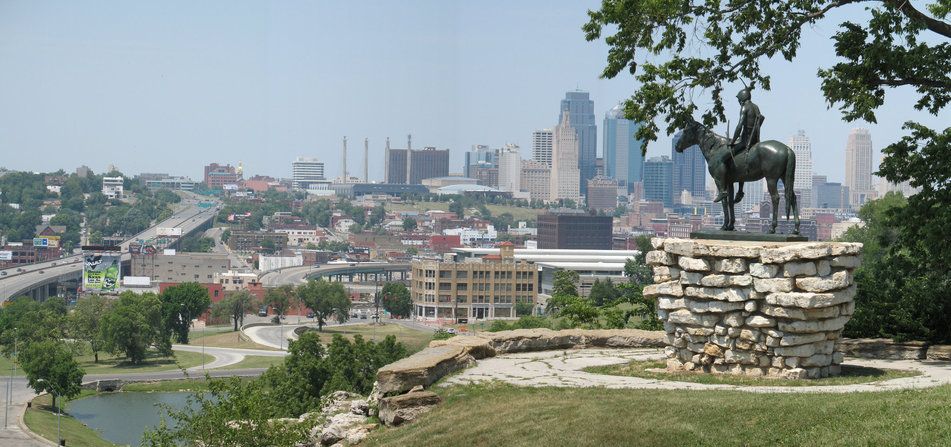
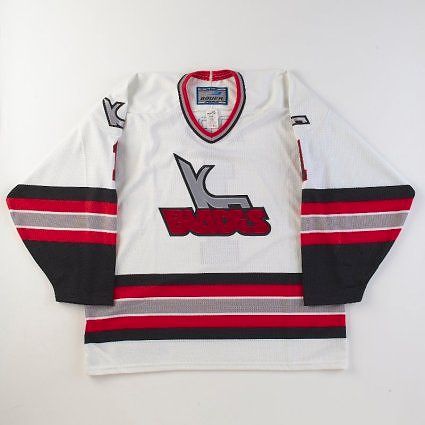
The team was originally going to be called the Mohawks - "Mo" from the Missouri postal abbreviation, and "Hawks" from Kansas' affinity to JayHawks. The Chicago Blackhawks put a stop to that name, stating that there was too much similarity between their name and the new Kansas City team name. Instead, the team chose "Scouts" in honour of the scout statue that overlooks the city. The logo reflected the statue as well, and it was nice to see hockey trying to honour the Native American peoples from this area once again.

This is where the good news ended for the Scouts franchise. The 1974-75 season ended in disappointment as there was little talent to draw from considering there were 32 NHL and WHA teams. The Scouts finished the season with a 15-54-11 record, good for fifth-place in the Smythe Division, but out of the playoffs. Wilf Paiement was a rookie for the Scouts in 1974-75, and he'd go on to have a solid NHL career. Captain Simon Nolet was named to the Campbell Conference All-Star Team, and head coach Bep Guidolin was called upon to coach the Wales Conference All-Star Team.

For as bad as their first season was, the Scouts were worse in their second season of existence. After starting the season respectably, the Scouts found themselves one point out of a playoff spot at Christmas. And then the wheels came off. And there was a fiery crash and burn. And nothing remained that was salvageable.

The Scouts went winless in sixteen games from December 30, 1975 until February 4, 1976 before defeating the Washington Capitals on Feburary 7. They then pulled off the nearly-impossible by going winless in their next twenty-seven games. All in all, the Scouts managed to go 1-35-8 in their final forty-four games to post a pitiful record of 12-56-12. Just one of the Scouts players and staff - Wilf Paiement - was called upon for the NHL All-Star Game, an indication of just how bad it was in 1975-76.

While both the Capitals and Scouts were pitiful excuses for professional hockey teams in their early goings, the Scouts also had problems drawing fans to their new 17,000-seat arena. They were averaging only about 8200 fans per game, and rising salaries were making the Scouts' bottom line look less and less appeaing. The 37 owners of the team decided to go on a massive season ticket campaign, but it only drew 2000 people to purchase season ducats. All said, they decided to sell the team to save their financial interests.

In two seasons in the NHL, the Scouts posted a record of 27-110-23 in 160 NHL games - hardly what NHL dreams are made of. They finished dead last in the Smythe Division both years, and twice had the second overall pick in the NHL Entry Draft. Wilf Paiement was their choice in 1974, and Barry Dean was the only other draft choice made by the Kansas City Scouts.

While the citizens and hockey fans of Kansas City would have to wait a few years for another hockey franchise to arrive, the IHL granted a franchise to the city in 1990, and it turned out to be a fairly successful run for Kansas City.

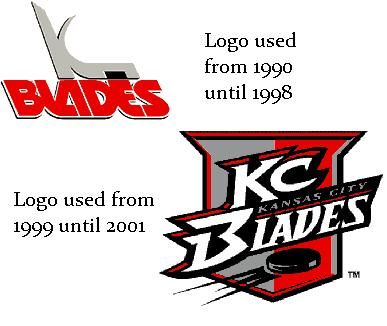
The suspended franchise of the Toledo Blades was purchased and moved to Kansas City by Russ and Diane Ross. While a "Name the Team" contest was held and ultimately chose the new team name as "Jazz", the Rosses rejected the name since there was already a "Jazz" team in Utah. The second most-popular choice was the Blades, and the Rosses stuck with that name. Thus, the Kansas City Blades were born!

In 1991, the Blades struck a deal with the San Jose Sharks to be their primary minor-league affiliate, and the Sharks would regularly stock the Blades with their up-and-coming players. This influx of talent into the Blades' lineup proved successful as the Blades went on to capture the 1991-92 Turner Cup under the tutelage of former NHL head coach Kevin Constantine. While the Blades would fall short in coming seasons, the 1991-92 team is still the only hockey franchise to bring back a championship on the ice to Kansas City.

Through pressure from the NHL to have its franchises align themselves with AHL teams as their primary affilates, the Blades and Sharks parted ways. During this same time, the Rosses decided to sell the team to the DeVos family. The DeVos clan also owned stakes in the Grand Rapids Griffins and the Orlando Solar Bears in the IHL, and a few owners felt that the DeVos family might be bordering on "conflict of interest". In 2001, the DeVos famly was involved with four of the eleven IHL teams!

The DeVos family didn't market themselves very well amongst the Blades' longtime fans. Changes were constant, and none seemed to bring back fans to Kemper Arena. After several seasons of losing money, the DeVos family looked at relocating the team to Oklahoma City which only further killed their popularity in Kansas City.

The move to Oklahoma City was blocked after the owners of the CHL's Oklahoma City Blazers refused to abandon their stake in Oklahoma City, and the IHL and the DeVos family could not reach an agreement with the Blazers. Once the news of relocation hit the news, the DeVos family was mercilessly booed at every appearance in Kansas City.

The Blades signed a deal with the Vancouver Canucks for two years at the start of the 2000-01 season to be their primary affiliate. Unfortunately for both teams, the IHL decided to fold due to rising costs, and the affiliation was cut short by one year. The Blades, like the Scouts, found themselves in limbo.

The teams from the IHL were considered in terms of joining the AHL, but AHL regulations stipulate that one owner can have a stake in only one team. The DeVos family, having interests in four teams, decided to promote their most successful team in the Grand Rapids Griffins, cutting loose the three other teams they were controlling: the Orlando Solar Bears, the Cleveland Lumberjacks, and the Kansas City Blades. Again, the people of Kansas City were screwed by the DeVos family.

While there was a Kansas City Outlaws team that played in the UHL, their history is about as long as the Scouts' history was. They didn't last long, and didn't come close to any sort of success. On April 15, 2005, the team suspended operations and folded. In one season in the UHL, the Outlaws posted a record of 28-45-7.

So there is a little history on Kansas City's modern hockey ventures. I'm not about to speculate on whether the city can support an NHL franchise, but they do have a shiny, new arena that is looking for a full-time tenant, and they were in talks with the Penguins about moving there when Pittsburgh was battling for a new arena.

What I do know is that it seems the people of Kansas City have been sold short a few times. If the Blades are any indication, hockey can work in Kansas City. Perhaps an AHL team would be a better fit?

Until next time, keep your sticks on the ice!