Showing posts with label IHL. Show all posts

Friday, December 31, 2010

We're back for the second half of Hockey Blog In Canada's Year In Review. Champagne, good food, and friends and family should be on the docket tonight, so HBIC will run through some of the highlights from the second half of the year. Yesterday, we took a look at the stories from January to June that attracted some attention, and we'll do the same today as we work through July to December. Happy New Year, everyone, and we'll be back in the normal fashion starting on January 1 with more hockey-related news and stories. Until then, all the best in the new year, and may health and happiness find you no matter where you are!

July Highlights
August Highlights
September Highlights
  • September 4: HBIC's month-long road trip through the midwestern US takes me through Kansas City, Missouri. Lots of good hockey history in that city, and I look at some of it.
  • September 5: The following day had me in Oklahoma City, Oklahoma. Great city, and some solid hockey history there. I really enjoyed my time in the city.
  • September 8: Houston's WHA era was interesting, and certainly has some very cool history behind it. The Howes, the flirting with the NHL, and their eventually dissolution are all covered in this piece.
  • September 9: Houston's WHA Aeros led to the IHL's Houston Aeros being born in memory of the WHA franchise. Some more excellent hockey history here.
  • September 20: San Antonio is a gorgeous city, and I really enjoyed my time there. Because of my visit, I wrote a piece on San Antonio's hockey history.
  • September 23: My stop in Des Moines, Iowa was short, but I drove through the city rather than going around it. A lovely little city that has a solid hockey history attached to it.
  • September 29: The Whale return! Unfortunately for Hartford, the Whalers continue to not exist while the AHL's Hartford Wolf Pack will become the Connecticut Whale. I'm not impressed with these developments.
October Highlights
  • October 2: Washington shows off its uniform choice for the Winter Classic. While the jersey choice is highly appropriate, Reebok's lack of effort in recreating the uniform is more than disappointing considering the magnitude of the game.
  • October 17: Found some great viral video from France that features a guy showing people what it looks like when a player gets bodychecked into the boards. Hilarious!
  • October 29: The Penguins show off their chosen duds for the 2011 Winter Classic. It's kind of a mish-mash of former uniforms, but it gets a pass.
November Highlights
December Highlights
So there's another year down in the history of Hockey Blog In Canada. I'm really looking forward to next year already, and it starts with the 2011 Bridgestone Winter Classic tomorrow afternoon evening. Hunker down in front of the old cathode ray tubes, and enjoy some outdoor hockey from Sid the Kid and the Great Eight!

Until next time, keep your sticks on the ice!

Monday, November 1, 2010

I love browsing through the Classic Auctions website. While there are a ton of things on that site up for auction that I would love to have in my hockey collection, it's still a great site just to browse for all of its incredible stuff. Today, HBIC takes a walk down memory lane in this article that will have you looking back at some of the incredible hockey memorabilia that Classic Auctions has on their website. Let's get this started!
  • Let's start with an old photo of the Stanley Cup Champion Toronto Arenas. If you look closely beside the "1918" on the photo, you'll see a very young Jack Adams. Adams would become a legendary coach in the NHL, and he would have a trophy named for his coaching efforts.
  • There was a young man who once played for the 1908 Chicoutimi Hockey Club. He was a goaltender, and certainly earned his merit playing in the NHL later in his life. That man also has a trophy named after him, and you can see a young Georges Vézina in the Chicoutimi Hockey Club photo.
  • The Montreal Wanderers were a solid hockey club at the turn of the 20th century, and they won three consecutive championships from 1906-1908. Of course, they were led by a couple of hockey legends in Art Ross and Lester Patrick, another two men who had NHL trophies named after them.
  • One of the teams that the Wanderers defeated, and a team that would eventually capture the Stanley Cup themselves, were the Kenora Thistles. How gorgeous are those sweaters? I absolutely love them! And, if you notice, the man in the front row on the right is none other than Art Ross!
  • There's another great photo of an old team as the Montreal AAA hockey club was captured on film. Again, those are some excellent sweaters! Why is no one reproducing these sweaters or the Thistles' sweaters?
  • If you like history, you'll love this Shamrock Amateur Athletic Association picture taken for the 1899-1900 Shamrock hockey team. Check out the image of the indoor rink at the bottom alongside the trophies that the Shamrock AAA team won at the turn of the century!
  • We'll jump ahead nearly one century as we take a look at the 1991-92 Detroit Red Wings "Turn Back The Clock" jersey. I can't tell you how much I love this jersey, and it's another one on my list of jerseys that I've love to own. The Original Six teams wore these against each other all season long as the NHL celebrated its 75th anniversary.
  • Speaking of the Red Wings, check out Paul MacLean's name from his 1988-89 jersey. Why is this significant? Well, the "ac" in "MacLean" is actually hovering in midair in his name, not sitting like they currently do. I'm not sure exactly when they made the change, but this won't be the last image like this.
  • The Calgary Flames also experienced the floating letters in 1988 as Brad McCrimmon's jersey shows. Comparatively, the letters have returned to Earth as time has progressed as Curtis McElhinney's jersey shows.
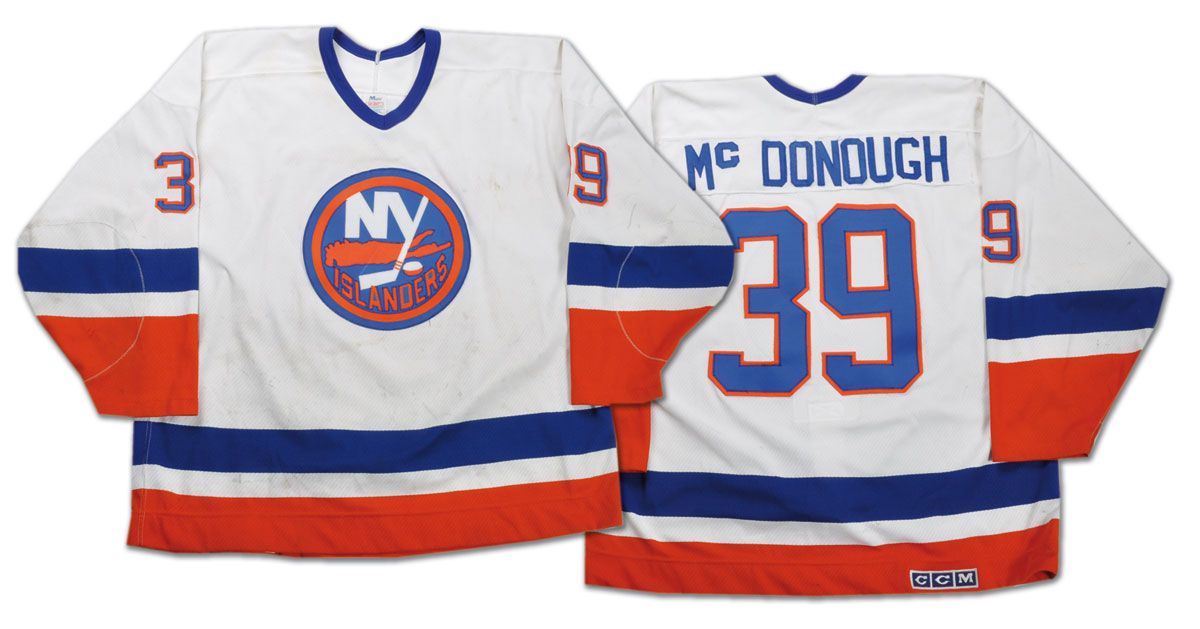
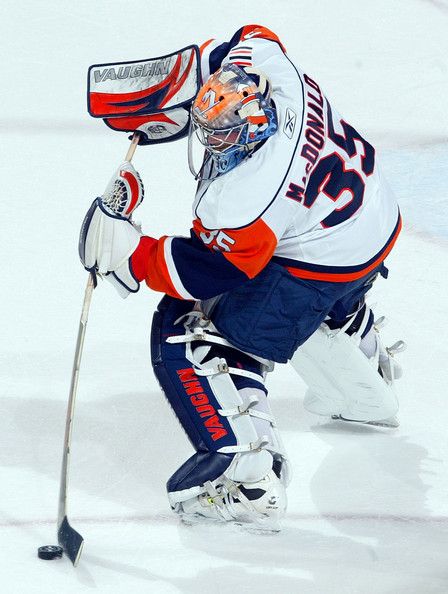
  • Maybe this was a 1980s thing because it shows up again with the New York Islanders on Hubie McDonough's jersey from 1989-90, but with an added space! However, like Calgary and Detroit, the letters moved down the jersey in more recent years and abolished the space.
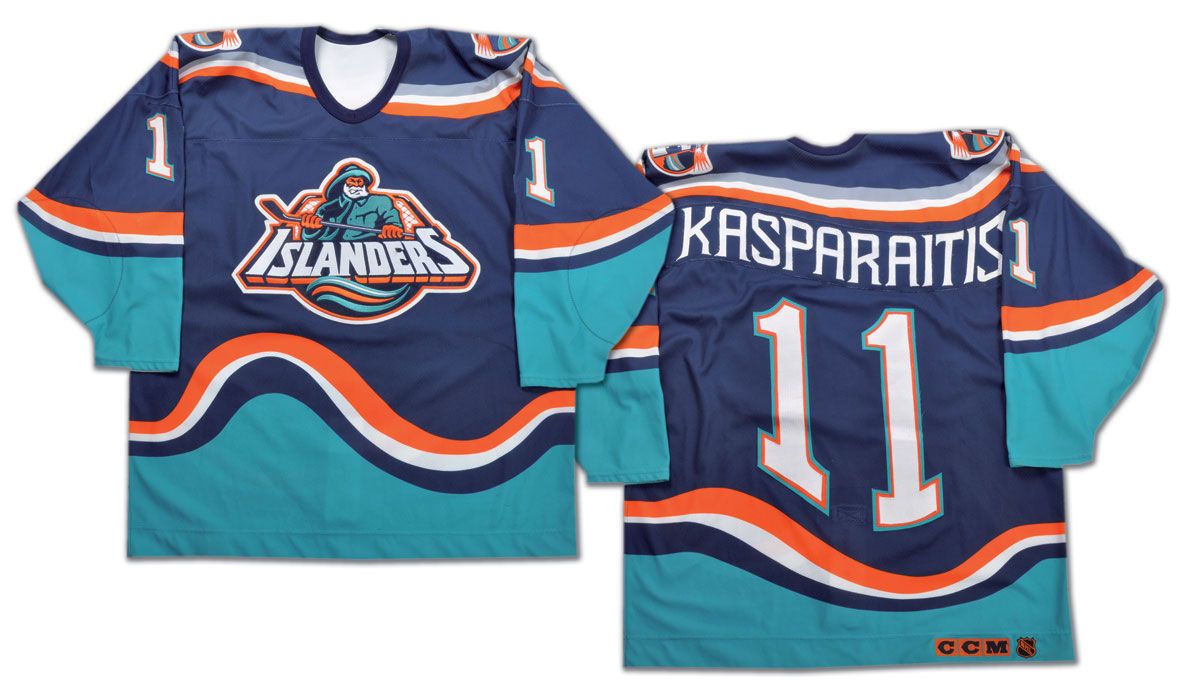
  • Let's stick with the Islanders as I came across another excellent Fisherman jersey! I own a white Islanders' Fisherman Kasparaitis jersey, so this would be the perfect bookend on my collection! I didn't buy it, though, despite my love of the Fisherman jersey.
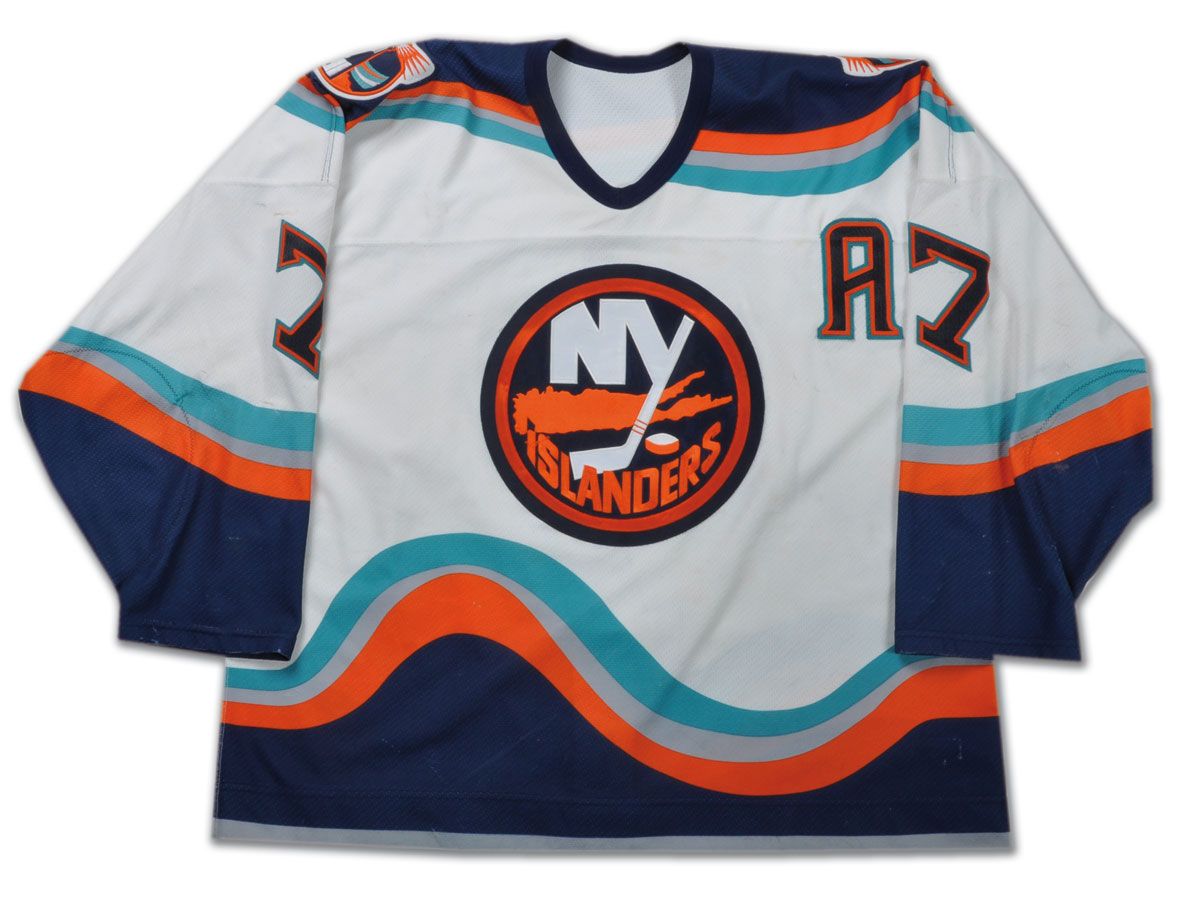
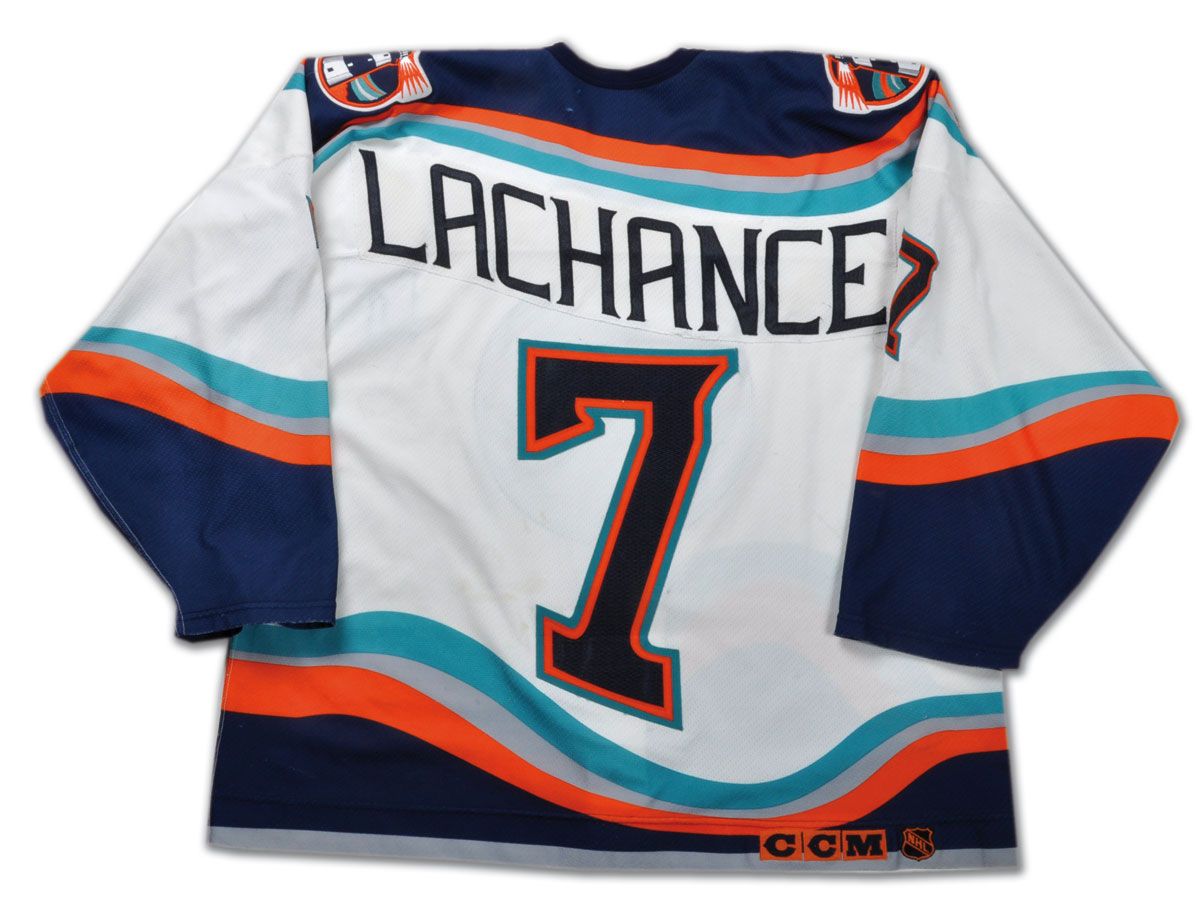
  • Of course, after the Fisherman met his demise, the Islanders developed the "wave" jersey. What caught my attention were the serifs on Lachance's #7 on the back. How ridiculous were those numbers to cut out? Maybe block lettering is easier for everyone.
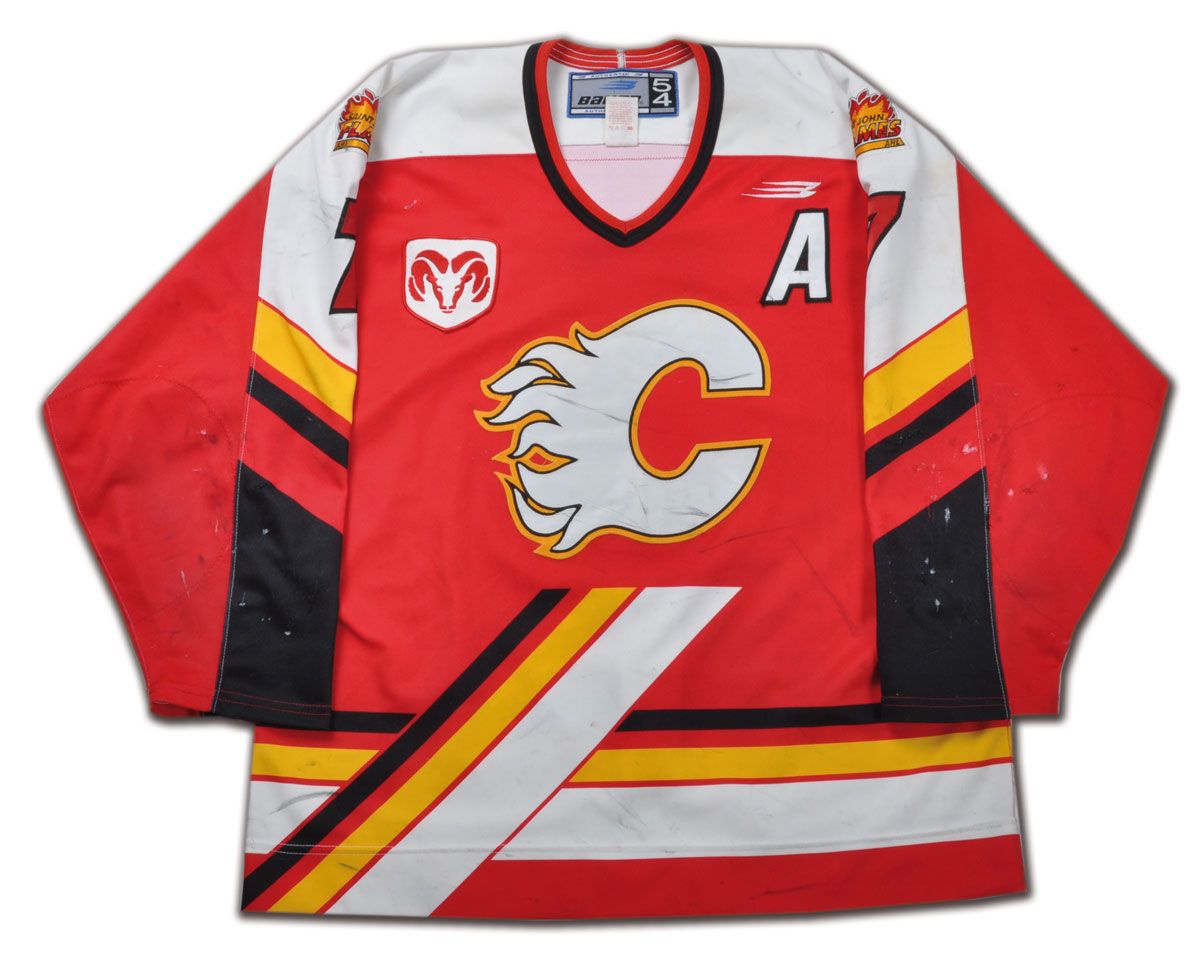
  • In examining a couple of AHL teams, I noticed that the Saint John Flames, a former affiliate of the Calgary Flames, wore the logo of their NHL affiliate. Has there ever been another minor-league team that has worn the logo of their NHL affiliate without having anything to do with the logo? For example, the Maple Leafs had a minor-league affiliate called the St. John's Maple Leafs, but they wore "St. John's" in place of "Toronto" on the logo. I can't think of any other AHL team that wore an NHL team's jersey for an entire season.
  • Speaking of AHL teams with same names, there's a reason why minor-league teams look like minor-league teams. The AHL's Cleveland Barons have a great uniform and I really like their logo. But in comparison to the NHL's Cleveland Barons, there's a reason why the AHL Barons' logo wasn't adopted by the NHL Barons. It is definitely minor-league.
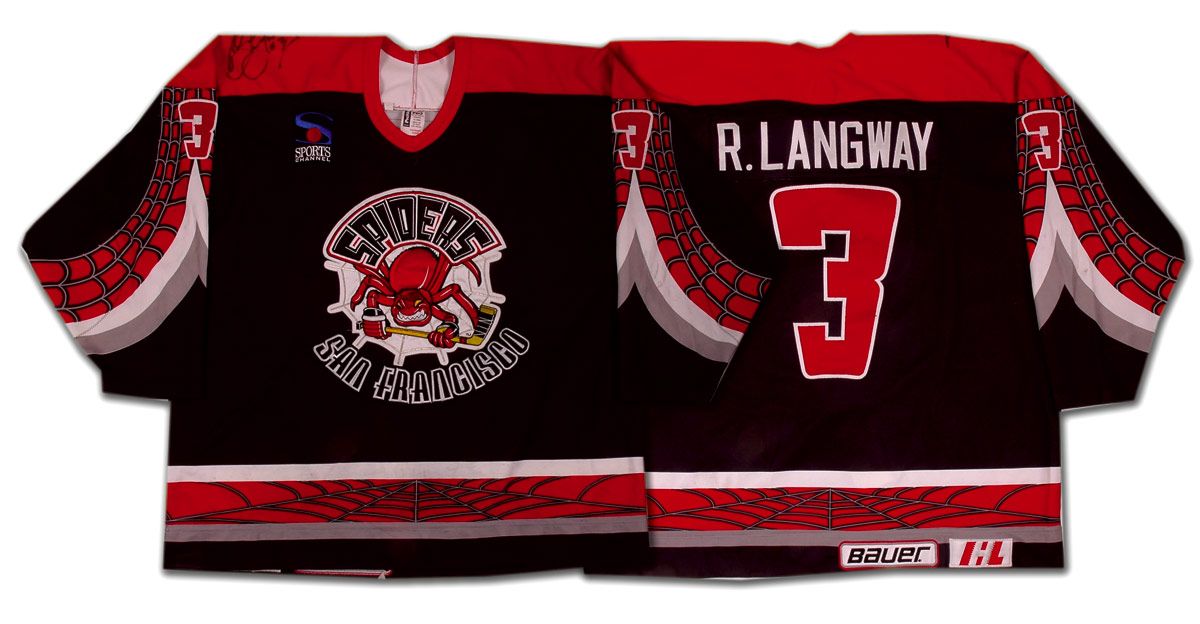
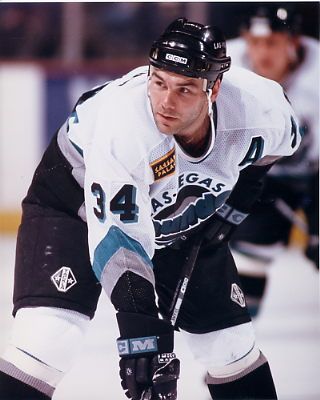
  • In keeping with the minor-league looks, NHL legend Rod Langway decided to retired from the NHL at the end of the 1993-94 season, but he joined the IHL's San Francisco Spiders in 1994-95. Note the interesting font used for the numbers. I'm actually a pretty big fan of the Spiders' look.
That's all for today, kids. Part Two will return tomorrow with more historical and interesting looks at hockey. I do encourage you to navigate over to the Classic Auctions website to check out all of the interesting stuff they have.

Until tomorrow, keep your sticks on the ice!

Monday, September 20, 2010

After spending a day in the fine city of San Antonio, it occurred to me that hockey hasn't known the city of San Antonio for any length of time. They have had three professional hockey teams in the history of their city, and the current AHL team known as the Rampage is the highest level of hockey that city has seen. With the growth of hockey throughout the state of Texas in the 1990s after the arrival of the Dallas Stars, cities that never knew hockey suddenly found a home on the hockey map. San Antonio was one of these cities, and their inclusion to both the IHL and AHL made sense geographically. However, there was one team before the IHL and AHL arrived in town, and we'll start with at this point in our examination of San Antonio's hockey history.

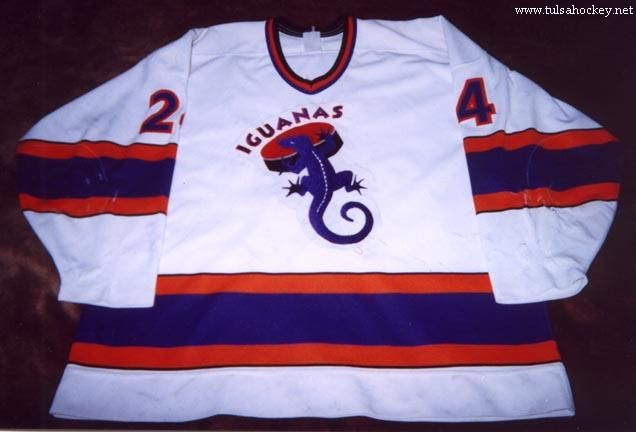
The Central Hockey League saw its first expansion team join the league in 1994 when the San Antonio Iguanas joined the league for the 1994-95 season. The team started with former Minnesota North Star Bill Goldsworthy as their head coach, but he only spent ten games behind the bench, going 5-4-1. Goldsworthy stepped down after being diagnosed with AIDS in November 1994, the first professional hockey player to acknowledge having the disease. In 1996, Goldsworthy passed away due to complications from the disease, and his gravesite is located in Lakewood Cemetary in Minneapolis, Minnesota.

After Goldsworthy announced his early retirement, he was replaced by John Torchetti. Torchetti guided the Iguanas to a 37-22-7 mark, good for second-place in the seven-team CHL. Paul Jackson would lead the team in goals with 51, and Brian Shantz would lead the CHL in assists with 80 and in points with 119. With the top four CHL teams making the playoffs, the Iguanas would meet up with the Tulsa Oilers in the playoffs in their first season.

The two teams battled through seven games. Only Games One and Six would be decided by less than three goals, and those two games went to overtime. Tulsa won both of those games - Game One was a 6-5 overtime win, while Game Six was a 5-4 overtime win. The other five games were all significant wins with margins of three goals or more. The series would flip back and forth before San Antonio wrapped up the series in the seventh game by a 6-1 score at the Freeman Coliseum in San Antonio. Their win gave them a berth in the CHL Final!

The Iguanas would face-off against the CHL regular-season champions in the Wichita Thunder. The Thunder would win Games One and Two before the Iguanas cut the deficit in half on home ice with a 5-2 win in Game Three. The Thunder would rally back to push the Iguanas to the brink, but the Iguanas staved off elimination in Game Five with a 6-2 victory. Game Six, however, saw the Iguanas fall 9-4 to Wichita as the Thunder captured the first Ray Miron President's Cup. John Torchetti won the Commissioner's Trophy as coach of the year at the conclusion of the season.

The Dallas Freeze would drop out of the CHL in 1995-96, leaving only six teams to compete for the championship. The Iguanas would finish in second-place for the second straight season, ending the campaign with a 39-17-8 record. Brian Shantz would have an outstanding season for the Iguanas, leading the team in goals with 56, and leading the league in assists with 85 and in points with 139. It appeared that the Iguanas were set to make another run at the CHL Championship.

The Iguanas would host the Memphis RiverKings in the opening round of the CHL Playoffs. The series was split 2-2 through four games, but the Iguanas poured on the heat in Games Five and Six, winning them 4-2 and 6-3, respectively. The six-game series win put the Iguanas into the CHL Final for the second consecutive season!

The Iguanas would meet the Oklahoma City Blazers in the final. The Blazers finished as the top-team in the CHL in 1995-96, so the Iguanas faced the same uphill battle as they did in the previous season. The Blazers would jump out to a 3-1 series lead, but the Iguanas were a determined bunch. They won Game Five in Oklahoma City by a 6-4 score before returning home to win Game Six by a 5-4 score in overtime. However, Game Seven saw the Blazers capture the Ray Miron President's Cup on home ice as they downed the Iguanas by a 4-2 score. Again, the Iguanas came up short, but they had been bridesmaids in their first two seasons of existance - not too shabby at all!

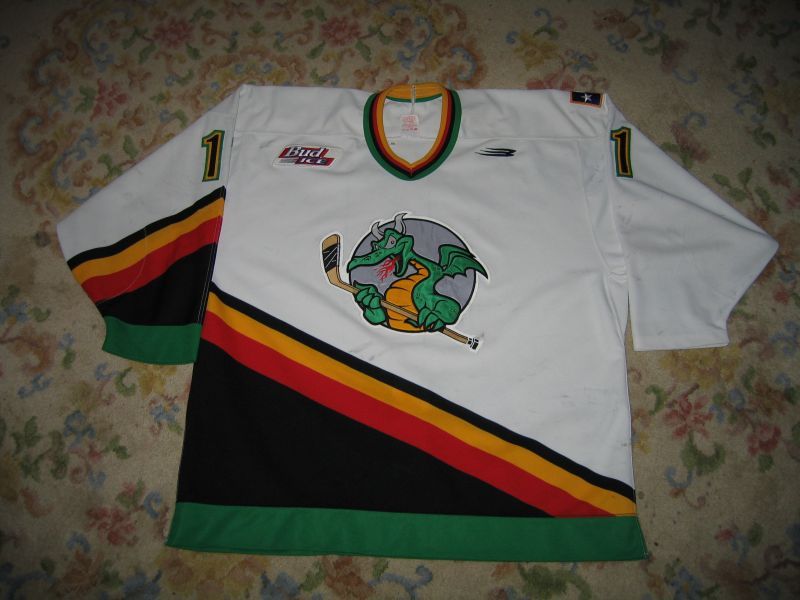
John Torchetti wouldn't be behind the bench for the Iguanas to start the season in 1996-97, but he was still in San Antonio. Torchetti took an assistant coaching position with the IHL's San Antonio Dragons as they began play in San Antonio. Instead, Dale Henry would guide the team through the first 36 games. Henry's reign would be cut short as he posted an abysmal 9-24-3 record in those 36 days, and he decided that he would rather help the team on the ice. He resigned his position as coach and took a seat on the bench as a player while Ric Seiling stepped behind the bench. Seiling would go 17-12-1 down the stretch, but it wasn't enough to get the Iguanas into the playoffs. They would finish the season in last place in the East Division with a 26-36-4 record.

Dale Henry played 23 games that season for the Iguanas, posting 12 goals and 19 points after his brief coaching stint. Paul Jackson led the Iguanas in goals (44), assists (46), points (90), and PIMs (391). Yes, you read that last stat correctly - leading scorer with nearly 400 PIMs! He would finish second in the league in PIMs and seventh in goals. Not a bad season's worth of work!

However, the Iguanas found themselves in a bit of a bind when another reptilian team took up residence in San Antonio in 1996. The IHL decided to set up shop in San Antonio after moving the Peoria Riverman franchise to Texas, and the Dragons took flight for the 1996-97 season. At first, the Iguanas and Dragons shared Freeman Coliseum, but the Dragons eventually forced the Iguanas out of their home. The Iguanas decided to suspend operations over the 1997-98 season while the IHL tested the waters in San Antonio.

The IHL Dragons lasted all of two seasons in San Antonio - not quite the lasting power that the IHL wanted. However, they had some success in their two-year existance. Head coach Jeff Brubaker hired former Iguanas' coach John Torchetti to help behind the bench, and the 1996-97 Dragons posted a record of 45-30-0-7. Daniel Shank led the team in all the major stats with 33 goals, 58 assists, and 91 points. He was also second on the team in PIMs with 293 minutes in the sin bin! David Littman and Bruce Racine split the goaltending duties fairly evenly.

The Dragons finished their first season in first-place in the Midwest Division. That finish gave them a first round date with the Chicago Wolves. In the best-of-five series, the Dragons were more than the Wolves could handle despite three of four games being decided by one goal, and San Antonio advanced with a 3-1 series win.

The Dragons would run into their cross-state rivals in the Houston Aeros in the second rund of the Turner Cup Playoffs. Houston jumped out to a 3-0 series lead before San Antonio picked up a 2-1 win to force a Game Five. The Aeros didn't let it go any longer, though, as they closed out the series with a 4-3 win to secure the 4-1 series win.

The 1997-98 season saw only one in San Antonio as the IHL's Dragons no longer had to share the Freeman Coliseum. The Dragons, unfortunately, would not survive past this season as they ran into financial problems. Despite being the better draw compared to the Iguanas, the Dragons simply couldn't make it work.

The 1997-98 season was certainly not the best way to go out, either. John Torchetti left the Dragons to take the head coaching job of the Fort Wayne Komets, and the carousel of coaches in San Antonio began. The Dragons stumbled through the season, posting a 25-49-8 record. Along with the Quebec Rafales, they were the only two teams to miss the Turner Cup Playoffs that season in the sixteen-team IHL. The Dragons were the worst team in the IHL in the 1997-98 season, closing out their existance with nothing more than a whimper. Once the season came to a close, the franchise folded due to their money problems.

Daniel Shank was clearly the star of the team once again in this season-to-forget. Shank finished 34 points ahead of the next closest scorer on the Dragons, Micah Aivazoff. Once again, he led the Dragons in goals with 39, assists with 43, and points with 82. The carousel of goaltenders saw six men dress for the Dragons. Scott Bailey played in 37 games, sporting a record of 11-17-3, a GAA of 3.73, and one shutout. Statistically, Eldon "Pokey" Reddick was the best goaltender that season. He played in 17 games for the Dragons, going 5-9-1 with a 3.13 GAA, a .900 save percentage, and one shutout.

With the Dragons extinct, the Iguanas returned to the ice in the CHL for the 1998-99 season. Their one-season time-out didn't seem to ruin their fan support. Head coach Todd Simpson led the team to a 37-26-0-7 record, good for second-place in the CHL's Western Division and a playoff spot. Johnny Brdarovic led the team in goals with 56 and points with 115, while goaltender Ken Shepard backstopped the team with a 16-11-2 record, a 3.64 GAA, and one shutout. Brdarovic was also named as the CHL's Rookie of the Year in 1998-99.

The Iguanas squared off with the Wichita Thunder in the opening round of the playoffs, and they showed that hadn't missed a beat. Wichita opened the series with a 3-2 ovetime victory, but the Iguanas rattled off three straight wins to clinch the series by a 3-1 margin.

In the second round, the Iguanas ran into an old nemesis as they matched up against the Oklahoma City Blazers. The Blazers finished first in the Western Division, so this was also a divisional rivalry between these two clubs. Unfortunately, the comparisons run short when looking at the series as the Blazers dismantled the Iguanas in a four-game sweep. Despite the loss, the Iguanas made a pretty good return to San Antonio!

Chris Stewart would take over behind the bench for the 1999-2000 season, but his first season didn't fare very well. Despite leading the Iguanas to a 33-32-5 record, the team missed the playoffs. Brian Shantz led the team in scoring with 109 points, 79 of which were assists!

Stewart would guide the Iguanas to another second-place finish in the Western Division and to the playoffs in his second season on the strength of a 42-21-0-7 record. A familiar name in Johnny Brdarovic would return to San Antonio to claim his team's scoring title. Brdarovic scored 29 goals and added 56 assists to lead the Iguanas in scoring just two seasons after leading the Dragons in scoring.

The Iguanas faced off against the Topeka Scarecrows in the first round. Much like their last trip to the playoffs, they allowed the Scarecrows to draw first blood with a 4-2 win before rattling off three straight wins to secure the 3-1 series win.

The second round was reduced to a best-of-five series, and the Iguanas and Blazers would clash again in this round. San Antonio took Games One and Three to go up 2-1 on the Blazers, pushing their rivals to the brink. However, the Blazers hammered the Iguanas 5-2 in San Antonio to push the series back to Oklahoma City. There, the two teams battled to a 1-0 score through overtime. However, the Blazers were the team to score, and San Antonio went home empty-handed once more thanks to the Blazers.

Stewart would be the first coach to last three seasons with the Iguanas, and he guided the club to a second-place finish in the Southeast Division on a 40-16-8 record in 2001-02. Blair Manning would lead the club in scoring with 77 points.

The Austin Ice Bats - the Iguanas' in-state rivals and first-place in the Southeast Division - were the Iguanas' opening-round opponents. While the two teams split the first two games, the Ice Bats took the next two games to close out the Iguanas' season with a 3-1 series loss. Not quite the finish they were looking for, but the Iguanas had larger issues at hand.

The San Antonio Spurs and the Florida Panthers had annouced a partnership to bring an AHL franchise to San Antonio's SBC Center in May 2002. Because the Iguanas' lease had expired, they had to look at the Alamodome as a possible place to play their home games. However, the search for an ownership group to purchase 25% of the team fell through, and the team had to cease operations without suitable ownership.

This, of course, opened the door for the San Antonio Rampage to be born, and the AHL moved into the SBC Center as the San Antonio Spurs and Florida Panthers launch an expansion team to be stocked with Panthers' prospects. The AHL franchise was awarded to the Spurs/Panthers ownership group on May 6, 2002. Before the team had been named, however, the group made a shrewd decision in hiring John Torchetti as the first head coach of the AHL franchise on May 31, 2002. Torchetti would return to San Antonio as part of the third professional hockey franchise in the history of the city.

On Jume 3, 2002, the Spurs announced that the AHL franchise would be named as the "Stampede", and would feature a rampaging bull with a blue, black and silver color scheme. The blue came directly from the Panthers while the silver-and-black are the colours of the Spurs. However, the Spurs made a second announcement just eleven days later stating that the AHL franchise would be named as the "Rampage", but all logos and the colour scheme would remain the same. On September 14, 2002, the Rampage unveiled their jerseys to the public just weeks before their first pre-season game against the Houston Aeros on October 4, 2002.

The Rampage haven't seen very much success in their eight seasons, but they started off fairly well. They opened their franchise history on October 12 in Milwaukee against the Admirals with a 6-2 loss. October 18 saw the Rampage record their first victory, a 5-4 win over the Utah Grizzlies. Their first home win in the brand-new SBC Center happened on November 7, 2002 when they defeated the Cincinnati Mighty Ducks by a 4-3 score. Filip Novak is selected as the team's first AHL All-Star, playing for PlanetUSA. Jeff Toms led the team in goals with 30 and scoring with 63 points in their inaugural season.

With a 36-29-11-4 record, the Rampage qualified for the Calder Cup Playoffs in their first season. They would match up against the Norfolk Admirals, but the series wouldn't last long as the Admirals swept the Rampage out of the playoffs. While their first season showed promise, this season would be one of two where the Rampage played past the last regular season game.

Since their inaugural season, the Rampage have made the Calder Cup Playoffs twice. They made the playoffs in their first season, as seen above, and in 2007-08 under the watchful eye of Greg Ireland who guided the team to their best finish at 42-28-3-7 thus far. The team finished fifth in the eight-team West Division, and met up with the Toronto Marlies in the opening round of the Calder Cup Playoffs. Despite falling behind 3-2 in the series, the Rampage pushed the Marlies to seven games before falling in Game Seven by a 2-1 score.

The Rampage have had some highlights, though. On February 14, 2005, Jay Bouwmeester represented the Rampage at the AHL All-Star Game for Team Canada. On June 30, 2005, the Spurs bought out the Panthers to become the sole owners of the Rampage. They hired the front office and coaching staff of the Utah Grizzlies to run their team after the Grizzlies had decided to pull out of the AHL. In early August of 2005, the Spurs announced that they had come to an agreement with the Phoenix Coyotes to be their AHL affiliate.

December 1, 2005 saw the San Antonio Rampage host the Cleveland Barons in the AHL's 30,000th regular season game. The game featured two NHL goaltenders as both Vesa Toskala of Cleveland and Brian Boucher of San Antonio took to the nets. Both goaltenders battled to a scoreless draw into the shootout. Karl Goehring replaced Boucher in the Rampage net for the shootout, and stopped four of five shots to post his first win as a member of the Rampage while giving the Rampage the victory in the 30,000th AHL game.

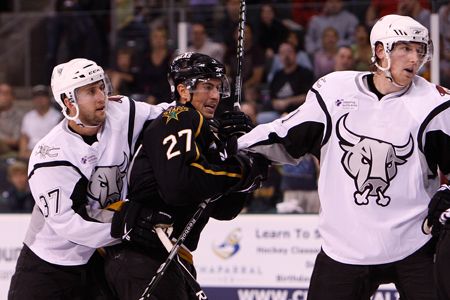
September 7, 2006 marked a new look for the Rampage as they changed their uniforms to reflect their affiliation with the Coyotes. The new colour scheme is black, gray, and silver, and the primary chest logo on the jersey has just the bull's head, replacing the full Rampage logo. Not that this should be a major piece of news, the Rampage also were afflicted with the Rbk EDGE jersey in 2007.

The Rampage will continue to write history this season as they begin their ninth AHL season. While the history of hockey has been short in San Antonio and there have been no championships to speak of yet, hockey appears to be thriving in the Texas city. Having both the Texas Stars and the Houston Aeros as in-state rivals should only help to fuel the rivalry that burns in the Texas winter!

Until next time, keep your sticks on the ice!

Sunday, September 12, 2010

In spending time examining the hockey history of Houston, I began to wonder why there aren't more hockey players from Texas. Of course, they have a burning passion for football, both NCAA and NFL, and they love their Rockets and Astros like any fans should. However, I've only seen one rink oustide the Toyota Center since arriving here, and that might be part of the reason. There have been a couple of high-profile players who have made their mark on the NHL, and these two men, besides both being from Texas, are also world-class defencemen. While Texas may not produce many NHL-caliber players, there have definitely been two that should make the state proud.

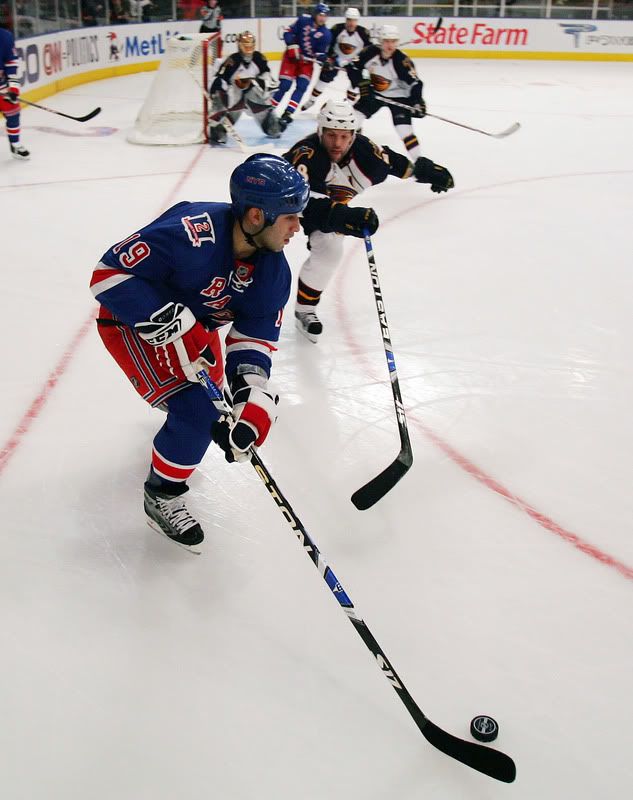
The one man that stood out as one of the best defencemen ever born in the United States is Brian Leetch. Leetch was born in Corpus Christi, Texas, and starred mostly with the New York Rangers as an offensive threat from the blueline. Leetch was the first American-born player named as the Conn Smythe Trophy winner when the Rangers captured the Stanley Cup in 1994, and he represented the USA internationally on a number of occasions. Leetch also captured two Norris Trophies as the best defenceman during his career, and was the NHL's top rookie in 1988.

While Leetch was born in Corpus Christi, his training came elsewhere. Leetch's father was a flight instructor, and the Leetch family moved to Cheshire, Connecticut when Brian was just three months old. Brian's father would continue the flight instructor business, but also managed an ice rink when the winter rolled around, giving Brian unrestricted access to skating opportunities.

While Brian grew up playing and excelling in both baseball and hockey, he truly shone in the sport of hockey. He earned All-State honours while in high school, putting up ridiculous numbers as a defenceman. At Avon Old Farms, Leetch scored an incredible 70 goals and added 90 assists in a mere 54 games!

In 1986, the New York Rangers, impressed by his remarkable scoring ability, chose Leetch ninth overall. However, Leetch followed the footsteps of his dad by enrolling at Boston College where he would be an All-American in 1987. He would only spend one year with the Eagles, though, as he jumped at an opportunity to play with Team USA in 1988.

On February 29, 1988, Leetch made his debut with the New York Rangers in St. Louis. He would record his first point that night, drawing an assist on a Kelly Kisio goal. While playing in only 17 games, Leetch looked right at home as he recorded 14 points. One year later, Leetch captured the Calder Trophy as the league's top rookie after scoring 73 points in the 1987-88 season.

Leetch would continue to impress the hockey world with his abilities. In 1992, he became the first American-born defenceman and only the fifth NHL defenceman to record 100 points in a season. His 100-point season prompted the NHL to award him his first Norris Trophy as the league's most outstanding defenceman. Leetch's 100-point season is the last time that an NHL defenceman has reached that pinnacle to date.

Leetch's 1994 season saw the Rangers captured the President's Trophy as the NHL's top regular-season team, the Stanley Cup, and he was named as the first American-born player to receive the Conn Smythe Trophy as the Stanley Cup Playoff MVP. He is still the only American to have won the award.

After Mark Messier left the team, Leetch was named as the captain of the Rangers in 1997. He would carry that honour until he handed the captaincy back to Messier in 2000 once he returned to the Rangers. But along with the captaincy, Leetch earned his second Norris Trophy in 1997 as the league's top defender.

While Leetch bounced around the NHL in the twilight years of his career, he formally announced that he was retiring from the NHL on May 24, 2007. That September, Leetch was one of four recipients of the 2007 Lester Patrick Trophy for his contributions to the US hockey program. January 24, 2008 saw the New York Rangers retire Leetch's #2 to the rafters of Madison Square Garden alongside the other legends. In October 2008, both Leetch and former Rangers teammate Mike Richter were inducted into the US Hockey Hall of Fame in Denver, Colorado. In November of 2009, Leetch was inducted into the Hockey Hall of Fame in Toronto, Ontario to sit alongside the game's greatest names.

Brian Leetch, in my estimation, might be the greates hockey player to have been born in Texas. His resume of work is second-to-none, but there is one young man who broke into the game in Texas after having been born in Houston.

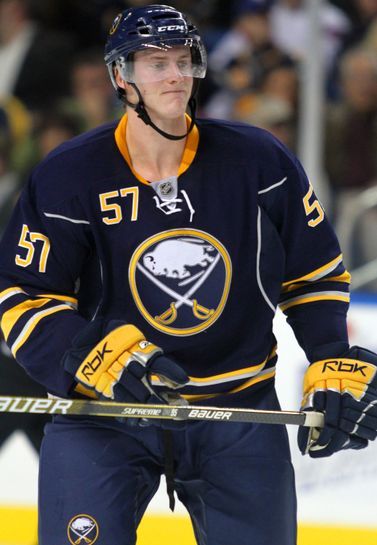
Tyler Myers was born in Katy, Texas just outside Houston, and lived in the city until he was ten years-old. Myers moved to Calgary, Alberta at that point with his father and stepmother. However, Myers became smitten with hockey after attending Houston Aeros games as a child with his father when he was six. Moving to Calgary allowed Myers to pick up the game he watched in Houston.

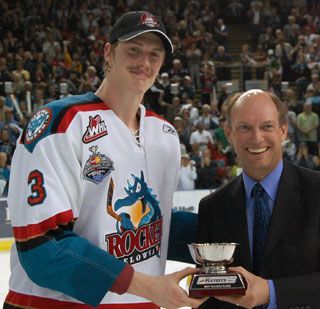
Myers played minor hockey at Athol Murray College of Notre Dame, and followed an outstanding period there by jumping to the WHL's Kelowna Rockets. Myers was a towering defenceman in the league, standing at 6'7" tall, and routinely delivered bone-crushing hits while playing excellent defence.

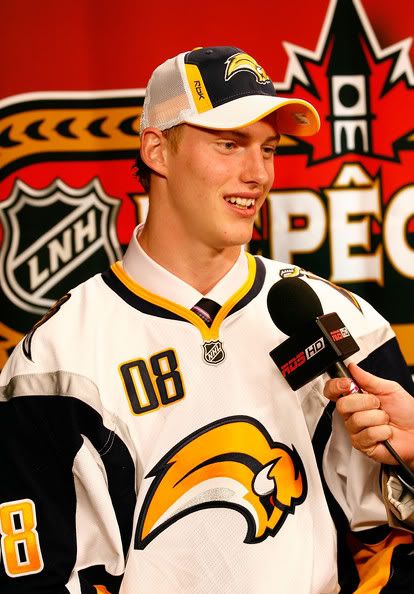
Myers was just coming into his own when the Buffalo Sabres came calling in the 2008 NHL Entry Draft. With the 12th overall pick, the Sabres added Myers to their team, and both GM Darcy Regier and head coach Lindy Ruff were excited to get Myers.

"There are two oddities to Tyler," Regier told USA Today. "One is size, and one is that he is a right-handed defenseman. (Coach) Lindy (Ruff) says find us a right-handed defenseman. But when I call up the rosters and look at every team's right-handed defensemen, there aren't many out there."

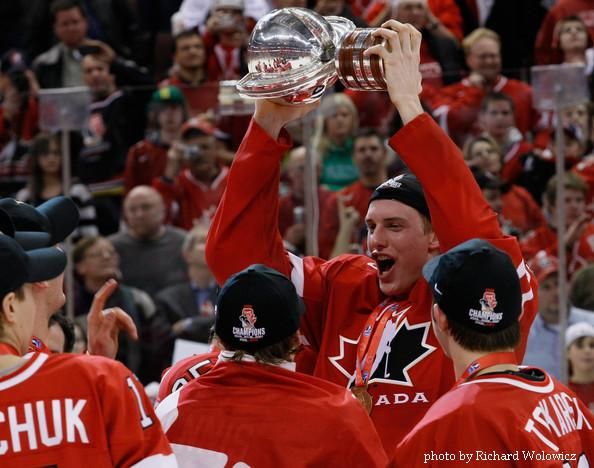
While the Sabres returned Myers to Kelowna, Myers stirred up a little controversy by choosing to play with Team Canada instead of Team USA in 2009. Hockey Canada began the controversy by naming Myers to their U20 team, and Myers' decision to accept the invitation was a slight role reversal in terms of Canada grabbing talent from the US Hockey Program.

"It was tough, I was born in the States," Myers told The Hockey News in 2010. "I based my decision on, if I hadn't of moved to Canada, I probably wouldn't be where I am today. I don't even think I'd be playing hockey right now.

"I just feel I owe Canada a lot and it feels good to put on the red and white."

The 2009 Team Canada World Junior team went on to capture the gold medal in Ottawa, and Myers was on the lists of many NHL scouts. That same year, the Kelowna Rockets went on to capture the 2009 Ed Chynoweth Cup as the WHL Champions, and he was named as the WHL Playoff MVP after scoring 20 points. Both tournaments allowed Myers to grow and mature as a player, and the Sabres were anxious to bring the young man back to training camp.

May 11, 2009 saw Myers sign a three-year, entry-level contract with the Sabres, and it was apparent through training camp that the young man was light years ahead of the Sabres' development plans. Because of his impressive camp, the Sabres chose to keep Myers with the club for the entire 2009-10 season. And what a season it was for Myers!

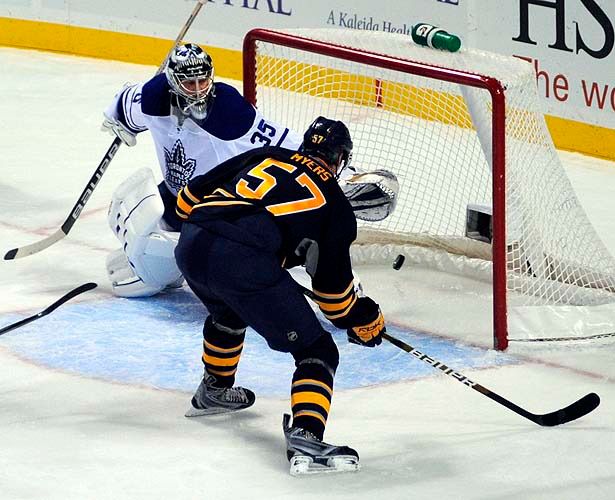
Myers recorded his first NHL point with an assist against the Phoenix Coyotes on October 8, 2009. His first NHL goal came eight days later as a Myers' blast found its way behind Dwayne Roloson of the New York Islanders on October 16. Myers hit another first eight days after his first goal by netting his first shootout goal against the Tampa Bay Lightning on October 24. Myers recorded his first multi-goal game on January 8, 2010 against the Toronto Maple Leafs when he scored a pair of powerplay goals.

What made the transition of Myers from junior player to NHL player impressive was his growth as a top player. He logged the most ice time of all NHL rookies last season, and played on Buffalo's top pairing on the blueline for the majority of the season. He finished third in rookie scoring last season, and his incredible play earned him the 2010 Calder Trophy as the NHL's top rookie.

Myers looks to have a long and successful career ahead of him, and he got his start by watching the IHL Aeros in Houston! While he has chosen to play for Canada, he is still one of the two best Texans to come out of the Lone Star State to play in the NHL.

With Leetch and Myers, Texas is beginning to produce quality hockey players despite not having a lot of places to play!

Until next time, keep your sticks on the ice!

Thursday, September 9, 2010

We check back in today with some more information on Houston's hockey history. As we saw yesterday, the legacy left by the WHA's Houston Aeros in this city might be difficult to match. Not only were they able to have coach Bill Dineen lure Gordie Howe out of retirement to play with his two sons, Mark and Marty, but the team was extremely competitive and twice captured the Avco Cup. Had it not been for some stubbornness on both the WHA's and the NHL's sides, there might be an NHL team in Houston about which I could be writing. Instead, the NHL wanted nothing to do with Houston, Texas in 1979, and the WHA's Aeros were forced to fold. Today, we pick up when hockey came back to town in 1994 as the Houston Aeros were revived in the IHL.

The 1994 version of the Houston Aeros were actually the second team in the IHL to use a former WHA name. The Phoenix Roadrunners were the first team on the scene, but the Aeros would outlive that franchise in spades, similar to their WHA days.

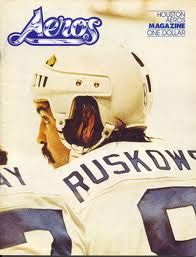
The 1994-95 season saw former Aeros player Terry Ruskowski behind the bench, guiding the team. They would finish in second-place in the Central Division with a 38-35-8 record. Mark Freer led the team in scoring with 38 goals and 42 assists, while Scott Arniel finished second in goals with 37 on the campaign. Troy Gamble, seen here with the Canucks, and Rob Dopson would split the goaltending duties, but Gamble was the better of the tandem as he finished with an 18-17-5 record, a 3.27 GAA, and one shutout. The Aeros would fall in opening round of the playoffs by a 3-1 count to the Phoenix Roadrunners, but their strong showing in their inaugural season would foreshadow great seasons to come.

The 1995-96 Aeros would miss the playoffs and finish dead last in the Central Division with a 29-45-8 record. The hiring of head coach Dave Tippett in the off-season would prove to be a wise choice as the 1996-97 Aeros rebounded to finish second in the South Division with a 44-30-8 record. Mark Lamb led the team in scoring with 25 goals and 53 assists. Tippett and Lamb took the Aeros to the semi-finals by sweeping the Las Vegas Thunder in three games and beating the San Antonio Dragons in five games.

However, they ran into the Long Beach Ice Dogs who knocked them out of the playoffs in five games. In their third season, Aeros fans were excited with their blue-collar team, and looked forward to the following season.

The 1997-98 Aeros finished second in the South Division again, this time with a 50-22-10 record. Brian Wiseman, seen here with the Leafs, led the team in scoring with 26 goals and 72 assists. The playoffs proved to be the Aeros' weak spot once more as the Milwaukee Admirals dispatched the Aeros by a 3-1 margin in the first round.

The Aeros were a determined bunch in the 1998-99 season as they marched through the IHL by posting a 54-15-13 record for first in the Southwest Division and first overall in the IHL. Wiseman was once again a scoring machine, notching 21 goals and adding an incredible 88 assists to lead the team. The Aeros received a first-round bye thanks to their efforts in the regualr season, meaning they waited until the second round to grapple with division-rival Long Beach Ice Dogs. Houston needed the full five games, but prevailed 3-2 over the Ice Dogs to advance to the Turner Cup Semi-Finals.

In the semi-final, the Aeros battled with the Chicago Wolves in a dogfight. Houston went up 3-1 in the series only to see Chicago win Games Five and Six to force a Game Seven at the Toyota Center in Houston, Texas. However, the Aeros managed to close out the series on home ice with a 4-1 victory in the final game. With that victory, the Aeros advanced to their first Turner Cup Championship!

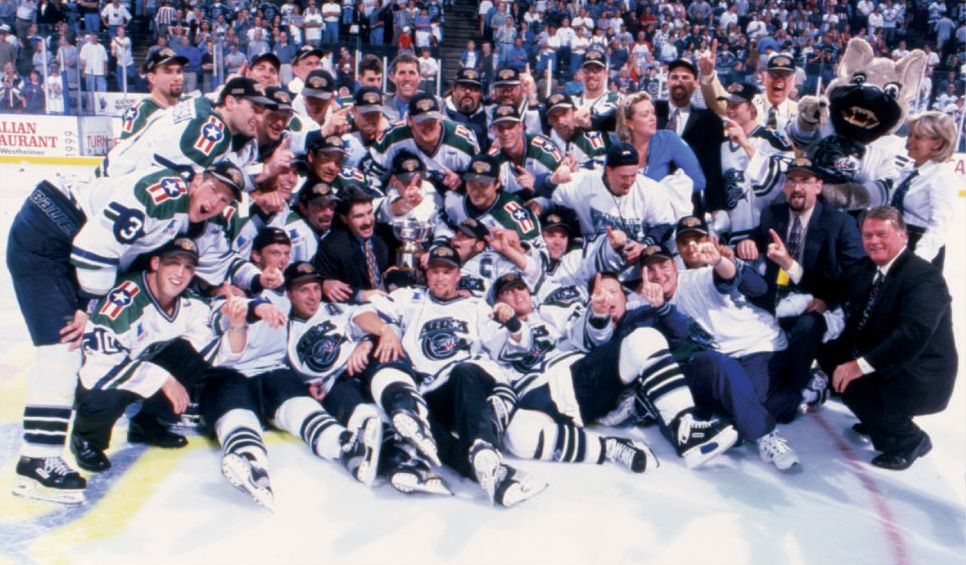
In the final, the Aeros met the Orlando Solar Bears who finished third in the IHL's Northeast Division. Once again, the Aeros jumped out to a 3-1 series lead over their opponents. But the Solar Bears would not go quietly as they won Game Five by a 5-4 score in overtime before rallying in Game Six by a 3-2 score to force a Game Seven back at the Toyota Center. The Aeros would not be denied on home ice, though, as they defeated the Orlando Solar Bears by a 5-3 score to capture the 1999 IHL Turner Cup! For the third time, a professional hockey championship was delivered to the city of Houston, Texas!

The 1999-2000 Aeros saw head coach Dave Tippett leave as he was hired away by the NHL, and Ron Low would take over. However, Low would only be able to guide the Aeros to the semi-final in his frist season. The Aeros would finish third-place in the IHL West Division with a record of 44-29-9. That record was good enough to earn Houston a bye through the first-round. In the second-round, they eliminated the Utah Girzzlies four games to one to advance to the Turner Cup Semi-Final. The Chicago Wolves got their revenge in this series as they defeated the Aeros four games to two.

The 2000-01 Aeros would see another new coach as Dave Barr was hired to take over the reins. The Aeros would finish second in the West Division with a 42-32-8 record. In the opening round of the playoffs, the Aeros would make a return to Winnipeg where they would play the Manitoba Moose in the Turner Cup Playoffs. The Moose, who finished third in the West, found themselves down 3-1 in the series before pulling off the impossible. The Moose won Game Five in overtime by a 3-2 score, won Game Six in overtime by the same margin, and then rallied in Game Seven in Houston to eliminate the Aeros by a 3-1 score. Heartbreak is the only way this loss can be described as it appeared that Houston had this series won coming home.

In early 2001, it was apparent that the IHL was on thin ice. Travel costs combined with rising player salaries and competition from the American Hockey League forced the IHL into a corner. With little money to save several failing franchises, the IHL decided to close its doors for good. However, where the WHA failed, the IHL succeeded.

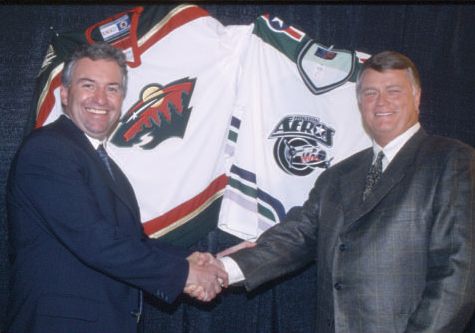
The AHL decided to absorb six IHL franchises into the American Hockey League. The six teams included the Chicago Wolves, Grand Rapids Griffins, Houston Aeros, Utah Grizzlies, Milwaukee Admirals, and Manitoba Moose as the American Hockey League looked to push into the midwestern USA and Canada. The franchises were allowed to align themselves with NHL clubs to bolster their rosters, and the Houston Aeros partnered themselves with the NHL's Minnesota Wild.

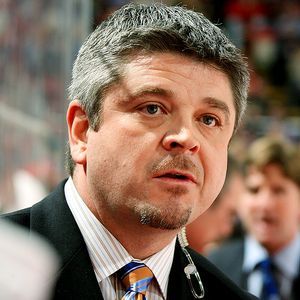
The strength of the young Minnesota prospects helped to bolster an already strong club, and the 2001-02 AHL Aeros finished second in the West Division with a 39-26-10-5 record under head coach Todd McLellan. The Aeros earned a bye in the preliminary round of the playoffs, and met up with their former IHL rivals in the Utah Grizzlies in the first round. It took all five games, but Houston knocked out Utah to advance to the second round of the Calder Cup Playoffs.

There, the Aeros met the Hershey Bears. After eliminiating one set of bears in the first round, the Aeros had no trouble with these Bears as they swept Hershey out of the playoffs. Up next stood a different animal, but a very familiar foe in the Chicago Wolves with a berth to the Calder Cup Final on the line.

It was a very different story against the Wolves as Chicago eliminated the Aeros by a 4-1 margin. However, the IHL's former teams had a very success first season as the Wolves went on to win the Calder Cup, and five of the six IHL teams made the playoffs in their first venture. Even more encouraging was the fact that Houston looked very good against the rest of the American Hockey League, and this was more foreshadowing for their success down the road.

The 2002-03 AHL season was a very good one for the Aeros as they finished first in the West Division on the strength of a 47-23-7-3 record, and ended up third overall in the AHL. Jean-Guy Trudel finished second in AHL scoring with 31 goals and 54 assists, just one point behind AHL scoring leader Steve Maltais.

The Aeros were seeded as the second-place team in the Western Conference, and this led to an opening-round matchup against the Milwaukee Admirals. The Aeros made short work of the Aeros, sweeping them out of the playoffs in three straight games. That led to a meeting with the third-seeded Norfolk Admirals. Much like the previous Admirals team, the Aeros defeated the Norfolk Admirals in six games to advance to the AHL Calder Cup Semi-Final.

It was here that the Aeros ran into the top-seeded Grand Rapids Griffins. Much like their history before them, the Aeros managed to go up 3-1 in this series. The Griffins, much like the Aeros' opponents in history, managed to claw their way back to a 3-3 series tie. Houston, however, played solid hockey on the road, and defeated the Griffins by a 2-1 score in Game Seven to secure the series win. Just to show how closely these two teams were matched, six of the seven games were decided by one goal!

The win vaulted the Aeros into the Calder Cup Final against the Hamilton Bulldogs who had been the best team through the regular season. Through five games, the Aeros found themselves with a 3-2 series lead. But these were the Aeros we were talking about, so you knew that Game Six would be a Hamilton victory. And it was as the score was 2-1 in favour of the Bulldogs. Houston, though, would not be denied. A 3-0 victory on Hamilton ice was all they needed to claim their first Calder Cup in just their second season in the AHL!

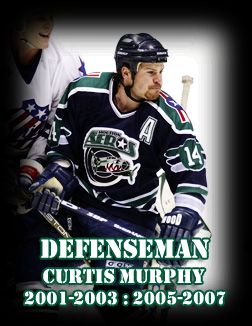
Goaltender Johan Holmqvist was named the Jack A. Butterfield Trophy winner as the Calder Cup Playoff MVP. Curtis Murphy was named as the Eddie Shore Trophy winner as the top AHL defenceman. Homlqvist also wrote himself into the AHL record books by recording the first shutout on the road in a Game Seven of the Calder Cup Final and by playing the most minutes in a Calder Cup postseason with 1498. Head coach Todd McLellan was named the top minor league coach by The Hockey News.

I'd say 2002-03 was a pretty good year for hockey in Houston, and the men listed above had pretty solid campaigns as well!

Since that time, the Aeros have lost in the Calder Cup Semi-Final once, and in the Conference Final twice. They have only missed the playoffs once since joining the AHL in 2001, and definitely one of the solid teams in the AHL at this point.

Thanks to Houston's growing legacy in hockey, there might be a time when the state of Texas can have two cities with NHL teams. Right now, though, the AHL's Houston Aeros are doing a fabulous job in keeping Houston hockey fans proud!

Until next time, keep your sticks on the ice!

Wednesday, September 8, 2010

Having finally arrived in Houston, Texas on Monday night, I've spent the last few days just trying to stay cool. The heat combined with the high humidity makes the environment like a sauna as Sage C. said in the comments a couple of days ago. What strikes me as interesting is that Houston, for the size of the city it is, could very well be an NHL city. However, the similarities to Winnipeg, a former NHL city, are not that far off in terms of its hockey history. Both cities had WHA teams that were bitter rivals, both cities had IHL teams that were bitter rivals, and both teams have AHL teams that are bitter rivals. What makes this story great is that Houston still has a very strong hockey following despite their teams being shuffled through several professional leagues, and this passion of Houston's fans have made Houston a very attractive city for professional leagues.

We'll start with hockey's start in Houston way back in 1972. The WHA had awarded a franchise to Dayton, Ohio, and the Dayton Arrows were to begin play in 1972. However, owner Paul Deneau was less than thrilled with Dayton's lack of enthusiasm for a pro team combined with its lack of a suitable professional arena, so Deneau didn't waste any time in moving the franchise to Houston, Texas.

In retrospect, this might have been the best relocation in the history of hockey in terms of success for both the team and the owner. The newly-moved Houston Aeros would be a cornerstone for the WHA in terms of its success in the early going, and the team would be one of the most successful teams in the rogue league.

In 1972, the puck dropped for the Aeros as they were part of the six-team Western Division of the WHA's inaugural season. They would battle their way to second-place in the division on the strength of a 39-35-4 record. Gord Labossiere led the team in goals and scoring with 36 goals and 60 assists. Don McLeod and Wayne Rutledge nearly split the games, but Rutledge had the better record with a 20-14-2 mark and a 3.05 GAA compared to McLeod's 19-20-1 record and 3.56 GAA.

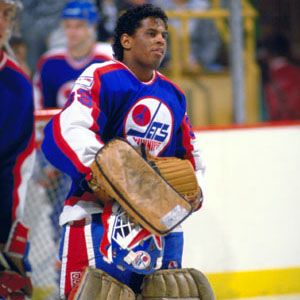
In the playoffs in 1972-73, the Aeros squared off against the Los Angeles Sharks. It took six games, but the Aeros advanced to the semi-finals against the Winnipeg Jets who had finished first in the Western Division. Winnipeg decimated the Aeros in the series, sweeping them out of the playoffs on their way to the WHA Final. While the first season for the Aeros didn't result in a parade, there would be big news made in coming seasons.

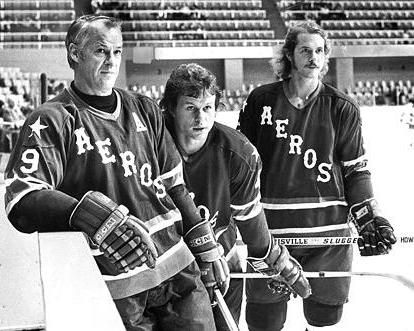
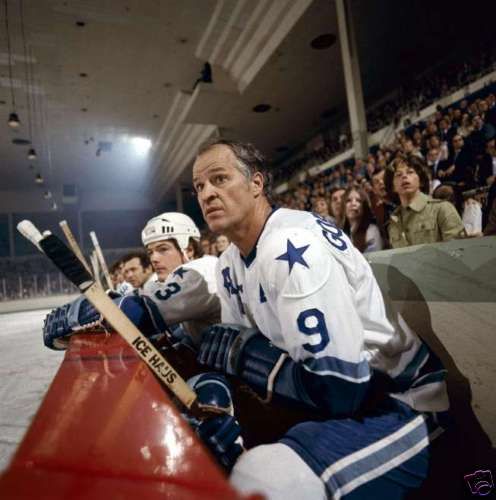
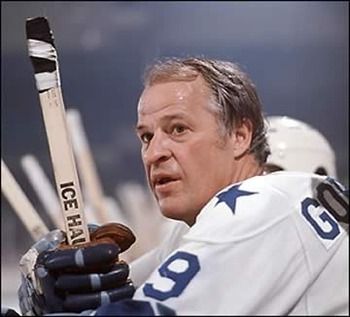
In the off-season of 1973, the Aeros decided to make a major player signing. They discussed the possibility of 45 year-old Gordie Howe, who had retired in 1971, of playing with his sons, Mark and Marty, in Houston. The elder Howe liked this idea, and he signed on to play with the Aeros for the 1973-74 season. It marked the first time that a father-sons combination had played together on the same ice in professional hockey.

The results were encouraging for the Aeros. Gordie Howe scored 31 goals and added 69 assists for a 100-point season, and the Aeros finished first in the Western Division and as the top team in the WHA with a 48-25-5 record. They matched up against the Winnipeg Jets in the first round, and handily swept the Jets aside in four games. They met up with the Minnesota Fighting Saints in the semi-final, and they were victorious in six games to advance to the WHA Avco Cup Championship.

There, they ran into an upstart Chicago Cougars club that had finished fourth-place in the Eastern Conference, and the Aeros proved they were the real deal. They hammered the Cougars in four games, outscoring them 22-9 in the series, and captured their first Avco Cup! Houston had its first professional hockey championship a mere two years after getting a pro hockey franchise!
Gordie Howe was named the winner of the Gary L. Davidson Trophy as the WHA MVP in 1973-74, and he would prove that the Aeros' success in that season was no fluke. His son, Mark Howe, was named the Lou Kaplan Trophy winner as the WHA's rookie of the year. Goaltender Don McLeod was named the winner of the Ben Hatskin Trophy as the WHA's best goaltender. 1973-74 was a great year for the Houston Aeros franchise!

1974-75 saw the Aeros roll over the WHA, posting the league's best record at 53-25-0 as they ended up first in the Western Conference again. Gordie Howe nearly duplicated his previous season as he scored 34 goals and added 65 helpers. But it was in the playoffs where the Aeros march to dominance really continued.

The top-ranked Aeros eliminated the eighth-ranked Cleveland Crusaders in five games. After dismantling the Crusaders, they trounced the San Diego Mariners in a four-game sweep in the semi-finals to give them a berth in the Avco Cup Championship to defend their title. However, there wasn't much defending as they tore through the Quebec Nordiques in a four-game sweep. The Aeros had captured their second consecutive WHA Championship, becoming the first WHA team to do so!

While there were less accolades for the players of the Aeros this season, Ron Grahame, seen here with the Bruins, did win the Ben Hatskin Trophy for leading the WHA in wins, shutouts and goals against average, as well as being named the WHA Playoff MVP after losing only one game on the way to another championship celebration. As a side note, Ron Grahame is the father of former NHL goaltender John Grahame!

The 1975-76 season was more of the same dominance as the Aeros plowed through the WHA's new 80-game schedule with a 53-27-0 record. The finished first in the Western Division, and tied with Winnipeg for the most points. However, Houston finished with one more regular-season win that Winnipeg, and were once again considered the top seed in the WHA. Gordie Howe was the model of consistency again, recording 32 goals and adding 70 assists in 78 games that season.

The WHA Playoffs saw the Aeros dispatch the San Diego Mariners in six games in the quarterfinals before eliminating the upstart New England Whalers in seven games. Whether the extra games took their toll or Houston simply wasn't as strong, the Winnipeg Jets ran over the Aeros in the Avco Cup Final in a four-game sweep. Disappointing to be sure, but the Aeros still had a lot in the tank.

The 1976-77 season saw the Aeros dominate the WHA once more, posting a final record of 50-24-6. They were the top team in the Western Conference, and owned the best record in the WHA that season. Howe had a serious drop-off in production this season as he only appeared in 62 games, scoring 24 goals and 44 assists - the lowest totals in his WHA career. Terry Ruskowski led the team in scoring with 24 goals and 60 assists.

Houston rolled over the Edmonton Oilers in the WHA Quarter-Finals, beating them four games to one. In the semi-final, Winnipeg and Houston clashed once again, the two WHA rivals renewing their rivalry. Winnipeg won Game One on the road by a 4-3 score in overtime. From there, the home team won each game. Unfortunately, that means that Houston won Games Two and Five before their season came to an end at the hands of the Jets once more, this by a four-games-to-two margin. While there was disappointment over the Aeros' finish once more, there were much larger problems on the horizon.

Merger discussions were initiated in 1977 between the NHL and the WHA about moving the most successful teams into the NHL. The NHL, however, informed the WHA that they were not interested in expansion in 1977, and the conversation was laid to rest. The six most successful WHA teams - Winnipeg, Edmonton, Quebec, Cincinnati, New England, and Houston - decided to push the fact by applying to the NHL as a franchise, but the chatter died down with the approaching 1977-78 season after the NHL voted down the offer.

In Houston, the Howes were asked to defer some of their salaries as the team found itself in a financial crisis. The Howes balked at the offer, and the three men walked away from the Aeros. As free agents, they garnered offers from NHL and WHA teams, but it came down to two offers: the NHL's Boston Bruins and the WHA's New England Whalers. The Howes opted to stay in the WHA with New England thanks largely to the guarantees made by the Whalers franchise. As a result, Houston's biggest stars were now playing for the rival New England Whalers.

Without their stars, the Aeros struggled more than they had in the previous four seasons. They finished third overall in the one-division league with a 42-34-4 record. Andre Lacroix emerged from the shadows of the Howes, and posted 36 goals and 77 assists. He finished ahead of teammate Morris Lukowich by an incredible 38 points!

In the playoffs, they met up with the Quebec Nordiques, but it seems that the Aeros couldn't shake the playoff monkey off their backs. Despite finishing ahead of the fourth-place Nordiques, the Aeros fell in six games to Quebec. It maked the earliest exit from the playoffs for any WHA Aeros team, and April 23, 1978 marked the last game they played in Houston. The Aeros defeated the Nordiques 5-2 that night before getting shellacked 11-2 in Quebec City on April 25 to close out the series.

In the off-season, the NHL was willing to listen to the WHA about a merger, but they would only accept four teams rather than the six teams that the WHA wanted to promote. One of the conditions of the merger was that the WHA wanted all three Canadian-based teams included in the merger, meaning that there was one spot remaining in the merger for New England, Cincinnati, and Houston. The NHL was very interested in the Hartford-New England franchise, meaning that the future looked bleek for both Cincinnati and Houston.

However, Aeros owner Kenneth Schnitzer wanted an NHL franchise and proposed that his team be accepted as an expansion franchise outside of the merger. If that was not an option for the NHL, Schnitzer proposed that he be allowed to purchase a current franchise and relocate it to Houston. The NHL declined both of these offers made by Schnitzer, and the Houston Aeros franchise ceased to exist beyond July 9, 1978.

Phew! That's quite the history right there in those seven seasons! Houston's hockey legacy would be cemented with Gordie Howe stories and Avco Cup Championships, but we're not done there. 1994 saw professional hockey return to Houston as the IHL moved into town! However, we'll embark on that leg of the flight tomorrow as we look at the modern Aeros and the history they are currently writing.

Until then, keep your sticks on the ice!

Saturday, September 4, 2010

Unknowingly as I dressed this morning for another day of travels on the open road through the United States of America, I happened to don the t-shirt sporting the logo of the defunct Colorado Rockies. My travels took me to Kansas City today where I am writing this article. How do those two things relate? Well, a gentleman approached me in my restaurant of choice, and informed me that the team I was wearing once played in Kansas City. While I let him regale me with the tales of how the Scouts moved to Denver to become Rockies before moving to East Rutherford, New Jersey to become the Devils, I realized that there have been various levels of pro hockey through Kansas City. And some teams actually did much better than the NHL team that once called this city home.

We'll start with the NHL era in Kansas City.

Kansas City was awarded a franchise in the last wave of NHL expansion to try to curb the WHA's growth. Along with Kansas City, a franchise was awarded to Washington, DC to begin play in 1974. June 8, 1972 was the day that the NHL came knocking on Kansas City's door, and Kemper Arena was built to house both the Scouts and the NBA's Kansas City Kings. The Scouts would eventually play in the Smythe Division as the NHL expanded to four divisions in 1974 when both Washington and Kansas City began play.

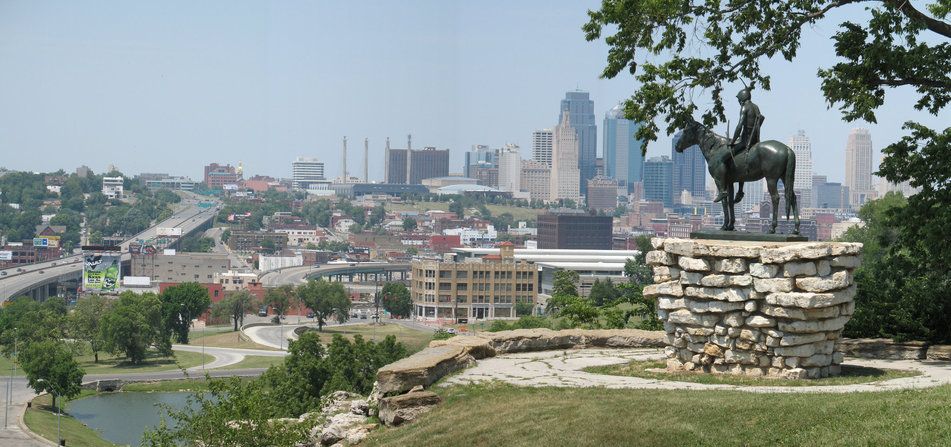
The team was originally going to be called the Mohawks - "Mo" from the Missouri postal abbreviation, and "Hawks" from Kansas' affinity to JayHawks. The Chicago Blackhawks put a stop to that name, stating that there was too much similarity between their name and the new Kansas City team name. Instead, the team chose "Scouts" in honour of the scout statue that overlooks the city. The logo reflected the statue as well, and it was nice to see hockey trying to honour the Native American peoples from this area once again.

This is where the good news ended for the Scouts franchise. The 1974-75 season ended in disappointment as there was little talent to draw from considering there were 32 NHL and WHA teams. The Scouts finished the season with a 15-54-11 record, good for fifth-place in the Smythe Division, but out of the playoffs. Wilf Paiement was a rookie for the Scouts in 1974-75, and he'd go on to have a solid NHL career. Captain Simon Nolet was named to the Campbell Conference All-Star Team, and head coach Bep Guidolin was called upon to coach the Wales Conference All-Star Team.

For as bad as their first season was, the Scouts were worse in their second season of existence. After starting the season respectably, the Scouts found themselves one point out of a playoff spot at Christmas. And then the wheels came off. And there was a fiery crash and burn. And nothing remained that was salvageable.

The Scouts went winless in sixteen games from December 30, 1975 until February 4, 1976 before defeating the Washington Capitals on Feburary 7. They then pulled off the nearly-impossible by going winless in their next twenty-seven games. All in all, the Scouts managed to go 1-35-8 in their final forty-four games to post a pitiful record of 12-56-12. Just one of the Scouts players and staff - Wilf Paiement - was called upon for the NHL All-Star Game, an indication of just how bad it was in 1975-76.

While both the Capitals and Scouts were pitiful excuses for professional hockey teams in their early goings, the Scouts also had problems drawing fans to their new 17,000-seat arena. They were averaging only about 8200 fans per game, and rising salaries were making the Scouts' bottom line look less and less appeaing. The 37 owners of the team decided to go on a massive season ticket campaign, but it only drew 2000 people to purchase season ducats. All said, they decided to sell the team to save their financial interests.

In two seasons in the NHL, the Scouts posted a record of 27-110-23 in 160 NHL games - hardly what NHL dreams are made of. They finished dead last in the Smythe Division both years, and twice had the second overall pick in the NHL Entry Draft. Wilf Paiement was their choice in 1974, and Barry Dean was the only other draft choice made by the Kansas City Scouts.

While the citizens and hockey fans of Kansas City would have to wait a few years for another hockey franchise to arrive, the IHL granted a franchise to the city in 1990, and it turned out to be a fairly successful run for Kansas City.

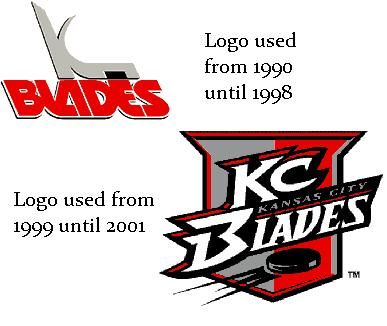
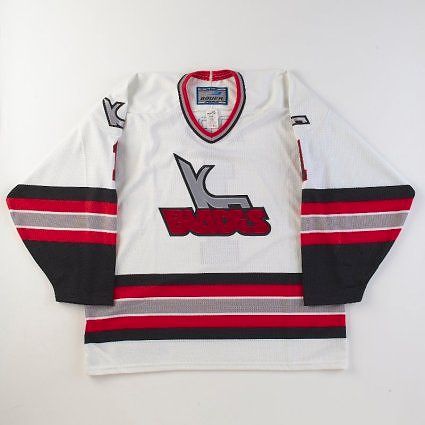
The suspended franchise of the Toledo Blades was purchased and moved to Kansas City by Russ and Diane Ross. While a "Name the Team" contest was held and ultimately chose the new team name as "Jazz", the Rosses rejected the name since there was already a "Jazz" team in Utah. The second most-popular choice was the Blades, and the Rosses stuck with that name. Thus, the Kansas City Blades were born!

In 1991, the Blades struck a deal with the San Jose Sharks to be their primary minor-league affiliate, and the Sharks would regularly stock the Blades with their up-and-coming players. This influx of talent into the Blades' lineup proved successful as the Blades went on to capture the 1991-92 Turner Cup under the tutelage of former NHL head coach Kevin Constantine. While the Blades would fall short in coming seasons, the 1991-92 team is still the only hockey franchise to bring back a championship on the ice to Kansas City.

Through pressure from the NHL to have its franchises align themselves with AHL teams as their primary affilates, the Blades and Sharks parted ways. During this same time, the Rosses decided to sell the team to the DeVos family. The DeVos clan also owned stakes in the Grand Rapids Griffins and the Orlando Solar Bears in the IHL, and a few owners felt that the DeVos family might be bordering on "conflict of interest". In 2001, the DeVos famly was involved with four of the eleven IHL teams!

The DeVos family didn't market themselves very well amongst the Blades' longtime fans. Changes were constant, and none seemed to bring back fans to Kemper Arena. After several seasons of losing money, the DeVos family looked at relocating the team to Oklahoma City which only further killed their popularity in Kansas City.

The move to Oklahoma City was blocked after the owners of the CHL's Oklahoma City Blazers refused to abandon their stake in Oklahoma City, and the IHL and the DeVos family could not reach an agreement with the Blazers. Once the news of relocation hit the news, the DeVos family was mercilessly booed at every appearance in Kansas City.

The Blades signed a deal with the Vancouver Canucks for two years at the start of the 2000-01 season to be their primary affiliate. Unfortunately for both teams, the IHL decided to fold due to rising costs, and the affiliation was cut short by one year. The Blades, like the Scouts, found themselves in limbo.

The teams from the IHL were considered in terms of joining the AHL, but AHL regulations stipulate that one owner can have a stake in only one team. The DeVos family, having interests in four teams, decided to promote their most successful team in the Grand Rapids Griffins, cutting loose the three other teams they were controlling: the Orlando Solar Bears, the Cleveland Lumberjacks, and the Kansas City Blades. Again, the people of Kansas City were screwed by the DeVos family.

While there was a Kansas City Outlaws team that played in the UHL, their history is about as long as the Scouts' history was. They didn't last long, and didn't come close to any sort of success. On April 15, 2005, the team suspended operations and folded. In one season in the UHL, the Outlaws posted a record of 28-45-7.

So there is a little history on Kansas City's modern hockey ventures. I'm not about to speculate on whether the city can support an NHL franchise, but they do have a shiny, new arena that is looking for a full-time tenant, and they were in talks with the Penguins about moving there when Pittsburgh was battling for a new arena.

What I do know is that it seems the people of Kansas City have been sold short a few times. If the Blades are any indication, hockey can work in Kansas City. Perhaps an AHL team would be a better fit?

Until next time, keep your sticks on the ice!

Sunday, April 25, 2010

It's time to wrap-up the week before we start anew on Monday, so we'll bounce around the hockey world as we look at stories from inside hockey. Of course, there are playoffs happening all over the place, so there will be updates to a bunch of leagues as to who is still in, and who is now on the golf course. There have also been some pretty big stories from the hockey world that need to be touched upon, and I'll provide my commentary to those stories in terms of how I see them. We'll also bounce over to one blog that has been entertaining me over the last few days, so there are lots of things to check out. Oh, did I mention pictures? Yeah, we'll have those too. A few of them anyway. Let's get to this full menu!
  • The KHL will get first billing tonight as the Gagarin Cup was in the house in Moscow as HC MVD had the 3-2 series lead at home against the defending champions in Ak Bars Kazan. Facing elimination, the current champs from Kazan put the gears to MVD as they pumped seven goals past MVD's netminders in a 7-1 Game Six win. That means we'll have one more game as Game Seven will be played Tuesday night in Kazan. Nothing like a Game Seven for all the marbles! Of course, there will be a full recap on Saturday after the Gagarin Cup has been handed out, so tune in for that!
  • We have some new threads for an NCAA team. Next season, the Michigan State Spartans will play games in these new uniforms, replacing some fairly iconic uniforms - home, road, and alternate. I'm not against the new look, and I think the Spartan logo looks pretty good, but why did they need black breezers? And why not drop the captain's "C" about an inch and a half so that it's only on the white portion? Personally, I don't think they needed to make a change, but I don't run the athletic department at Michigan State.
  • Speaking of NCAA uniforms, I wasn't aware that Providence College wore pants with their team name on the leg. This photo, featuring former NHL goaltender Chris Terreri in net for the Friars, shows the pants clearly that Providence College took to wearing in games. By the way, Terreri went 21-15-5 that season with a 3.12 GAA.
  • Big news out of the NHL today is that Blackhawks' forward Marian Hossa will not be suspended for his questionable hit on Dan Hamhuis in yesterday's game. You can see the hit here, and there were a lot of TV personalities who said that this was nothing more than a "hockey play". Pierre McGuire, as much as I disagree with him, is correct. That was a very dangerous hit. However, the NHL handed down its decision, and we're forced to live with it. The hockey gods will not be happy, Marian Hossa. They've punished you for being a hired gun for the last two years. This could be the third year his curse continues.
  • The ECHL has nearly completed their push for conference finalists. The National Conference will see the Idaho Steelheads and Stockton Thunder square off for the right to advance to the Kelly Cup Final, while the Reading Royals await the winner of the Cincinnati Cyclones and Charlotte Checkers. The Cyclones lead that series 3-2. The winner will advance to play the Royals for the right to represent the American Conference in the Kelly Cup Final.
  • The AHL, much like the NHL, is just finishing its first round of the Calder Cup Playoffs, and there have been some excellent games thus far. What I find slightly confusing is how the Western Conference is still determining who moves on, yet the Eastern Conference has already started their Round Two games. Why does the AHL allow this to happen? What's the rush on getting the Eastern Conference games done?
  • The Central Hockey League is down to two teams in their playoffs as the Allen Americans battle the Rapid City Rush for the President's Cup. The Americans took Game One by a 4-1 score, while the Rush rallied for 5-4 overtime win in Game Two. Game Three through Five will be held in Allen, Texas starting on Wednesday, April 28, so get down to the rink if you're in Texas!
  • The IHL has determined the four teams that will compete for the Turner Cup this year! The top-seeded Muskegon Lumberjacks will face the fourth-ranked Flint Generals, while the second-seeded Fort Wayne Komets will play the third-seeded Port Huron IceHawks. The schedule has been posted, so if you're near your local IHL franchise, get down to the rink and cheer the boys on!
  • Down Goes Brown brings the funny with Signs Your Team Is Not Making It To The Second Round. Some classic signs in this list. DGB is a solid read.
That's all for me tonight. I have a busy week coming up, so please don't freak out if the HBIC Playoff Pool isn't updated in real-time. There's still a ton of hockey to be played, and I'm going to go watch the Kings and Canucks tangle.

Until next time, keep your sticks on the ice!

Tuesday, February 9, 2010

There have been a number of stories that have been reported today from the various leagues across North America. Some deal with future events, some deal with relocation of teams to new cities and new leagues, and some are just cool stories. There was a suspension and a trade today, so we need to cover the business side of the game as well. With all the stuff that's been going on, let's get cracking on a busy day in the hockey world. I'll try to elaborate as much as possible on each story.
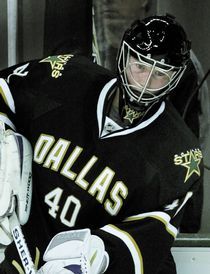
  • Kari Lehtonen is now part of the Dallas Stars. Lehtonen lost his status as the top goaltender in Atlanta with the emergence of Ondrej Pavelec. Combine that with inconsistent play and a penchant for injuries, and the Thrashers gave up on him. Coming back to Atlanta from the Stars will be highly-touted defensive prospect Ivan Vishnevskiy and a fourth-round pick. Not a bad deal for the Thrashers, but you have to wonder what may happen with Marty Turco and his UFA status approaching.
  • Goaltender Ray Emery's hip may need surgery to correct his woes, and this has the Flyers worried with only Michael Leighton to man to the crease. With Turco's status in the air at this point, the talks may heat up between Dallas and Philly for the goaltender.
  • The Pittsburgh Penguins have expressed interest in hosting the 2010-11 NHL All-Star Game in the brand-new Consol Energy Center slated to open next season. They have also expressed interest in hosting the NCAA's Frozen Four tournament with Robert Morris University. This would an excellent opportunity for the NHL and the NCAA to get into a market that will be buzzing due to the hockey activity.
  • Team Canada breathed a huge sigh of relief today when it was announced that centerman Ryan Getzlaf's sprained ankle showed no significant ligament or muscle damage. There was talk of Getzlaf possibly missing the Winter Olympics with his injury, but it appears that he will be ready to go by the time the men's hockey tournament begins. Honestly, I'd take Getzlaf over Jeff Carter or Vincent Lecavalier at this point in the season any day of the week.
  • The NHL will expand its kickoff weekend in Europe for the 2010-11 season by sending six teams to three European cities. The Boston Bruins and Phoenix Coyotes will square off in the O2 Arena in Prague, Czech Republic in what appears to be the best matchup. The San Jose Sharks and Columbus Blue Jackets will tangle in the Ericsson Globe Arena in Stockholm, Sweden. And in what seems like a poor choice of teams right now, the Carolina Hurricanes will meet the Minnesota Wild in the Hartwall Arena in Helsinki, Finland. The 'Canes and Wild will play October 7 and 8; the Jackets and Sharks will play on October 8 and 9; the Bruins and 'Yotes will play on October 9 and 10.
  • The AHL's Albany River Rats appear to be on the move. According to reports, a press conference scheduled tomorrow will announce that the River Rats are moving closer to their NHL affiliate, the Carolina Hurricanes, by moving into Charlotte, North Carolina. There's also word that the team will change their name from "River Rats" to "Checkers". There's no word on any other franchises moving into Albany at this time, but it seems that anything can happen in the AHL.
  • Speaking of which, the Edmonton Oilers announced today that they are resurrecting their AHL franchise. The Edmonton Road Runners, who have been suspended for a couple of years now, will move to Oklahoma City for the 2010-11 season. Indications are that the management team of the former Oklahoma City Blazers of the CHL will be brought onboard, and that the franchise will hold a "name the team" contest before the start of the next season. Edmonton's agreement with the Springfield Falcons will end as a result of this decision.
  • Anaheim now sits as the only NHL franchise without an affiliate for the 2010-11 season in the AHL. Springfield could be a destination for this one season, but the Ducks already walked away from the Portland Pirates due to the immense distance between the teams. I think Springfield will be temporary, but only the Ducks know what they will do for the upcoming season.
  • Down Goes Brown, an incredibly funny and smart blog, turns two years-old. Get over there and wish Sean some good wishes. And read his stuff. You won't be disappointed.
  • Great story from the hockey world as Wendel Clark lends his name in helping the Chase McEachern Hockey for Heart Tournament in Alliston, Ontario. Chase was an 11 year-old boy who was diagnosed with an atrial flutter which caused him to be monitored whenever he played sports. He started a campaign to raise funds for schools and public places to purchase AEDs, or automated external defibrillators. Unfortunately, Chase lost his battle after collapsing in gym class. Anyone who raises $10,000 gets to participate in the game against the pros headlined by Clark in one of 14 Ontario communities! If you'd like to donate to an excellent cause, please head over to the Hockey For Heart website and give what you can. Your dollars will be a life-saver. Literally.
  • Today's a big day in hockey history as well. Back in 1966, the NHL decided to double the size of the NHL by admitting six new expansion teams in their own division. The newly-formed West Division contained the California Seals, the Los Angeles Kings, the Minnesota North Stars, the Philadelphia Flyers, the Pittsburgh Penguins, and the St. Louis Blues. The main motivation was money as the NHL looked to gain bigger television contracts like the NFL and MLB, but another factor that was growing behind the scenes was the rising of a rival hockey league. Of course, this expansion led to the NHL becoming the dominant hockey league on the planet, so this date in history is quite important.
  • In a rather unfortunate story, the IHL's Muskegon Lumberjacks, the league's top team thus far this season, has announced that they will cease operations at the end of this season, ending a 50-year run of professional hockey in Muskegon. The Lumberjacks average only 2835 fans - good for third in overall attendance - but nowhere near the IHL's leader in the Fort Wayne Komets who average 8080 people per game.
  • But with every dark cloud comes a silver lining. Indianapolis businessman Josh Mervis has announced that he will bring a USHL team to Muskegon for the 2010-11 season. The USHL features players ranging from 16-20 years of age. The new USHL Muskegon Lumberjacks was a franchise owned by the Mervises that was dormant for the last four years after closing its doors in Rochester, Minnesota. With Dubuque, Iowa joining the USHL next season as well, the USHL will feature 16 teams.
  • Lastly, there's a new button on the right. I've decided that I need to keep up with the rest of the hockey world, and I've joined the Twitter revolution. This does not mean that I will "tweet" with reckless abandon, however. I simply post information that I find funny or relevant or both. If you want to get onboard with HBIC's Twitter movement, click the button on the right.
That's all for tonight, kids. I have a pile of work to do still, so I'm out. Drop me an email, "tweet" me, or leave a comment. I'll answer them all if possible!

Until next time, keep your sticks on the ice!